Induction Range Vs Electric Range – 7 Key Differences to Know
Are you feeling overwhelmed trying to choose the right cooktop for your kitchen? You’re not alone—many people struggle with deciding between induction and electric ranges.
Both have their perks and pitfalls, making it tricky to pick the best fit.
Induction ranges heat your cookware directly with electromagnetic fields, providing instant heat, precise control, and cooler surfaces for safety.
Electric ranges use resistive coils, take longer to warm up, and can be harder to clean.
Induction is more energy-efficient and usually costs more upfront but saves money over time.
Plus, induction cooktops are safer for households with children.
To learn more about these key differences and find the best fit for your kitchen, keep exploring.
Key Takeaways
- Induction ranges heat cookware directly through electromagnetic fields. This means they respond instantly and allow for precise temperature control, unlike electric coils that take longer to heat up.
- They are more energy-efficient too. Induction ranges transfer about 85-90% of energy, while electric ranges typically transfer only 70-75%. That can add up to some nice savings over time.
- Cleaning is a breeze with induction cooktops because of their smooth surfaces. Electric coils, on the other hand, require more effort to keep clean and maintain.
- Keep in mind, induction ranges usually come with a higher purchase price and installation costs. But those costs can be offset by the long-term energy savings they offer.
- Plus, induction surfaces are safer. They heat only the cookware and stay cooler to the touch, reducing burn risks and making them safer for kids around the kitchen.
What Are the Key Differences Between Induction and Electric Ranges?
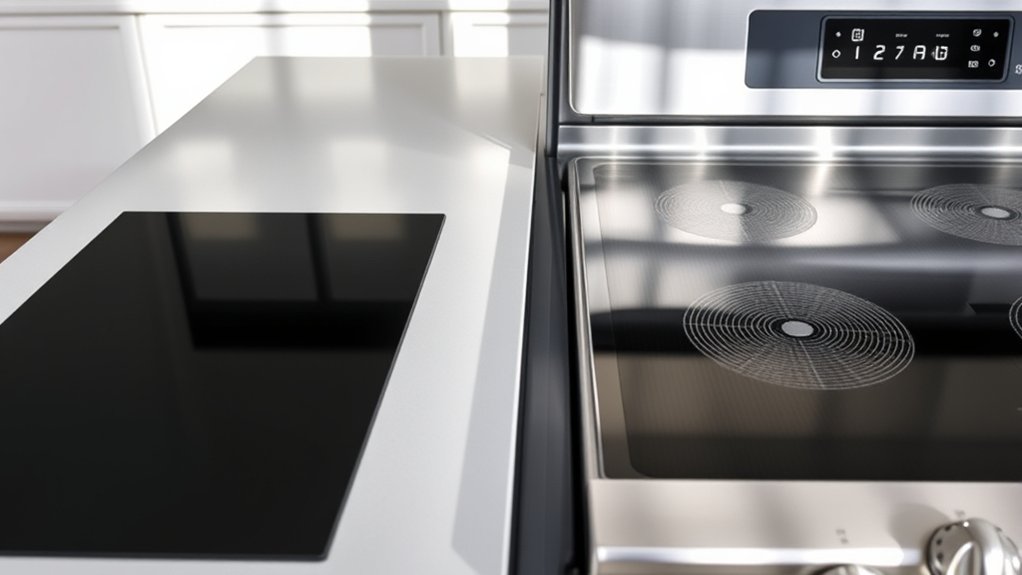
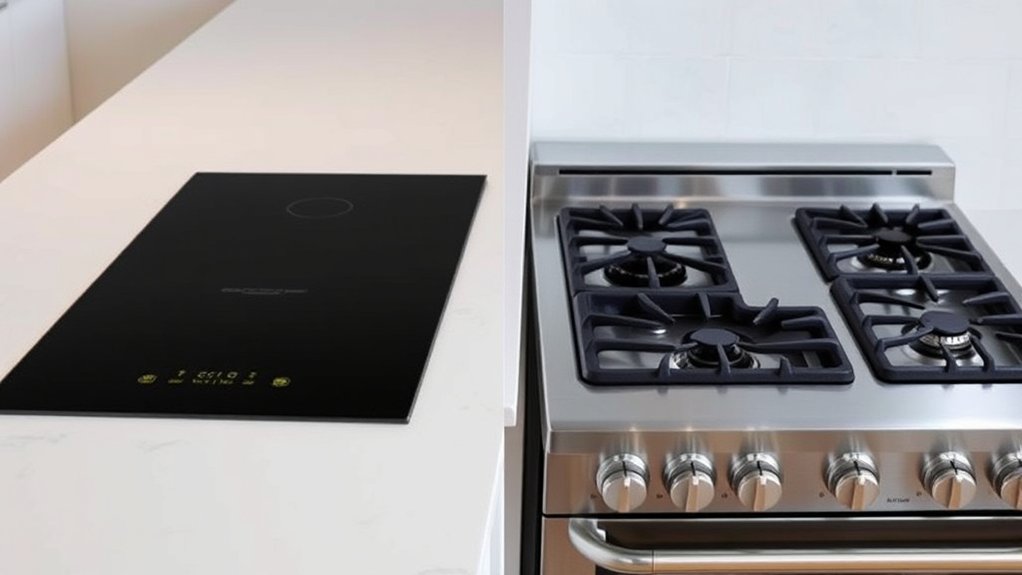
While both induction and electric ranges use electricity to generate heat, they work quite differently. An electric range heats through resistive coils that transfer warmth to your cookware, which then cooks your food.
In contrast, an induction range uses electromagnetic fields to directly excite the metal in your pots and pans, creating heat instantly. This means induction ranges respond faster and give you more precise temperature control.
Electric ranges tend to have traditional coil or smooth-top surfaces, which can take longer to heat up and cool down. Induction surfaces stay cooler to the touch, making them safer and easier to clean.
These core differences affect cooking speed, safety, and convenience, shaping how you’ll use each type in your kitchen.
How Do Induction and Electric Ranges Heat Food Differently?
Induction and electric ranges heat food through fundamentally different processes. With electric ranges, heat is generated by electrical resistance in the coil or surface, which then transfers heat to your cookware. This process takes time to warm up and cool down.
Induction ranges, on the other hand, use electromagnetic fields to directly heat the cookware itself. When you turn on an induction cooktop, it creates a magnetic current that heats ferrous cookware instantly.
Induction cooktops heat ferrous cookware instantly using electromagnetic fields for precise, rapid cooking.
Because the heat is transferred directly to the pan, induction ranges respond faster and offer more precise control. Electric ranges rely on the heated surface to transfer warmth, which can lead to slower response times and uneven heating.
This fundamental difference impacts how quickly and precisely you can cook your food.
Which Is More Energy Efficient: Induction or Electric?
You might notice that induction ranges transfer heat more directly to cookware, making them more efficient than electric ones. They typically use less power overall because they heat faster and waste less energy.
Understanding the differences in energy transfer and power use can help you choose the most efficient option for your kitchen.
Energy Transfer Efficiency
In regard to energy transfer efficiency, induction ranges generally outperform electric ranges. Induction cooking heats cookware directly through electromagnetic energy, which cuts down on heat loss.
Electric ranges heat the coil first, then transfer heat to the cookware. This process results in more energy loss. The table below shows the efficiency differences:
| Feature | Induction Range | Electric Range |
|---|---|---|
| Energy transfer method | Electromagnetic induction | Resistive heating element |
| Heat transfer efficiency | About 85-90% | About 70-75% |
| Heat loss during transfer | Minimal | Higher due to coil heating |
| Response time | Faster | Slower |
This makes induction ranges more efficient at converting energy into heat, saving you both energy and time.
Power Consumption Levels
When considering overall power consumption, induction ranges usually use less energy to cook effectively compared to electric ranges. This is because induction heats cookware directly through electromagnetic fields, reducing heat loss.
Electric ranges transfer heat via a heating element, which then warms the cookware, leading to more energy waste. As a result, induction units are more energy-efficient, especially during longer cooking periods.
You’ll find that induction ranges heat faster and keep temperatures steady with less energy. While electric ranges might be cheaper upfront, the energy savings and quicker cooking times of induction can lower your overall electricity bills.
If efficiency is important, induction is the better choice for conserving energy during your cooking tasks.
How Easy Are They to Maintain and Clean?
Maintaining and cleaning an induction or electric range can vary in ease, but both are generally designed with user convenience in mind. Induction ranges have smooth, flat surfaces that make wiping spills simple, often needing just a damp cloth.
Electric ranges, especially coil models, can be more involved, requiring removal of drip pans and coils for thorough cleaning. Both types benefit from regular wiping to prevent buildup and keep them looking new.
What Are the Cost Factors for Buying and Installing Each?
The initial costs of buying and installing an induction range can be higher than those for an electric range because of the advanced technology and specialized parts involved. Induction models usually have a higher purchase price due to their sophisticated electromagnetic systems.
Installation may also cost more if your kitchen needs electrical upgrades to support the higher power requirements. Electric ranges tend to be less expensive upfront and are easier to install, often fitting existing outlets.
Here’s a quick comparison:
| Cost Factor | Electric Range | Induction Range |
|---|---|---|
| Purchase Price | Lower | Higher |
| Installation Cost | Lower | Higher |
| Electrical Requirements | Standard outlet | Higher amperage needed |
| Maintenance | Similar, low-cost parts | Slightly higher tech components |
| Long-term Savings | Similar, depends on energy use | Potentially more efficient |
Consider these factors based on your budget and your current kitchen setup.
Which Range Is Safer for Your Kitchen?
Are induction ranges safer for your kitchen compared to electric ranges? Generally, yes. Induction cooktops heat only the cookware, which reduces the risk of burns from hot surfaces. They also turn off immediately when you remove the cookware, preventing accidental fires.
Electric ranges, on the other hand, can stay hot for a while, increasing burn risks. Here are three safety advantages of induction ranges:
- Cooler surface: The cooktop stays relatively cool, which helps reduce burn injuries.
- Automatic shut-off: The surface turns off when you take the cookware away.
- Lower fire risk: There are no open flames or exposed heating elements.
While both options are safe, induction ranges offer extra safety features that make them a better choice, especially for households with children or safety concerns.
Which Range Suits Your Cooking Style Best?
Choosing the right range really depends on your cooking style and what you prefer. If you like precise temperature control and quick heating, an induction range is a great choice. It heats up fast and reacts instantly to your adjustments, making it perfect for delicate sauces or stir-frying.
On the other hand, if you want a more traditional cooking experience with versatile cookware options, an electric range might be better for you. Electric ranges usually have a wider range of heat settings and are easier to use with different pots and pans.
Think about how you cook every day—do you need quick temperature changes, or do you prefer a simple, familiar setup? Your style, whether fast-paced or relaxed, will help you find the range that makes your kitchen more efficient and enjoyable.
Frequently Asked Questions
Can I Use Any Cookware With Induction or Electric Ranges?
You can’t use any cookware with induction ranges because they need magnetic materials like cast iron or some stainless steels.
Electric ranges are more flexible and work with most cookware, including aluminum and glass.
To check if your cookware works with induction, see if a magnet sticks to the bottom. If it does, you’re all set.
If not, you’ll probably need to switch to pots and pans that are compatible with induction.
Are There Any Specific Power Requirements for Installation?
Yes, there are specific power requirements for installation. You’ll need a dedicated electrical circuit, typically 240 volts, for either type of range.
Induction ranges often need higher amperage because of their powerful coils, while electric ranges might have different circuit needs based on their size and features.
Always check your manufacturer’s specifications and talk to a licensed electrician to make sure your home’s wiring can handle the load safely.
How Long Do Induction and Electric Ranges Typically Last?
Induction and electric ranges usually last about 10 to 15 years if you take good care of them.
Induction cooktops tend to last a bit longer because they have fewer moving parts and experience less wear and tear.
To keep your range working well longer, clean it regularly and avoid dragging heavy pots across the surface.
It’s also a good idea to fix any issues quickly to prevent more damage.
With proper maintenance, both types can serve you well for many years to come.
Do Induction Ranges Produce Less Heat in the Kitchen?
Yes, induction ranges produce less heat in your kitchen compared to electric ranges. They heat cookware directly through electromagnetic energy, which keeps the surrounding area cooler.
This means your kitchen stays more comfortable, especially during long cooking sessions. You might find your kitchen less stuffy and hot, making cooking more pleasant.
Are There Specific Maintenance Routines for Each Type?
Yes, there are specific maintenance routines for each type. For induction ranges, you should regularly clean the glass surface with a soft cloth and avoid abrasive cleaners to prevent scratches.
Electric ranges need periodic checks of the coils for damage, and you should clean the burners and drip pans to prevent buildup. Always follow the manufacturer’s instructions for maintenance to guarantee safety and extend the lifespan of your appliance.
Conclusion
Remember, the right choice depends on your cooking style and priorities. Whether you go for the quick, precise heating of induction or the familiarity of electric ranges, weigh the differences carefully.
As the saying goes, “A penny saved is a penny earned,” so think about energy costs and maintenance too. Both types have their benefits, so it’s all about what fits your needs best.
Ultimately, picking the best range means finding one that suits your lifestyle perfectly. If you’re considering an induction range versus an electric range, make sure your choice aligns with how you cook and your budget.
Happy cooking!