Induction Cooktop Vs Electric – 8 Key Differences to Consider
Struggling to choose the right cooktop for your kitchen? You’re not alone—many people find the decision overwhelming with so many options out there.
If you’re torn between induction and electric, you’re in the right place.
Induction cooktops heat faster and use energy more efficiently than electric stoves, thanks to direct electromagnetic heating.
They’re safer since the surface stays cooler and offer precise temperature control, ideal for quick, accurate cooking.
You’ll find them easier to clean and more durable with less maintenance.
Electric stoves are cheaper upfront but less efficient and slower in response.
Want to uncover which option fits your cooking style and budget? Keep exploring the key differences.
Key Takeaways
- Induction cooktops heat up faster and more efficiently because they transfer electromagnetic energy directly to your cookware.
- Electric stoves tend to heat more slowly and are less efficient. They can also waste more energy during use.
- Induction surfaces are smooth and flat, making them easier to clean.
- On the other hand, electric coil stoves have components that are harder to clean.
- With induction, you get precise temperature control and quick responses.
- Electric stoves can lag when you try to adjust the heat levels, making them less responsive.
- Induction cooktops are safer since their surfaces stay cooler.
- They also come with safety features that help reduce the risk of burns compared to electric burners.
How Do Induction Cooktops Work Compared to Electric Stoves?
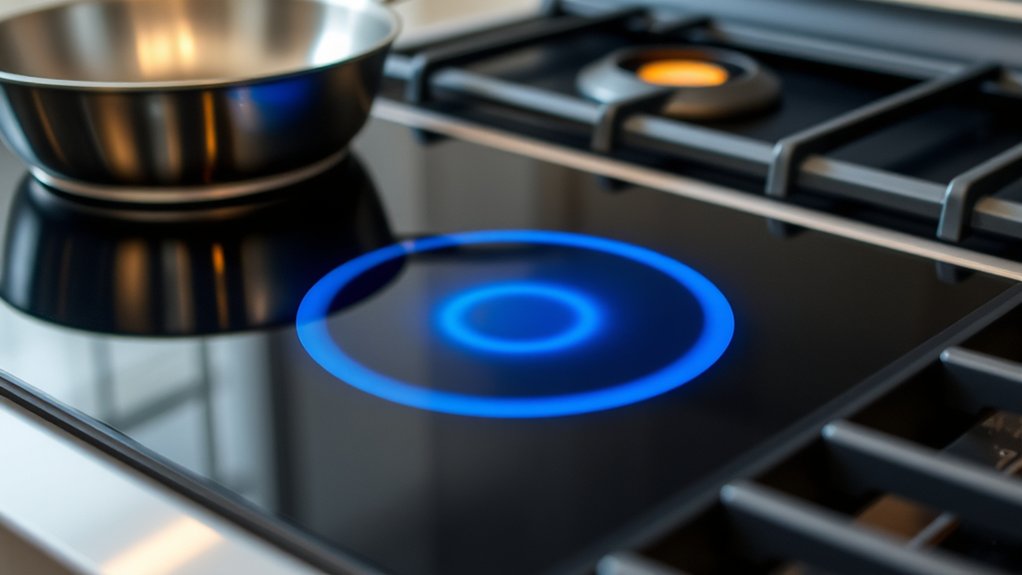
While both induction cooktops and electric stoves use electricity to generate heat, they do so in fundamentally different ways. An electric stove heats through resistive heating elements that directly transfer heat to your cookware. When you turn it on, electricity flows through these coils, causing them to heat up and warm your pots and pans.
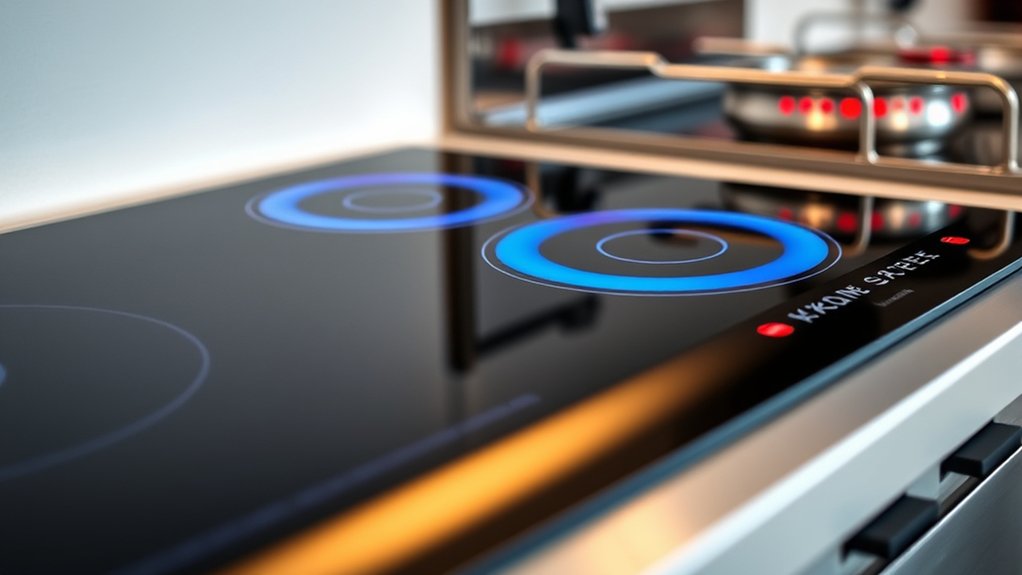
In contrast, induction cooktops use electromagnetic fields to heat cookware directly. When you place ferromagnetic pots or pans on the surface, an electric current generates a magnetic field, which induces heat in the cookware itself. This process makes induction cooking faster and more efficient since heat is created directly within the cookware, not the cooktop.
The result is precise control and quicker responses compared to traditional electric stoves.
Which Is Faster: Induction or Electric Cooking?
You’ll notice that induction cooking heats up faster than electric stoves because it transfers energy directly to the cookware.
This means induction has a higher efficiency, converting more energy into actual heat.
As a result, your food cooks quicker with induction, saving you time and energy.
Heating Speed Differences
Induction cooktops heat up faster than traditional electric stoves because they generate heat directly within the cookware itself. This means less energy is wasted, and you can start cooking almost immediately after turning on the burner.
Electric stoves rely on heating elements that take time to warm up and transfer heat to your cookware. Because of this, induction offers a big speed advantage.
You’ll notice that boiling water or frying food happens more quickly with induction. The fast and precise heating also lets you adjust temperatures instantly, giving you better control over your cooking.
Energy Transfer Efficiency
When comparing energy transfer efficiency, induction cooktops beat electric stoves because they heat cookware directly through electromagnetic fields. This process transfers energy more effectively, reducing heat loss.
Electric stoves use heating elements that transfer heat to cookware via conduction, which wastes more energy. Induction systems turn electricity directly into magnetic energy, creating quick, focused heat that heats your cookware instantly.
As a result, more of the energy you use goes directly into cooking. Induction is highly efficient—around 85-90%. In contrast, electric stoves usually have efficiencies of about 70%.
If you want to maximize energy use and cut down on waste, induction clearly leads. It offers faster, more precise heating while saving electricity.
How Do Energy Efficiency and Cost Compare?
Are induction cooktops more energy-efficient and cost-effective than traditional electric stoves? Generally, yes. Induction cooktops transfer energy directly to the cookware, which reduces wasted heat and improves efficiency. This means you use less energy to cook your meals, helping lower your utility bills over time.
Although induction models tend to have higher upfront costs, their faster heating and better energy use can save you money in the long run. Electric stoves, on the other hand, are less efficient because of heat loss around the burners and slower heating times.
What Are the Cleaning and Maintenance Differences?
Cleaning an induction cooktop usually takes less effort because its smooth surface doesn’t trap food easily. This makes spills and debris easier to wipe up quickly.
Compared to electric stoves with grates or coils, induction cooktops need less frequent maintenance to keep them looking good and working well.
Electric stoves, on the other hand, often require more regular cleaning and care to keep burners and elements in good shape.
Surface Cleaning Requirements
Induction cooktops usually have smooth, glass surfaces that are easy to keep spotless, but they still need regular attention to prevent smudges and spills from building up. A soft cloth and gentle cleaner are usually enough to wipe away fingerprints and stains without scratching the surface.
Electric cooktops often have coil or coil-like elements, which means cleaning can be a bit more involved. You’ll need to wipe around the coils and clean the drip pans regularly to prevent buildup.
Glass electric surfaces are similar to induction, but spills can harden and become harder to remove if you neglect them. Overall, induction surfaces are easier to clean daily, while electric cooktops may need a little more effort to stay looking good and safe to use.
Maintenance Frequency Differences
While both induction and electric cooktops need regular maintenance, induction surfaces generally require less frequent attention because of their smooth, non-porous glass design. Cleaning spills and crumbs on an induction cooktop is quicker since the flat surface doesn’t trap debris.
In terms of overall upkeep, induction units tend to be more durable with fewer parts to service or replace, which saves you time. Electric cooktops with coil or coil-like elements might need more frequent inspections for loose connections or wear and tear.
The glass surface of an induction cooktop also resists scratches and stains better over time, so you won’t need to maintain it as often. Overall, induction cooktops usually demand less frequent maintenance, saving you time and effort.
Spill and Debris Management
Because induction cooktops have a smooth, flat glass surface, managing spills and debris is easy. You can quickly wipe away splatters or crumbs with a damp cloth, preventing buildup.
Unlike traditional electric stoves with coils or burners, there are no grates or hard-to-reach areas where debris can hide. This makes cleaning faster and simpler.
For stubborn stains, a gentle scraper or a specialized cleaner works well without scratching the surface. Electric cooktops with coil burners might require more effort, as spills can drip into crevices or around burners.
Cleanup is more involved on those models, making induction cooktops a convenient choice. Overall, they make spill management straightforward, helping you keep your cooking surface clean with minimal effort.
How Precise Is Temperature Control on Induction vs. Electric Stoves?
Are you curious about how accurately these cooktops can control temperature? Induction stoves excel in precision because they heat cookware directly through electromagnetic fields. You can make quick adjustments, and the temperature responds instantly, giving you tight control over heat levels.
Electric stoves rely on heating elements that take time to warm up or cool down, making temperature control less exact. You might notice fluctuations or lag when trying to maintain a specific temperature.
For delicate tasks like simmering or melting, induction offers more stability. Electric stoves are more prone to uneven heating and slower adjustments. Overall, induction stoves provide a higher degree of precision, giving you better control over your cooking process.
Are Induction or Electric Cooktops Safer to Use?
Have you ever wondered which type of cooktop is safer to use—induction or electric? Both have safety features, but they differ in some key ways.
Induction cooktops are generally safer because the surface stays relatively cool, reducing burn risks. They only heat when a compatible pot is on the surface, so accidental contact is less dangerous.
Electric cooktops, on the other hand, can remain hot for a while after use, increasing the risk of burns.
Induction surfaces cool quickly, minimizing burn hazards.
Electric burners stay hot longer, posing a burn risk.
Induction cooktops also have automatic shutoff and safety sensors for added safety.
What Are the Costs and Long-Term Value of Each Option?
While safety features are important, considering the costs and long-term value of induction versus electric cooktops can help you make a more informed decision.
Induction cooktops often have higher upfront costs but save you money over time through greater energy efficiency. They heat faster and use less power, which can lower your utility bills.
Induction cooktops cost more initially but save money long-term with faster heating and lower energy consumption.
Electric cooktops tend to be less expensive initially, but their slower heating and higher energy consumption may add up over the years.
Furthermore, induction cooktops typically have longer-lasting components and require less maintenance, boosting their long-term value.
If you plan to keep your cooktop for years, investing in induction might be more cost-effective.
However, your budget and energy priorities should guide your choice based on these long-term benefits.
Which Cooktop Fits Your Cooking Style and Lifestyle?
Determining which cooktop suits your cooking style and lifestyle depends on how you use your kitchen and your specific needs. Think about your cooking habits, available space, and whether speed or energy efficiency is more important to you.
An induction cooktop offers quick heating and precise control, making it great if you enjoy fast-paced cooking or need accuracy in temperature. Electric cooktops give a more traditional feel and might be better for slower, simmered dishes.
Consider your daily routines and kitchen setup before making a choice. Do you prefer rapid heating and precise temperature control? Is safety a top concern, especially in a busy household? Do you need a cooktop that fits a compact or flexible kitchen space?
Frequently Asked Questions
Can Induction Cooktops Work With All Types of Cookware?
Induction cooktops only work with ferromagnetic cookware, meaning pots and pans made of magnetic materials like cast iron or stainless steel.
If your cookware has a magnetic base, it’ll work fine. To check, see if a magnet sticks to the bottom.
Non-magnetic cookware, such as aluminum or glass, won’t work on induction cooktops unless you use a compatible ferromagnetic base or a special induction-compatible plate.
Do Induction Cooktops Emit Any Electromagnetic Radiation?
Yes, induction cooktops emit a small amount of electromagnetic radiation, but it’s generally safe. They generate electromagnetic fields to heat cookware directly, which can produce non-ionizing radiation.
However, these fields are usually confined to the cooking zone and fade quickly with distance. If you have electronic medical devices like pacemakers, it’s a good idea to check with your doctor.
For most people, the radiation levels are well within safety limits. So, while they do produce some electromagnetic fields, they’re considered safe for everyday use.
Are Electric Cooktops More Prone to Accidental Activation?
Yes, electric cooktops are more prone to accidental activation because their controls are often easy to access and may not have safety locks. You might accidentally turn them on while cleaning or reaching for something nearby.
Unlike induction cooktops, which usually have touch controls with safety features, electric models can be turned on unintentionally by bumping or pressing buttons.
What Are the Power Outlet Requirements for Each Type?
For electric cooktops, you’ll usually need a standard 240-volt outlet with a dedicated circuit. This often involves a 40-50 amp breaker, but check your specific model’s power needs.
Induction cooktops also require a 240-volt outlet, though some models might work with slightly lower amperage. Always look at the manufacturer’s specs to make sure your outlet matches the needed voltage and amperage.
It’s a good idea to consider professional installation for safety and to ensure everything’s up to code.
How Do They Perform During Power Outages?
During power outages, neither induction nor electric cooktops work because they rely on electricity. You won’t be able to cook with either unless you have a backup power source like a generator or a battery system.
Induction cooktops might seem more energy-efficient, but both require a stable power supply. To keep cooking during outages, consider gas stoves or portable options that don’t depend on electricity.
Conclusion
Think of choosing between induction and electric cooktops as picking a vehicle for your culinary adventure. If you want speed and precision, induction is like a sleek sports car, zooming through tasks with ease.
For a more relaxed experience, electric offers comfort and familiarity. Whichever you choose, your kitchen’s new induction cooktop or electric stove will turn everyday cooking into a smooth, enjoyable journey—so enjoy the ride!