Induction Vs Electric Range: 8 Key Differences
Are you overwhelmed by the many options when choosing a new cooktop? You’re not alone—many people struggle to decide between induction vs electric range, unsure which will suit their cooking style best.
Induction ranges heat cookware directly with electromagnetic fields, making them faster, more energy-efficient, and safer with cool surfaces and auto shut-off features.
Electric ranges rely on resistance heating, which is slower, less efficient, and leaves residual heat.
Induction offers precise control, while electric options are better for baking and roasting.
Considering your cooking style and budget, you’ll find the right choice. Keep exploring to identify which suits your needs best.
Key Takeaways
- Induction cooktops heat up faster and give you more precise temperature control. Electric ranges tend to heat more slowly and gradually, which can be less convenient when you’re in a hurry.
- They’re also more energy-efficient, transferring about 80-90% of the energy directly to your cookware. Electric ranges waste more heat, making them less efficient overall.
- Induction surfaces stay cool to the touch and will automatically shut off if no cookware is detected. This makes them safer to use, especially in busy kitchens or homes with kids.
- When it comes to baking and roasting, electric ranges are still the better choice. They offer traditional oven functionalities that induction stovetops simply can’t match.
- While induction cooktops cost more upfront, you might save money in the long run. They’re more energy-efficient and tend to have lower maintenance expenses over time.
Induction Vs. Electric Ranges: What Are the Key Differences?

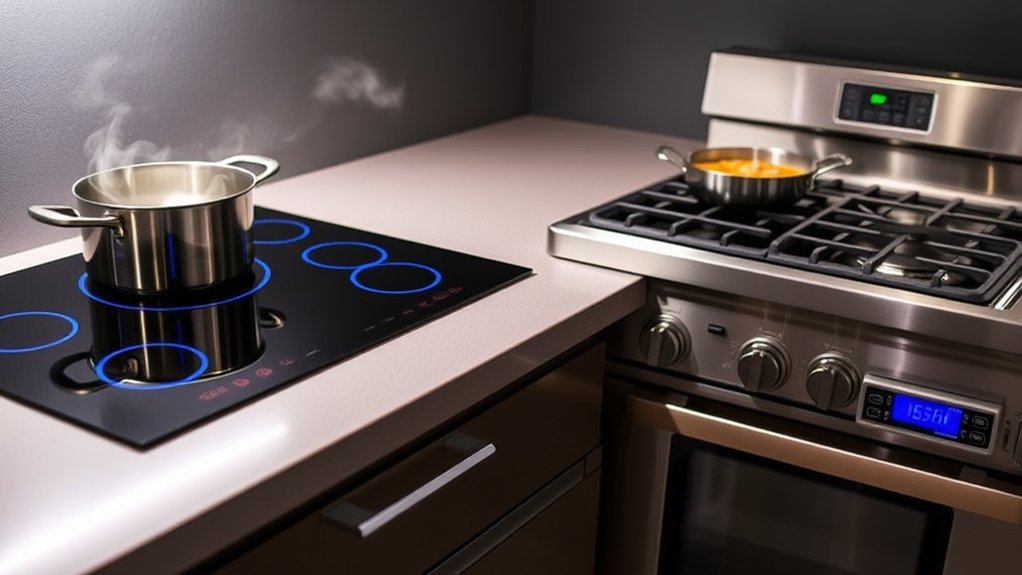
Wondering how induction and electric ranges differ? The main difference is in how they generate heat. With electric ranges, you have coil burners or smooth tops that heat up through resistance. The heat then transfers to your cookware.
Induction ranges, on the other hand, use electromagnetic fields to directly heat compatible pots and pans. This means induction cooktops heat up faster and respond more quickly to temperature adjustments.
Electric ranges often stay warm after cooking, while induction surfaces stay cool unless in contact with ferromagnetic cookware. Plus, induction cooktops tend to be more energy-efficient because they transfer heat directly to the cookware.
How Do Cooking Performance and Speed Compare?
In terms of cooking performance and speed, induction ranges generally beat electric ones because they transfer heat directly. With induction, the heat responds instantly to your adjustments, boiling water faster and simmering more precisely.
Electric ranges heat more slowly, and their coils or glass tops take time to respond. To see the difference more clearly:
| Feature | Induction Range | Electric Range |
|---|---|---|
| Heating Speed | Very fast, almost instant | Slower, gradual heating |
| Temperature Control | Precise, quick adjustments | Less responsive, lags slightly |
| Heat Distribution | Even, localized heat | Less even, larger zones |
| Recovery Time | Rapid, keeps heat steady | Longer, fluctuations possible |
This comparison highlights how induction offers better speed, control, and consistency.
Energy Efficiency: Which Range Saves More Power?
When comparing energy efficiency, you’ll want to see how much power each range uses and how well it transfers that energy to your cookware.
Induction cooktops usually use less energy because they heat directly through electromagnetic fields. Electric ranges, on the other hand, rely on heating elements that can waste some energy as heat.
Knowing these differences can help you pick a range that saves power and lowers your energy bills.
Energy Consumption Rates
Electric ranges generally use more energy than induction cooktops because they convert more of their electrical power directly into heat at the cooking surface.
However, induction cooktops heat up faster, making them more efficient and reducing overall energy use during cooking. The table below compares their typical energy consumption rates:
| Range Type | Average Power Usage | Cooking Speed |
|---|---|---|
| Electric Range | 1.8–2.4 kW | Slower |
| Induction | 1.4–2.0 kW | Faster |
| Energy Use | Slightly Higher | Less energy wasted |
While electric ranges may consume slightly more power overall, induction cooktops often save energy by heating faster and reducing heat loss. Your choice depends on balancing consumption with cooking speed.
Power Transfer Efficiency
Although electric ranges and induction cooktops both turn electrical energy into heat, induction cooktops are usually more efficient because they transfer energy directly to cookware with minimal loss.
Induction technology uses electromagnetic fields to generate heat inside the pot or pan, which means nearly 80-90% transfer efficiency. Traditional electric ranges rely on heating elements that transfer heat indirectly, with efficiency around 65-70%.
This means induction cooktops waste less energy during use. You’ll notice faster heating and more precise control, which help reduce energy waste even more.
Safety Features of Induction Vs. Electric Cooktops
Safety features are an important factor when choosing between induction and electric cooktops. Induction cooktops automatically shut off if no cookware is detected, which helps reduce the risk of fires. They also stay cool to the touch because heat is generated directly in the cookware, minimizing burns.
Electric cooktops often have residual heat indicators that alert you when the surface is still hot, helping prevent accidental burns. Both types offer safety features, but induction cooktops generally provide more immediate and effective safety measures.
Your choice depends on your safety priorities and cooking habits.
Installation and Maintenance Tips for Your New Range
When installing your new range, be sure to follow the manufacturer’s instructions carefully to ensure safety and proper operation.
Regularly check and clean the cooktop and connectors to keep everything running smoothly.
Keeping up with these maintenance practices will help your appliance last longer and perform at its best.
Proper Installation Procedures
Proper installation is key to making sure your new range works safely and efficiently. Be sure to follow the manufacturer’s instructions closely to get everything set up correctly.
Check that the electrical connections and power supply match the specifications for your range. If you’re unsure about wiring or positioning, it’s best to call in a qualified professional.
Good venting and secure placement help prevent hazards and keep your range running at its best. Keep these points in mind:
- Make sure the electrical circuit matches the range’s voltage and amperage needs
- Verify that the range is properly grounded to avoid electrical shocks
- Place the range on a level surface to prevent uneven operation
- Ensure ventilation and clearance requirements are met for safety and efficiency
Following these steps will help you achieve a safe, durable installation.
Regular Maintenance Practices
Regular maintenance keeps your range working smoothly and helps it last longer. Make sure to clean the cooktop surface regularly to remove spills and debris, which can reduce heating efficiency.
For induction ranges, gently wipe the glass surface with a soft, damp cloth and avoid using abrasive cleaners. Electric ranges might need cleaning of burners or coil elements; always check that they are cool first before wiping.
Periodically check and tighten any loose knobs or connections to keep everything secure. Make sure the ventilation area stays clear to prevent overheating.
Inspect power cords for damage and replace them if needed. Following the manufacturer’s cleaning and maintenance instructions can help prevent problems and extend your range’s life.
Incorporate these simple practices into your routine to enjoy reliable performance and safety from your appliance.
Choosing the Right Range for Your Kitchen Size and Style
Choosing the right range for your kitchen depends on your space and style preferences. Consider the size of your cooking area to ensure a good fit, whether you have a small apartment or a large kitchen. Your aesthetic also matters—sleek induction ranges work well in modern designs, while vintage-inspired electric ranges match traditional decor.
Think about how many burners you need; larger families might want more cooking surfaces. Also, check your countertop and cabinet layout to avoid overcrowding or awkward placement. Matching the range’s finish to your overall kitchen decor will create a cohesive look.
Decide whether a built-in or freestanding model fits best based on your space. Pick a range with features that suit your cooking style, like a griddle or larger oven. Lastly, consider how easy it is to clean and maintain your choice to keep your kitchen looking great.
Cost and Long-Term Value: Is Induction Worth the Investment?
Is investing in an induction range a smart financial decision? While induction models often come with a higher upfront cost, they can save you money over time.
They are more energy-efficient than traditional electric ranges, which reduces your electricity bills. Plus, induction cooktops heat up faster and cook more precisely, helping you avoid wasted energy and food spoilage.
Maintenance costs tend to be lower because they have fewer moving parts and less wear and tear. If you cook frequently, these savings can really add up, making the initial investment worthwhile.
However, consider the cost of compatible cookware, which might be an extra expense. Overall, induction can deliver long-term value if you prioritize energy efficiency, faster cooking times, and lower maintenance costs.
Which Range Fits Your Cooking Style and Lifestyle?
How well does a range match your cooking habits and daily routine? Your choice depends on things like how often you cook, what kinds of dishes you make, and your schedule. Think about these points:
Choosing the right range depends on your cooking habits, dishes, and daily schedule for a perfect fit.
- Cooking speed and responsiveness: Induction heats up faster and reacts instantly, which is great if you like quick adjustments while cooking.
- Ease of cleaning: Electric ranges with smooth surfaces are easier to wipe down, saving you time after busy meals.
- Cooking versatility: Electric ranges often have more traditional oven features, perfect for baking and roasting.
- Energy efficiency: Induction gives you precise control and uses less energy, making it ideal if you’re eco-conscious or want to save on utility bills.
Matching your lifestyle with these features helps make sure your new range fits into your daily routine and makes cooking easier and more enjoyable.
Frequently Asked Questions
Are Induction Ranges Compatible With All Cookware Types?
No, induction ranges aren’t compatible with all cookware types. They need magnetic cookware, like cast iron or certain stainless steel, to work properly.
If your pots and pans aren’t magnetic, the induction cooktop won’t heat them. To check, see if a magnet sticks to the bottom of your cookware.
If it does, you’re good to go. If not, you might need to buy compatible pots or stick with traditional electric ranges.
What Are the Common Maintenance Issues for Electric Ranges?
You might notice common maintenance issues with your electric range like burners not heating properly, control panel glitches, or oven temperature inconsistencies.
Regularly clean the cooktop to prevent residue buildup, check for loose connections, and replace faulty parts promptly.
Avoid using abrasive cleaners, and make sure cooling vents are clear. These simple steps help keep your electric range working well and can extend its lifespan.
This can also reduce the need for costly repairs down the line.
How Does Heat Distribution Differ Between Induction and Electric Cooktops?
Think of heat distribution like sunlight shining through a window. With induction cooktops, heat is like a focused beam—directly transferring energy to your pot, so it heats quickly and evenly.
Electric cooktops, on the other hand, are more like sunlight spreading across a room. The heat disperses from the coil, which can create slight variations in temperature.
This means induction cooktops offer more precise control, while electric ranges might have hotspots that can affect how evenly your food cooks.
Can Electric Ranges Be Used During Power Outages?
No, electric ranges typically can’t be used during power outages unless you have a backup power source like a generator.
They rely on electricity to heat the coils or elements, so when the power’s out, they won’t work.
If you want to cook during outages, consider a gas stove or portable camping stove, which work without electricity.
Always follow safety precautions when using alternative cooking methods.
Are There Specific Safety Concerns for Ceramic Electric Cooktops?
In the past, safety concerns for ceramic electric cooktops were minimal if you followed proper precautions.
Just be careful about the hot surface, as it stays hot even after you finish cooking. This can cause burns if you’re not cautious.
Avoid placing metallic objects on the surface to prevent sparks or damage. Make sure the cooktop’s controls are working properly to avoid accidental activation.
Regular cleaning and maintenance are key to keeping it safe and working efficiently.
Conclusion
Choosing between induction and electric ranges is like picking a superhero for your kitchen. Will you harness the lightning-fast power of induction or rely on the steady warmth of electric?
Whichever you choose, it’s an upgrade that can transform your cooking from ordinary to legendary. Imagine your meals cooking in the blink of an eye, thanks to rapid heating technology.
Safety features are also a big plus, shielding you like a fortress and reducing the risk of burns or fires.
Plus, energy savings can be impressive, with induction ranges often using less power than traditional electric ones.
So, whether you want speed, safety, or efficiency, understanding the main differences between induction and electric ranges can help you make the best choice for your kitchen.