8 Key Differences Between Kosher Salt and Canning Salt
Many home cooks and food enthusiasts find themselves confused about which salt to use for different recipes. You’re not alone—navigating the world of salts can be tricky, especially when labels and packaging seem similar.
Kosher salt and canning salt differ in several key ways.
Kosher salt is coarse, flaky, and mainly used for seasoning and koshering meat, while canning salt is fine and designed for preservation.
Canning salt is usually 100% pure, whereas kosher salt may contain anti-caking agents.
The flavor of kosher salt is milder, and it’s less salty by volume.
If you keep these differences in mind, you’ll use each salt more effectively—and there’s more to uncover about their best uses.
Key Takeaways
- Kosher salt has coarse, flaky grains that are great for seasoning, while canning salt has fine, uniform granules that are perfect for preservation.
- Canning salt is usually 100% pure sodium chloride, but kosher salt may contain anti-caking agents. These additives can affect how the salt behaves in recipes.
- Kosher salt offers a mild flavor and is less salty by volume compared to the briny taste of canning salt. So, they don’t always measure the same.
- Canning salt dissolves quickly and evenly in brines, making it ideal for pickling and preserving.
- When substituting one for the other, you need to adjust measurements because of differences in density and grain size.
What Are the Main Uses of Kosher Salt and Canning Salt?
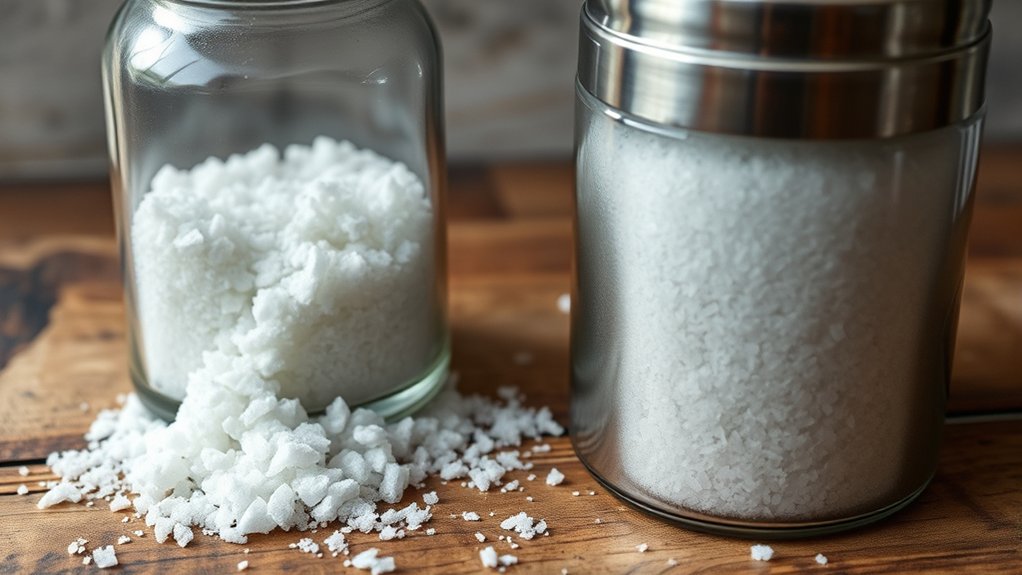
Have you ever wondered why kosher salt and canning salt are used for such different purposes?
Kosher salt is mainly used for seasoning meat and vegetables because it’s easy to sprinkle and distribute evenly. Its large, flaky grains make it perfect for rubbing onto meats or sprinkling over dishes during cooking.
Kosher salt’s large, flaky grains make it ideal for seasoning and even distribution on meats and vegetables.
You’ll also find it in koshering processes, where its coarse texture helps draw out blood from meat. On the other hand, canning salt is designed for preserving food.
Its fine grains dissolve quickly, ensuring an even brine that prevents spoilage. It’s often used in pickling, canning vegetables, and preserving fruits.
Both salts serve specific culinary purposes, but their unique textures and properties make them suited for these distinct tasks.
How Do Their Textures and Grain Sizes Differ?
The main difference between kosher salt and canning salt is in their textures and grain sizes, which really affects how you use them in cooking.
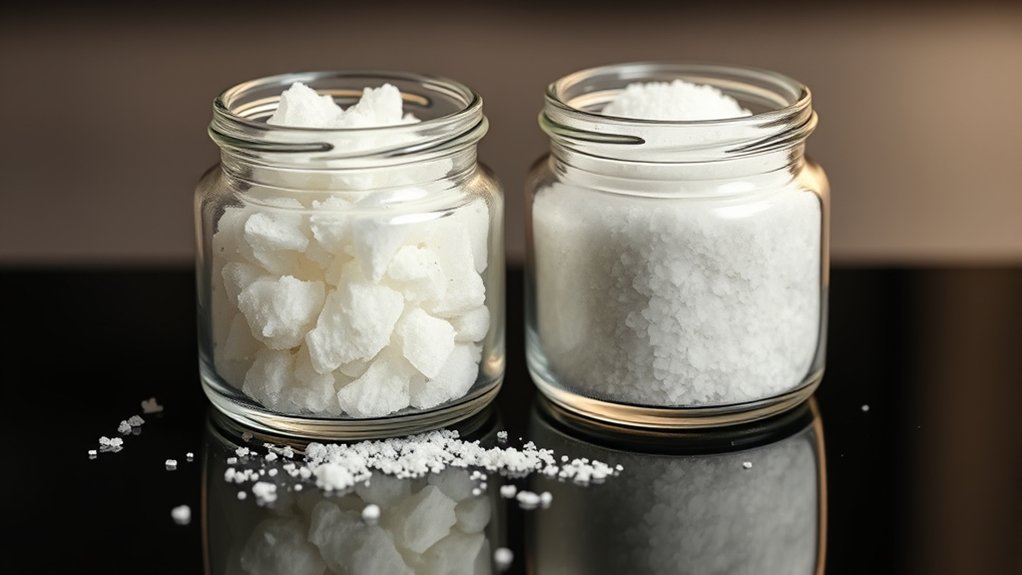
Kosher salt has big, flaky grains that are easy to pinch and sprinkle. It feels light and airy when you handle it.
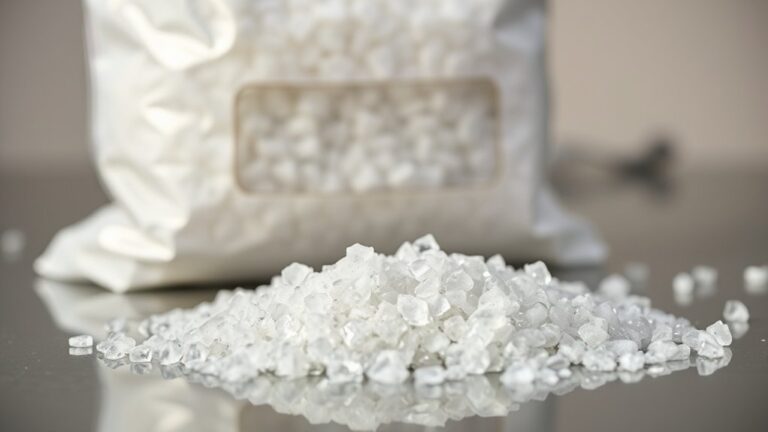
Canning salt, however, has very fine, uniform granules that dissolve quickly and evenly in recipes.
This difference matters when measuring and adding salt to your dishes or preserving foods.
| Salt Type | Grain Size | Texture |
|---|---|---|
| Kosher Salt | Coarse, flaky | Light, airy |
| Canning Salt | Fine, uniform | Dense, powdery |
Knowing these differences helps you pick the right salt for cooking or preserving.
What Are the Differences in Salt Purity and Additives?
While both kosher salt and canning salt are mainly sodium chloride, they differ quite a bit in purity levels and additives.
Canning salt is usually 100% pure sodium chloride with no additives, making it perfect for preserving and canning.
Kosher salt may contain anti-caking agents to help it flow better. Some brands also add iodine, which can change the flavor and appearance.
In general, additives in kosher salt are minimal but can vary depending on the brand. These differences affect how pure each salt is and how they behave in recipes.
How Do Their Flavors and Saltiness Levels Vary?
You’ll notice that kosher salt has a clean, mild flavor that enhances dishes without overpowering them. In contrast, canning salt’s briny taste can be more noticeable.
The saltiness levels also differ. Kosher salt is generally less salty by volume compared to canning salt.
Knowing these differences helps you pick the right type for your recipe’s flavor and seasoning needs.
Flavor Profiles Comparison
Kosher salt and canning salt differ noticeably in their flavor profiles, mainly because of their mineral content and how they’re processed. You’ll find that kosher salt has a clean, mild flavor with a subtle mineral note, making it great for seasoning.
Canning salt, however, tends to have a slightly more bitter or metallic taste because of its additives and processing methods.
Here’s how their flavors compare:
- Kosher salt provides a pure, straightforward saltiness that’s perfect for seasoning.
- Canning salt might introduce a mild bitterness or metallic undertone.
- The mineral content in kosher salt is minimal, giving it a neutral flavor.
- Additives in canning salt can influence its overall taste and slightly change the flavor experience.
Saltiness Intensity Differences
The saltiness levels of kosher salt and canning salt differ noticeably because of their grain size and processing methods. Canning salt is highly refined with fine grains that dissolve quickly, making it more concentrated per teaspoon.
In contrast, kosher salt has larger, flaky grains that dissolve more slowly, so it tastes milder. When you use it in recipes, canning salt provides a punch of saltiness with less volume, so you need to be precise.
Kosher salt’s bigger crystals make it less salty by volume but easier to control when seasoning. This difference affects flavor intensity, so adjusting amounts ensures your dish isn’t too salty or bland.
Understanding these differences helps you achieve the right flavor balance in your cooking.
Which Salt Works Best for Curing and Food Preservation?
In relation to curing and food preservation, choosing the right salt makes all the difference in ensuring safety and flavor.
For curing, you want a salt that dissolves evenly and controls moisture without overpowering the meat or produce. Canning salt is often best because it’s pure sodium chloride without additives, making it reliable for preserving food.
Kosher salt can work but may introduce trace minerals that could affect flavor. Here’s what to evaluate:
- Purity: Canning salt is more refined and free of anti-caking agents.
- Granule Size: Coarser grains in kosher salt can slow dissolving but are easier to control.
- Additives: Avoid salts with iodine or anti-caking agents for curing.
- Consistency: Canning salt offers uniformity, ensuring predictable results.
How Do Pricing and Availability Compare?
Have you noticed that prices for salt can vary widely depending on the type and brand? Kosher salt is generally more affordable and widely available in grocery stores, making it easy to find without breaking the bank.
Canning salt, on the other hand, tends to be slightly more expensive because it’s specialized for preserving. Some brands may also charge a premium for it.
Availability also differs: kosher salt is commonly found in most supermarkets and bulk stores, while canning salt might be limited to stores that cater to gardeners or home canners.
If you’re shopping on a budget or need it quickly, kosher salt is usually your best bet. Canning salt might require a special trip or online order, which could affect how easily you can get it.
Can You Substitute Kosher Salt and Canning Salt?
Can you substitute kosher salt and canning salt in recipes? It depends. These salts have different textures, densities, and flavors, which can affect your dish. To help you decide, consider these points:
- Texture: Kosher salt has larger crystals, so it’s less dense than fine canning salt.
- Measurements: You can’t substitute one-for-one; you’ll need to adjust quantities.
- Flavor: Canning salt is usually pure sodium chloride, often with additives, which can impact taste.
- Application: Use less canning salt when substituting for kosher salt, especially in dry rubs or seasoning, due to its finer texture and higher density.
In most cases, substitutions are possible but require careful measurement adjustments.
Common Mistakes to Avoid When Using These Salt Types
Using kosher salt and canning salt correctly requires attention because common mistakes can easily change your recipe’s outcome. One mistake is using the same amount without adjusting for their different textures and densities.
Kosher salt’s larger grains mean it’s less dense, so using it as a direct substitute for fine canning salt can lead to over-salting. Always measure by weight or adjust volume accordingly.
Another mistake is adding salt too early or too late in cooking, which can impact flavor and texture. Don’t rely on taste alone; measure carefully to keep things consistent.
Finally, avoid storing these salts improperly, as moisture can cause clumping, especially with canning salt. Proper storage and precise measurement help you avoid these common pitfalls.
Frequently Asked Questions
Are Kosher Salt and Canning Salt Interchangeable in Recipes?
You can usually swap kosher salt for canning salt in recipes, but just be careful with the amounts. Kosher salt has larger crystals and less sodium, so you might need to use more to get the same level of saltiness.
How Does the Mineral Content Differ Between Kosher and Canning Salt?
You might think all salts are the same, but nope—minerals tell a different story.
Kosher salt usually has fewer impurities and trace minerals, making it purer and more refined.
Canning salt, on the other hand, often contains anti-caking agents and may have more mineral content, which can impact flavor and texture.
Can Canning Salt Be Used for Baking Purposes?
Canning salt can be used for baking, but it’s not the best choice. It’s usually finer and has anti-caking agents, which might change the texture or flavor of your baked goods.
If you decide to use it, just be aware of these differences and measure carefully. For the best results, go with regular table salt or salt made specifically for baking to get the right texture and taste.
What Are the Health Implications of Choosing One Salt Over the Other?
Imagine your health as a delicate garden; choosing the right salt acts like nourishing sunlight. Kosher salt, with fewer additives and minimal processing, offers cleaner mineral content, making it a healthier choice.
Canning salt often contains anti-caking agents that might impact your well-being over time. Opt for the purer, natural flavor of kosher salt to keep your garden of health thriving, reducing unnecessary chemical intake.
How Long Does Each Type of Salt Typically Last Before Losing Quality?
Both kosher salt and canning salt last indefinitely if stored properly in a cool, dry place. You don’t need to worry about expiration dates because they won’t spoil or lose quality over time.
However, moisture or humidity can cause clumping or caking, so be sure to keep your salt sealed tightly. Regularly check for any signs of moisture or contamination.
Also, make sure your storage container stays clean and dry to maintain the salt’s quality.
Conclusion
Choosing between kosher salt and canning salt is like picking the right brush for a painting—you need the perfect tool for your task. Understanding their differences helps you avoid mistakes and get the best results in your cooking and preservation projects.
Whether you’re seasoning, curing, or preserving, knowing which salt suits your needs guarantees your dishes turn out just right. So, pick wisely and enjoy your culinary journey with confidence, especially when it comes to using kosher salt or canning salt.