Can You Put a Ceramic Pan in the Oven?
Many home cooks find themselves wondering about the best way to use their ceramic pans. You’re not alone—navigating cookware safety can be confusing, especially when it comes to oven use.
If you’re curious about whether your ceramic pan can handle oven temperatures, you’re in the right place.
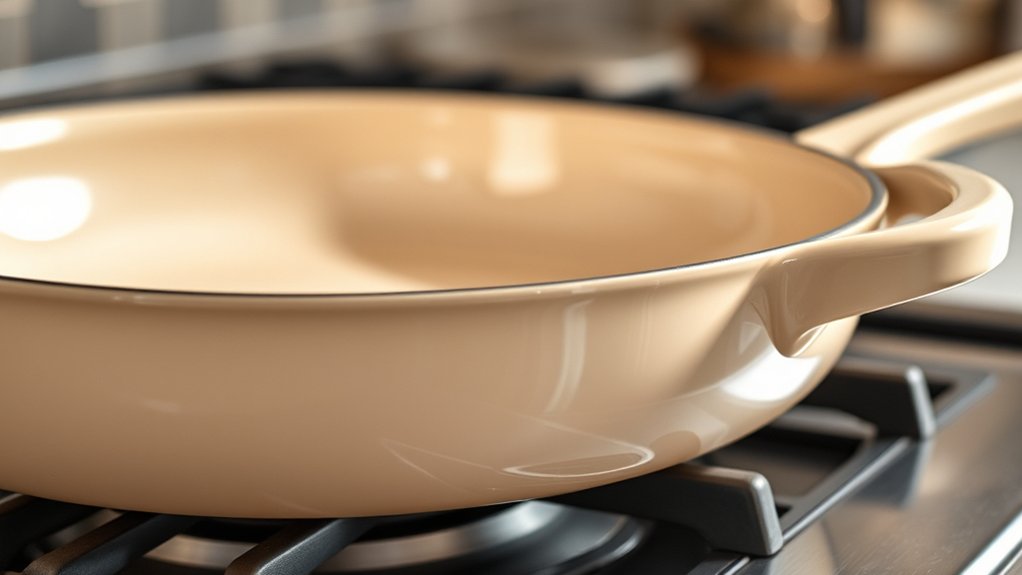
Yes, you can put a ceramic pan in the oven if it’s labeled oven-safe and you follow the manufacturer’s guidelines. Most ceramic pans handle temperatures between 350°F to 500°F, but exceeding the recommended limit can cause cracks or damage.
Always check for oven safety labels, inspect for damage, and avoid preheating an empty pan at high heat.
To learn about safe temperatures and precautions, keep exploring the essential tips for using your ceramic cookware properly.
Key Takeaways
- Check the manufacturer’s instructions or labels for oven safety and maximum temperature limits.
- Most ceramic pans are oven-safe between 350°F and 500°F, but it’s a good idea to verify the specific brand guidelines.
- Avoid preheating an empty ceramic pan at high heat to prevent cracking. It’s best to start with low to medium heat.
- When heating in the oven, try to prevent sudden temperature changes, which can cause damage.
- Always inspect your ceramic pan for any cracks or chips before putting it in the oven. If it’s damaged, it’s safer to replace it.
Is Your Ceramic Pan Oven-Safe? How to Check the Material and Manufacturer Guidelines
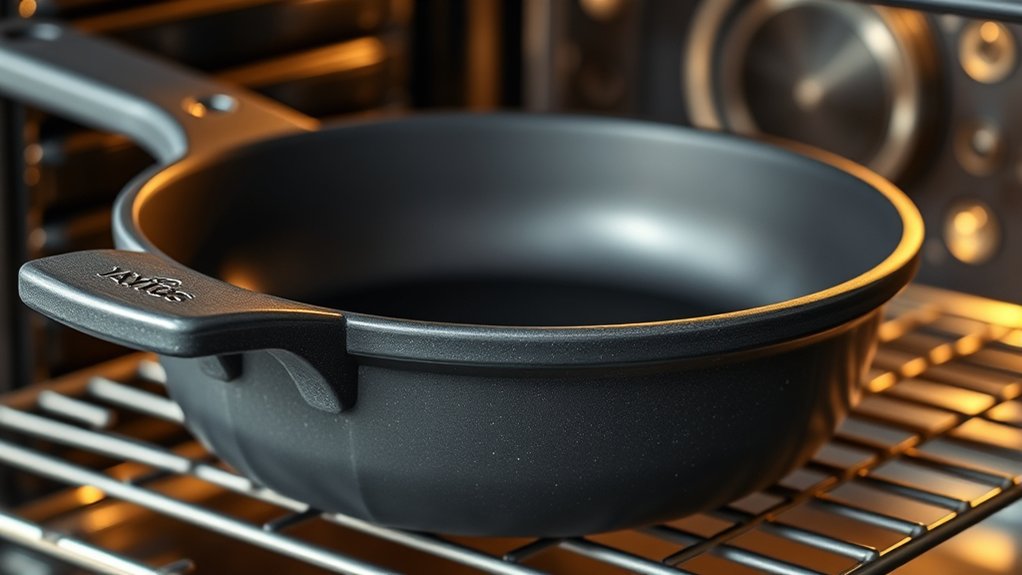
Wondering if your ceramic pan can handle the oven? The first step is to check the material and manufacturer guidelines.
Look at the bottom or handle of your pan for labels or symbols indicating oven safety. Many ceramic pans are marked with “oven safe” or a temperature limit.
Check the bottom or handle for oven safety labels or temperature limits on your ceramic pan.
If you have the packaging or instruction manual, review those details carefully. If you’re unsure, visit the manufacturer’s website or contact customer service for confirmation.
Some ceramic coatings can withstand high heat, but others might crack or degrade. Remember, even if your pan is oven safe, knowing the maximum temperature it can handle is essential.
Always follow the manufacturer’s instructions to prevent damage or accidents.
What Oven Temperatures Are Safe for Ceramic Pans?
Have you ever worried about damaging your ceramic pan by exposing it to too much heat? Most ceramic pans are designed to handle oven temperatures up to 350°F to 500°F (175°C to 260°C).
However, this range varies depending on the brand and specific model. Always check your manufacturer’s guidelines, as exceeding the recommended temperature can cause the ceramic coating to crack or peel.
Generally, it’s safest to stay below 450°F (232°C) to prevent damage. For longer cooking times or high-heat roasting, confirm your pan’s maximum temperature limit.
Never preheat an empty ceramic pan at high heat, as this can also harm the coating. When in doubt, err on the side of caution and stick to moderate oven temperatures.
How Hot Can Your Ceramic Pan Get in the Oven?
Your ceramic pan can usually handle oven temperatures up to 450°F, but it’s always best to check your manufacturer’s guidelines for the exact limit.
Exposing it to higher heat might cause damage or warping, which can shorten its lifespan.
Knowing these temperature boundaries helps you cook safely without risking your pan’s integrity.
Temperature Limits for Ceramic
Ceramic pans are generally designed to withstand oven temperatures, but their maximum heat tolerance varies depending on the manufacturer and specific materials used. Most ceramic pans can handle temperatures between 350°F and 500°F, making them suitable for baking and roasting.
However, some cheaper or lower-quality ceramic pans might have lower temperature limits, so always check the manufacturer’s guidelines. High-quality ceramic cookware often features a glaze or coating that resists cracking or warping at high heat.
Remember, exceeding the recommended temperature can cause damage, such as cracking, delamination, or deterioration of the non-stick surface. To avoid issues, stick to the suggested temperature range and follow the care instructions provided with your ceramic pan.
This guarantees safety and extends the lifespan of your cookware.
Impact of High Heat
While ceramic pans are generally built to withstand high oven temperatures, their ability to handle extreme heat depends on the specific product and manufacturing quality. To avoid damage, you should know their temperature limits.
Typically, good-quality ceramic pans can handle up to 450°F (232°C) without issue. Some high-end models can reach 500°F (260°C) or more. Always check the manufacturer’s guidelines for exact limits.
Exceeding these temperatures can cause the ceramic coating to crack or degrade over time. High heat can also warp the pan or weaken the bonding between ceramic and metal. To keep your pan in top shape, stay within the recommended temperature range and avoid sudden temperature changes.
How to Prepare Your Ceramic Pan for Oven Use Safely
Before placing a ceramic pan in the oven, it’s important to make sure it’s ready to handle the heat. First, check the manufacturer’s instructions to see if it’s oven-safe.
Next, give the pan a thorough clean, using gentle soap and water. Avoid abrasive cleaners that could damage the ceramic surface. If your pan has a non-metal handle, double-check that it’s oven-safe.
To prevent thermal shock, avoid sudden temperature changes when heating or removing the pan from the oven. Always inspect your pan for cracks or chips before use.
Ensure the handles are oven-safe by reviewing the manufacturer’s guidelines. Proper preparation helps keep your ceramic pan safe and in good condition for years to come.
Can You Use a Ceramic Pan for Broiling or High-Heat Cooking?
Knowing how to prepare your ceramic pan for oven use is just the first step. Understanding its limits for high-heat cooking is just as important. Ceramic pans can handle some high temperatures, but not all are suitable for broiling or intense heat.
To avoid damage, keep these points in mind. First, check the manufacturer’s guidelines to see if your pan is rated for broiling or high-heat use. This will give you a clear idea of its capabilities.
Avoid sudden temperature changes, like moving the pan from cold to hot, as this can cause cracking. It’s best to let the pan come to room temperature before heating.
Use low to medium-high heat settings when cooking, and don’t go beyond the recommended temperature. This will help keep your ceramic pan in good shape and prevent damage.
How to Protect Your Ceramic Non-Stick Coating in the Oven
Protecting your ceramic non-stick coating in the oven starts with mindful handling and proper preparation. Always use gentle tools like silicone or wooden utensils to prevent scratches. Avoid sudden temperature changes, such as placing a hot pan into cold water, which can cause coating damage.
Preheat the oven gradually and don’t exceed recommended temperatures. To reinforce protection, consider the table below for key practices:
| Practice | Purpose |
|---|---|
| Use silicone or wooden utensils | Prevent scratches and coating wear |
| Avoid high temperatures | Reduce coating deterioration |
| Preheat gradually | Minimize thermal shock |
Following these tips helps extend your ceramic pan’s lifespan and keeps it performing at its best.
How to Tell if Your Ceramic Pan Is Suitable for Oven Cooking
Wondering if your ceramic pan can handle oven cooking? Check these key indicators to be sure:
- Look for labels or markings: Many ceramic pans have symbols or text showing they’re oven-safe. If it says “oven-safe” or has a temperature limit, follow that guidance.
- Examine the handles: Metal or heat-resistant silicone handles usually mean the pan can go in the oven. Plastic or wooden handles typically aren’t oven-friendly.
- Review the manufacturer’s instructions: The best way to be sure is by checking the packaging or the manufacturer’s website. If you’re unsure, contact the maker for specific oven safety details.
Knowing these signs helps you cook confidently without damaging your pan or risking safety.
Cleaning and Maintaining Your Ceramic Pan After Oven Use
After using your ceramic pan in the oven, let it cool slightly before cleaning. Rinse it with warm water and use a soft sponge or cloth with gentle dish soap to remove any residue.
For stubborn stains, soak the pan in warm, soapy water for a few minutes before cleaning. Avoid abrasive scrubbers that can scratch the surface and damage the non-stick coating.
When you’re done, store the pan in a dry, safe place to prevent damage. Proper maintenance helps keep your pan non-stick and ensures it lasts a long time.
What to Do If Your Ceramic Pan Isn’t Oven-Safe
If your ceramic pan isn’t designed to withstand oven temperatures, putting it in the oven can cause warping, cracking, or other damage. Don’t panic. Here’s what you can do:
- Stop using it in the oven immediately to prevent further damage.
- Use it on the stovetop or for serving instead of baking.
- Replace it with an oven-safe ceramic or alternative cookware to avoid future issues.
If you still want to use the pan for baking, check the manufacturer’s guidelines for oven safety. If you’re unsure, go for cookware that’s labeled oven-safe. Taking these steps helps protect your investment and keeps your cooking safe.
Frequently Asked Questions
Can Ceramic Pans Go From Oven to Stovetop Safely?
Yes, you can usually move a ceramic pan from the oven to the stovetop safely, but it depends on the specific pan. Check the manufacturer’s instructions first, as some ceramic pans are designed for oven use only.
If the pan is stovetop-safe, make sure it’s not cracked or damaged before transferring it. Always use oven mitts to handle hot pans, and avoid sudden temperature changes to prevent cracking or breaking.
Are Ceramic Pans Safe for Use Under a Broiler?
Ceramic pans are generally safe under a broiler if they’re labeled as broiler-safe. Imagine you’re preparing a dish and want a crispy topping; using a ceramic pan designed for high heat lets you broil without worry.
However, if your pan isn’t specifically rated for broiler use, it could crack or warp. Always check the manufacturer’s instructions to verify your ceramic pan can handle the intense heat of a broiler safely.
Will Ceramic Coating Peel or Damage in the Oven?
Your ceramic coating can peel or get damaged in the oven if it’s exposed to high heat beyond the manufacturer’s recommended temperature. Sharp temperature fluctuations or using metal utensils can also cause damage.
To prevent this, always follow the care instructions, avoid sudden temperature changes, and use silicone or wooden utensils. With proper care, your ceramic pan stays durable and non-stick for a long time.
How Long Can I Leave a Ceramic Pan in the Oven?
You can usually leave a ceramic pan in the oven for up to 350°F for about 30 minutes to an hour.
Always check the manufacturer’s guidelines to make sure it’s safe, since some ceramic coatings or handles might have specific temperature limits or time restrictions.
If you’re planning to bake something longer, it’s better to use oven-safe cookware that’s designed for extended oven use to avoid damage or safety issues.
Are There Specific Brands Known for Oven-Safe Ceramic Pans?
Yes, some brands are known for their oven-safe ceramic pans, making your cooking adventures more delightful. Brands like GreenPan, Cuisinart, and Blue Diamond are popular for their durability and oven compatibility.
When shopping, always check the manufacturer’s guidelines to verify if the pan is oven-safe, as many are designed to handle high temperatures.
With the right brand, you can confidently bake and roast, knowing your ceramic pan is up for the task.
Conclusion
In the end, it’s essential to know your ceramic pan’s limits before tossing it in the oven. Always check the manufacturer’s guidelines—don’t let your good intentions backfire.
If you’re unsure, it’s better to be safe than sorry and avoid risking a kitchen disaster. Remember, patience is a virtue. Taking the time to verify guarantees your cookware stays in top shape and your cooking stays safe.
Knowing whether your ceramic pan is oven-safe is key to avoid damage. Don’t bite off more than you can chew—know your tools!