How Many Calories Are in Beef Broth?
Many people trying to eat healthier often struggle with finding low-calorie options that still satisfy their cravings. If you’re looking to enjoy the rich flavor of beef broth without piling on calories, you’re not alone.
It can be tricky to balance taste and nutrition, especially when store-bought options sometimes contain additives or sugars.
Beef broth usually has around 10 to 15 calories per cup, making it a low-calorie option if you’re watching your intake. The exact calories depend on ingredients, fat, and how it’s prepared, especially if store-bought versions contain additives or sugars.
Homemade broths tend to be lower in fat and sodium. To learn more about how to choose or make low-calorie beef broth, keep exploring your options.
Key Takeaways
- Beef broth typically contains 10 to 15 calories per cup.
- The calorie content can vary depending on the fat, protein, and ingredients used.
- Store-bought versions might have added sugar or preservatives, which can increase the calories.
- If you’re looking to cut calories, low-calorie options are available, often under 10 calories per cup.
- Homemade broth gives you better control over calories and ingredients, so you can make it healthier according to your preferences.
How Many Calories Are in Beef Broth?
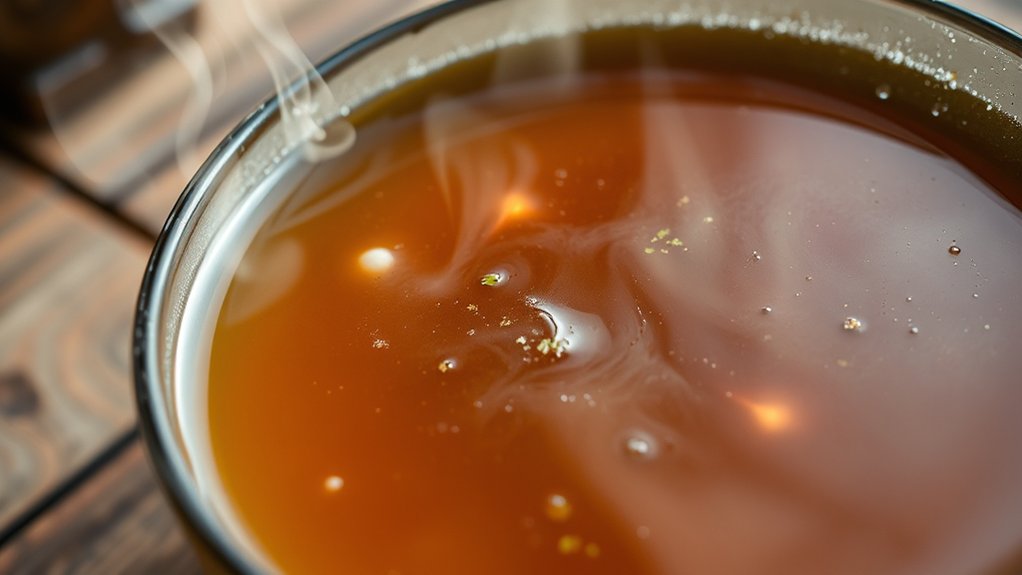
Curious about the calorie content in beef broth? Typically, beef broth contains about 10 to 15 calories per cup. This makes it a low-calorie option, especially if you’re watching your intake.
The exact number can vary depending on the recipe and ingredients used, but generally, it’s quite light. Most of these calories come from small amounts of fat and protein, with minimal carbohydrates.
If you buy store-bought broth, check the label for precise calorie information. Homemade versions might have slightly different counts based on the bones, meat, and seasonings used.
What Factors Influence the Calories in Beef Broth?
Several factors can influence the calorie content of beef broth, making each batch slightly unique. The amount of fat in the bones or meat used directly impacts calories, as fattier cuts add more energy.
The fat content in bones and meat directly affects the calorie count of beef broth.
Furthermore, the cooking time matters. Longer simmering extracts more nutrients and fat, increasing the calorie density. The concentration of the broth also plays a role—more concentrated broths contain more dissolved solids, boosting calories.
Seasoning ingredients like vegetables or added oils can further alter calorie counts. Even the starting ingredients’ quality and fat content vary, affecting the final calorie content.
Ultimately, these factors combined mean each batch can differ slightly in caloric value. Tracking specific ingredients and preparation methods helps you better estimate your broth’s calorie content.
How Do Homemade and Store-Bought Beef Broth Compare in Calories?
When comparing homemade and store-bought beef broth, you’ll notice differences in calorie content because of how they’re made. Homemade broth usually has fewer calories since you choose the ingredients, often using leaner beef cuts and adding less fat or salt.
It also has fewer preservatives and additives, which can add extra calories. Store-bought beef broth often contains flavorings, thickeners, and preservatives that can slightly bump up its calorie count.
Some brands even add sugar or other ingredients to enhance flavor, raising the calorie total further. Overall, homemade broth tends to be lower in calories and might be a better choice if you’re watching your intake.
But store-bought broth is convenient and offers a consistent flavor, which some people prefer.
Can You Use Beef Broth in a Low-Calorie Diet?
If you’re watching your calorie intake, beef broth can be a great addition to your low-calorie diet. It’s flavorful, low in calories, and perfect for soups, stews, or even sipping on its own.
Here’s a quick look at its benefits:
| Benefit | Why It Matters | How to Use |
|---|---|---|
| Low in Calories | Keeps your calorie intake in check | Use as a base for light soups |
| Rich in Nutrients | Adds essential minerals | Incorporate into meal prep |
| Hydrating | Helps boost your fluid intake | Drink warm or cold |
Beef broth’s versatility makes it a smart choice when you’re trying to cut calories while still enjoying flavor and nutrition.
Are There Low-Calorie Beef Broth Brands or Recipes?
You can find low-calorie beef broth brands that are specially made to reduce calorie content without sacrificing flavor.
Making homemade light recipes is also an option if you want full control over ingredients and calories.
Consider the differences between store-bought and homemade options to choose the best fit for your diet.
Low-Calorie Brand Options
Several brands now offer low-calorie beef broth options, making it easier to enjoy rich flavor without excess calories. These products usually have fewer than 10 calories per cup, often thanks to reduced sodium and fat.
Popular brands like Swanson, Kitchen Basics, and Pacific Foods have low-calorie versions that still taste great. When shopping, check labels carefully—look for “reduced sodium” or “light” to find the lowest calorie options.
These broths are perfect for soups, stews, or even sipping on their own. Keep in mind, some brands may add artificial flavors or preservatives, so choose those that match your dietary preferences.
Low-calorie beef broths are a flavorful, guilt-free way to enhance your meals without the extra calories.
Homemade Light Recipes
Homemade light beef broth offers a customizable and cost-effective way to enjoy rich flavor without the excess calories found in store-bought versions. You control the ingredients, reducing added fats and sodium while boosting flavor with herbs and vegetables.
To keep it low-calorie, consider these tips: Use lean beef bones or trim excess fat before simmering. Incorporate plenty of aromatics like onions, garlic, and celery for depth without calories.
Strain the broth well to remove residual fats and solids, ensuring a clear, light result. Making your own broth lets you skip preservatives and additives, providing a healthier, calorie-conscious option.
Plus, it’s easy to adjust seasonings to suit your taste and dietary goals.
Store-Bought vs. Homemade
When choosing between store-bought and homemade beef broth, consider their calorie content and ingredient quality. Store-bought options often have added salt, preservatives, and flavor enhancers, but some brands offer low-calorie or reduced-sodium versions.
Homemade broth lets you control ingredients, which can help reduce calories by skimming fat and avoiding additives. Look for brands labeled “low-calorie” or “reduced-sodium” if convenience is a priority.
Here’s a quick comparison:
| Feature | Store-Bought | Homemade | Low-Calorie Options |
|---|---|---|---|
| Ingredient Control | Limited | Full control | Adjusted for lower calories |
| Sodium Content | Can be high | Naturally low if skimmed | Specifically labeled |
| Additives | Often present | None | Minimized or absent |
| Convenience | Very convenient | Time-consuming | Varies |
| Calorie Content | Varies, often higher | Usually lower, customizable | Specifically designed to be low |
How to Read Labels and Find Calorie Info for Beef Broth
To accurately determine the calorie content in beef broth, start by examining the nutrition label carefully. Look for the serving size first, since calories are listed per serving.
Check the nutrition label first to find the serving size and calories per serving.
Next, check the calorie count and note whether it’s for a cup, half-cup, or another measure. Then, review the ingredients list to spot added sugars or high-fat components that could affect the calorie total.
Here are three key tips:
- Compare Serving Sizes: Make sure you’re comparing calories based on the same amount.
- Check for Additives: Look for ingredients like oils or sugars that can increase calorie counts.
- Read Nutrition Facts Carefully: Focus on calories per serving, not the total container.
This approach helps you make informed choices quickly.
Tips to Cut Calories When Cooking With Beef Broth
If you want to cut calories in your dishes, start by choosing lower-sodium or reduced-fat beef broth options. These have fewer calories and less fat, so you get flavor without the extra calories.
You can also dilute beef broth with water or vegetable broth to make it stretch further and lower the calorie count per serving. Herbs, spices, and acidic ingredients like lemon juice or vinegar are great for boosting flavor without adding calories.
Try to avoid adding high-calorie ingredients like butter or oil when cooking with broth. Using smaller amounts of beef broth in your recipes or as a base also helps keep calorie intake down.
How Does Beef Broth Compare to Other Broth Types?
Beef broth offers a richer flavor compared to chicken or vegetable broths, but it also tends to have more calories and fat.
You might notice that each type brings unique nutritional content and taste, affecting how you use them in recipes.
Think about how these differences influence your choice for cooking and flavor enhancement.
Nutritional Content Differences
Beef broth usually has more protein and calories than most other broths, making it a richer, more filling option. Compared to chicken, vegetable, or fish broth, it offers a stronger nutrient profile.
It’s higher in protein, providing more amino acids that help with muscle repair and immune health. Plus, it packs more calories, giving you more energy per serving.
Beef broth also tends to have more minerals like zinc, iron, and magnesium, which are important for your body’s functions. While vegetable broth is lower in calories and protein, beef broth’s nutritional strength makes it a hearty choice for both nourishment and flavor.
Flavor Profile Variations
The rich nutritional profile of beef broth is matched by its bold, savory flavor, which sets it apart from other types of broth. Beef broth offers a deep, meaty taste that’s robust and hearty, often with umami undertones.
In contrast, chicken broth tends to be lighter and more delicate, with a subtle savory sweetness. Vegetable broth provides a fresh, vegetal flavor that’s milder and more versatile.
Fish or seafood broth has a distinctive briny, oceanic taste, unlike the richer profile of beef. Each broth type’s flavor is influenced by ingredients and cooking methods, making beef broth distinctly intense and satisfying.
If you’re aiming for a bold, meaty base, beef broth’s flavor profile is unmatched among other broths.
Cooking Versatility
While each type of broth has its own unique flavor, beef broth really shines when it comes to versatility in the kitchen. It’s a rich base that can elevate more than just soups.
You can use it to add depth to stews, braises, or even risottos. Compared to chicken or vegetable broth, beef broth offers a deeper, meatier flavor that holds up well during long cooking.
It’s perfect for hearty dishes and can be reduced to make rich sauces. Here are three ways to get the most out of beef broth’s versatility:
- Use it as a cooking liquid for grains like rice or barley to boost flavor.
- Add it to slow-cooked dishes for extra richness.
- Make hearty soups and stews that need a flavor boost.
Making Your Own Low-Calorie Beef Broth at Home
Making your own low-calorie beef broth at home is a simple way to enjoy rich flavors without extra fat or calories. Start by skimming off any visible fat from lean beef bones or meat.
Use plenty of vegetables like onions, carrots, and celery for natural sweetness and flavor without adding calories. Add herbs such as thyme or bay leaves for extra depth.
Simmer everything gently for several hours to extract maximum flavor. Strain the broth to remove solids, leaving a clear, tasty liquid.
You can refrigerate and skim off any fat that solidifies on top later. Making broth at home lets you control ingredients, avoiding unnecessary additives or high-calorie fats often found in store-bought versions.
This way, you get a flavorful, low-calorie base perfect for soups and stews.
Frequently Asked Questions
What Is the Typical Calorie Range for Different Beef Broth Brands?
You’ll find that beef broth typically contains between 10 to 40 calories per cup, depending on the brand and ingredients.
Low-sodium and organic varieties often have fewer calories, while some flavored or canned options may be higher.
Always check labels because calorie counts can vary quite a bit. If you’re watching your intake, choose brands with minimal added ingredients and lower sodium to keep calories in check.
How Does Adding Ingredients Like Vegetables Affect the Calorie Count?
Adding vegetables to beef broth increases its calorie count, but only slightly. For example, a cup of chopped carrots adds about 50 calories, while celery adds just 10.
Since most vegetables are low in calories but high in volume, they boost flavor and nutrition without greatly changing the calorie total. So, if you toss in a handful of mixed vegetables, expect only a modest rise in calories.
This makes your broth more filling and nutritious without adding many extra calories.
Are There Any Beef Broth Varieties Suitable for Ketogenic Diets?
Yes, there are beef broth varieties suitable for ketogenic diets. Look for options labeled “unsalted” or “no added sugars,” as they typically contain fewer carbs.
You can also make your own by simmering beef bones with vegetables and herbs, avoiding high-carb ingredients like potatoes or carrots.
Always check labels carefully, and opt for broths with minimal ingredients to stay within your carb limit and maintain ketosis.
Can Beef Broth Be Calorie-Free or Very Low in Calories?
You might be surprised, but beef broth can be nearly calorie-free if you pick the right kind. Unsalted, homemade, or store-bought low-calorie options usually have just 5 to 15 calories per cup.
Most of these calories come from tiny amounts of fat and protein. Always check labels or make your own to be sure there are no added sugars or carbs.
This makes beef broth perfect for low-calorie or ketogenic diets.
How Does the Cooking Method Influence Beef Broth’s Calorie Content?
Your cooking method directly impacts beef broth’s calorie content. For example, simmering beef bones with minimal added fats results in a lower-calorie broth.
Roasting bones beforehand can deepen the flavor but may slightly raise the calorie count. Using added oils, fats, or high-calorie ingredients during preparation also increases calories.
If you’re aiming for a lower-calorie broth, opt for gentle simmering without extra fats and steer clear of high-calorie add-ins.
Conclusion
Think of beef broth as a flavorful river flowing through your meals; its calories are just the boats sailing along. Whether store-bought or homemade, you can navigate your diet wisely by choosing low-calorie options and reading labels carefully.
With a few simple tips, you’ll keep your culinary journey tasty yet light. So, immerse yourself in your cooking adventure, and let beef broth be the gentle current guiding you toward healthier, delicious dishes.
Remember, the calories in beef broth can vary, but being mindful helps you enjoy your dishes without overdoing it.