Ideal Freezer Temp for Food Safety?
Many people struggle with keeping their food safe and fresh in the freezer. You’re not alone—finding the perfect temperature can feel tricky, but it’s essential for quality and safety.
To keep your food safe and maintain quality, set your freezer temperature to 0°F (-18°C). This cold level slows bacterial growth and prevents freezer burn while preserving taste and texture.
Use a thermometer to check if the temperature stays steady, and adjust your settings if needed. Proper airflow and regular maintenance help keep the temperature consistent.
Stay vigilant for signs of warmth or cold spots, and keep learning to guarantee your freezer stays at its best.
Key Takeaways
- The ideal freezer temperature for food safety is 0°F (-18°C).
- Keeping your freezer at this temperature helps slow bacterial growth and prevents spoilage.
It’s a good idea to use a thermometer regularly to check that your freezer is at the right temperature.
Proper air circulation and regular maintenance also help keep the temperature consistent.
Watch out for signs of temperature problems, like ice crystals forming or freezer burn.
If foods look thawed or discolored, it might be a sign that your freezer isn’t cold enough.
Why Freezer Temperature Matters for Food Safety

Maintaining the right freezer temperature is crucial because it directly impacts the safety and quality of your food. If your freezer gets too warm, bacteria can grow on perishable items, increasing the risk of foodborne illnesses.
Cold temperatures slow down or stop bacterial growth, helping to keep your food safe and fresh. If the freezer isn’t cold enough, ice crystals may form unevenly, leading to freezer burn and texture loss.
Cold temperatures prevent bacteria growth and protect your food from freezer burn and texture loss.
On the flip side, setting it too cold can waste energy and potentially damage the freezer. Keeping the temperature just right helps prevent spoilage, preserves nutrients, and extends your food’s shelf life.
It’s a simple step that ensures you’re eating food that’s safe, tasty, and healthy.
What Is the Recommended Freezer Temperature?
What is the ideal temperature for your freezer to keep food safe? The U.S. Food and Drug Administration recommends setting your freezer at 0°F (-18°C). This temperature slows bacteria growth and helps keep food preserved longer.
Keeping your freezer at this level also ensures ice crystals form properly and prevents freezer burn. If the temperature rises above 0°F, food can spoil faster and become unsafe to eat.
On the other hand, setting it too low may waste energy and cause unnecessary wear on your appliance. Regularly maintaining your freezer at 0°F guarantees your food stays safely frozen, retains quality, and reduces waste.
Make sure your freezer thermostat is calibrated correctly for optimal food safety and efficiency.
How to Check if Your Freezer’s Temperature Is Accurate?
To make sure your freezer is at the right temperature, you’ll need a good thermometer. Just place it inside and check the reading regularly. This way, you can catch any temperature swings early.
Keeping an eye on the temperature helps ensure your food stays safe and properly frozen. Regular checks are a simple way to avoid surprises and keep your freezer working its best.
Use a Thermometer
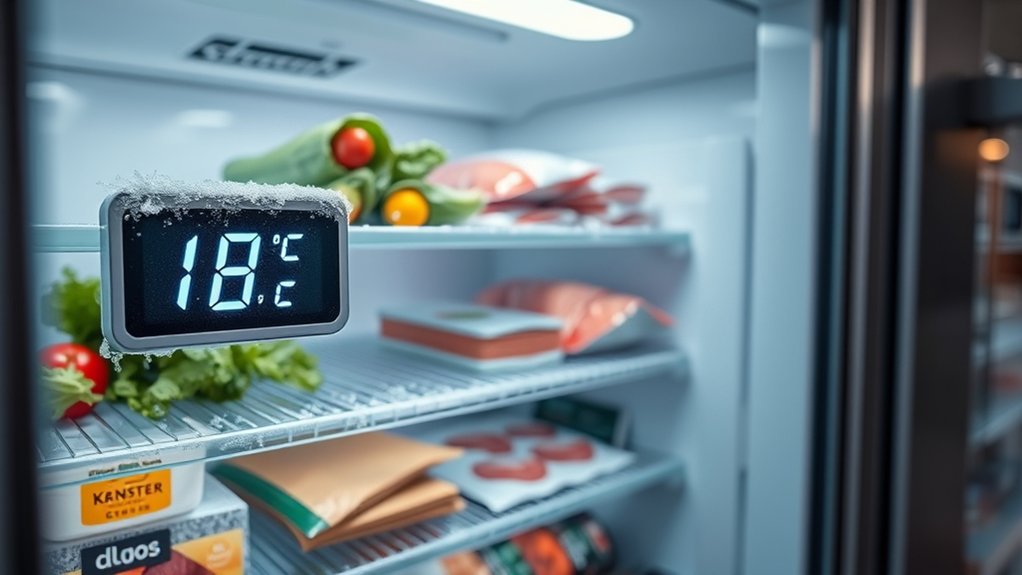
Use a thermometer to keep track of your freezer’s temperature. Place a digital or analog thermometer in the center of your freezer, away from walls or door openings.
Keep it there for 24 hours to get an accurate reading. Regularly checking this helps ensure your freezer stays at a safe temperature, preventing food spoilage and bacteria growth.
Use the table below to compare your thermometer’s reading with the recommended temperature:
| Your Freezer Temp | Ideal Freezer Temp |
|---|---|
| (Your reading) | 0°F (-18°C) |
| (Your reading) | 0°F (-18°C) |
| (Your reading) | 0°F (-18°C) |
| (Your reading) | 0°F (-18°C) |
| (Your reading) | 0°F (-18°C) |
Adjust your freezer if the temperature is outside this range.
Check Regularly
Checking your freezer’s temperature regularly guarantees it stays at the safe, ideal level. You should verify the thermometer’s accuracy at least once a month. To do this, place a separate, calibrated thermometer inside the freezer, away from the main thermostat. Wait a few hours or overnight to get an accurate reading.
If the temperature isn’t within the recommended range of 0°F (−18°C), adjust your freezer’s thermostat accordingly. Consistent checks help catch problems early, preventing food spoilage or safety risks. Make it a routine to record the temperature readings and compare them over time.
This proactive approach assures your freezer maintains the proper temperature, keeping your food safe and fresh. Regular monitoring is key to effective food storage and safety.
How to Tell If Your Freezer Is Too Warm or Too Cold?
Wondering if your freezer is maintaining the right temperature? You can tell by observing a few signs. If your food develops ice crystals or freezer burn quickly, it might be too cold.
On the other hand, if food starts to thaw or shows signs of spoilage, it could be too warm. Pay attention to these indicators:
- Food feels soft or develops frost
- Ice cream is soft or melts easily
- Frozen items are not solid or are watery
- Unusual odors or discoloration in frozen foods
These clues help you figure out if your freezer’s temperature isn’t right. Regular checks and noticing how your food looks and feels are key to keeping food safe.
If you see any of these signs, it’s time to check your freezer’s settings or condition.
How to Properly Set and Adjust Your Freezer Temperature
To keep your food safe, you need to set your freezer to the right temperature and make adjustments as needed.
You should calibrate the temperature based on food types and check it regularly to guarantee it stays consistent.
Properly managing your freezer’s settings helps prevent spoilage and keeps your food fresh.
Setting the Correct Temperature
Setting the correct temperature on your freezer is key to keeping food safe and fresh. Use an appliance thermometer regularly to check the temperature. Adjust the thermostat dial if needed, aiming for 0°F (-18°C).
Make sure the thermometer is placed in the center of the freezer for the most accurate reading. Avoid overcrowding, as this can block airflow and cause uneven cooling. Keep the door closed as much as possible to maintain a steady temperature.
Monitor and record the temperature regularly to catch any changes early. Keeping the right temperature helps prevent bacterial growth and keeps your food safe longer. Proper calibration and consistent checks are the best way to ensure your freezer stays at the ideal setting.
Adjusting for Food Types
Different types of food require different freezer temperatures to stay safe and keep their quality. For example, meats like beef, poultry, and fish should be stored at 0°F (-18°C) to prevent bacteria growth and preserve texture.
Frozen fruits and vegetables also do well at 0°F, but some softer or delicate items may benefit from slightly higher temperatures to prevent freezer burn. Ice cream and other dairy products need consistent freezing at 0°F to stay smooth and prevent spoilage.
If you’re freezing cooked leftovers or prepared meals, keep them at 0°F to ensure safety. Adjust your freezer temperature based on the specific food types, and always follow storage guidelines to maximize freshness and safety.
Proper adjustments help prevent spoilage and keep your food fresh longer.
Regular Temperature Checks
Regularly checking your freezer temperature guarantees that it stays at the ideal level for food safety and quality. You should use a reliable thermometer to monitor the temperature at least once a month.
When you check, imagine the thermometer’s display showing a consistent reading around 0°F (−18°C). There should be no fluctuations or spikes during different times of the day.
Make sure the thermometer is placed away from door openings or vents for an accurate reading. The numbers should be clear and easy to read, without fog or ice buildup.
If the temperature strays from the recommended range, adjust the thermostat accordingly. Keep a log of your checks to spot any trends over time.
Regular checks help ensure your freezer keeps food safe, prevents spoilage, and extends the shelf life of your frozen goods.
Tips to Keep Your Freezer Temperature Steady and Reliable
To keep your freezer temperature steady and reliable, it’s important to check it regularly and make adjustments when needed. Use a digital thermometer to monitor the temperature at least once a month, or more if you notice any changes.
Try to keep the door closed as much as possible to prevent temperature swings. Avoid overloading your freezer, since that can block airflow and cause uneven cooling.
Organize your items so cold air can circulate freely around them. If the temperature climbs above 0°F (-18°C), adjust the thermostat or defrost if frost builds up.
Don’t forget to clean the coils and door seals regularly to keep your freezer running efficiently. Staying vigilant and making small tweaks helps ensure your freezer stays at the right temperature for food safety.
Frequently Asked Questions
How Often Should I Calibrate My Freezer’s Temperature?
You should calibrate your freezer’s temperature at least once every three to six months. Regular calibration helps make sure your freezer stays at a consistent temperature, which is really important for keeping food safe and fresh.
Check the temperature with a reliable thermometer, then adjust the thermostat if needed. If you notice your freezer’s temperature fluctuating or not staying at the right level, you might need to calibrate more often to prevent spoilage and keep everything safe.
What Are Signs My Freezer Is Malfunctioning?
If your freezer isn’t working right, you might notice some signs. Your food could be thawing or getting ice crystals, which means the temperature isn’t steady.
You might also hear strange noises or see frost building up on the walls. Temperatures may fluctuate, causing your food to spoil faster.
Another sign is a higher energy bill or the freezer not staying cold enough. Check for these issues regularly to avoid wasting food and stay safe.
Can Temperature Fluctuations Affect Food Quality?
Temperature fluctuations can be like a rollercoaster for your food’s quality, causing spoilage and freezer burn. When your freezer’s temp swings above the ideal, bacteria can grow, and textures can become mushy or icy.
Consistent freezing keeps food fresh and tasty. So, by maintaining a steady temperature, you’re protecting your food’s flavor, nutrients, and safety—making sure each bite is as good as the last.
What Types of Food Are Most Sensitive to Freezer Temperature?
Frozen fruits and vegetables, seafood, and meats are most sensitive to freezer temperature changes. You need to keep these items at a consistent 0°F to prevent freezer burn and maintain quality.
If the temperature fluctuates, these foods can deteriorate faster, lose texture, and become unsafe to eat. Regularly check your freezer’s temperature, and avoid frequent door openings to keep sensitive foods properly preserved and safe for later use.
How Does Freezer Size Impact Temperature Control?
You’ll find that larger freezers can be more difficult to keep at a consistent temperature because of their size and insulation issues. Smaller freezers usually respond faster to temperature changes, making it easier to keep food safe.
With a bigger freezer, you’ll need to check the temperature more often and avoid overloading it. Overloading can block airflow, which affects temperature control.
Proper organization and regular defrosting are key to making sure your freezer stays at the right temperature for food safety.
Conclusion
Keeping your freezer at the right temperature is essential for ensuring food stays safe and fresh. Regularly checking and adjusting the temperature can prevent spoilage and foodborne illnesses.
Don’t rely on guesswork—use a thermometer to stay accurate. After all, isn’t your health worth a few minutes of effort?
By maintaining a steady, proper temperature in your freezer, you’re protecting your family and your food. The ideal freezer temperature for food safety is 0°F (-18°C). Isn’t that a small price to pay for peace of mind?