8 Costs to Consider: How Much Should a 10×10 Kitchen Remodel Cost?
Planning a 10×10 kitchen remodel can feel overwhelming. Many homeowners struggle with figuring out how much it will cost and what to prioritize. You’re not alone—budgeting for a kitchen makeover is a common challenge.
When budgeting for a 10×10 kitchen remodel, consider renovation costs, materials, and labor. Expect to spend between $12,000 and $30,000, depending on your choices.
Key expenses include cabinets, countertops, flooring, appliances, and fixtures.
Don’t forget permits, inspection fees, and a contingency fund for unexpected issues.
Choosing cost-effective materials and DIY options can help save money.
Keep these factors in mind—more tips are available if you keep exploring.
Key Takeaways
- Overall project budget usually falls between $12,000 and $30,000. This depends a lot on the materials and finishes you choose.
- The biggest costs tend to be cabinets, countertops, flooring, and appliances.
- Labor costs can vary depending on how complex the project is and what your contractor charges.
- Don’t forget about permits, inspections, and the possibility of unexpected repairs—they can add to your total costs.
- It’s a good idea to set aside 10-20% of your budget as a contingency fund. That way, you’re prepared for any surprises that come up along the way.
What’s the Typical Cost to Remodel a 10×10 Kitchen?
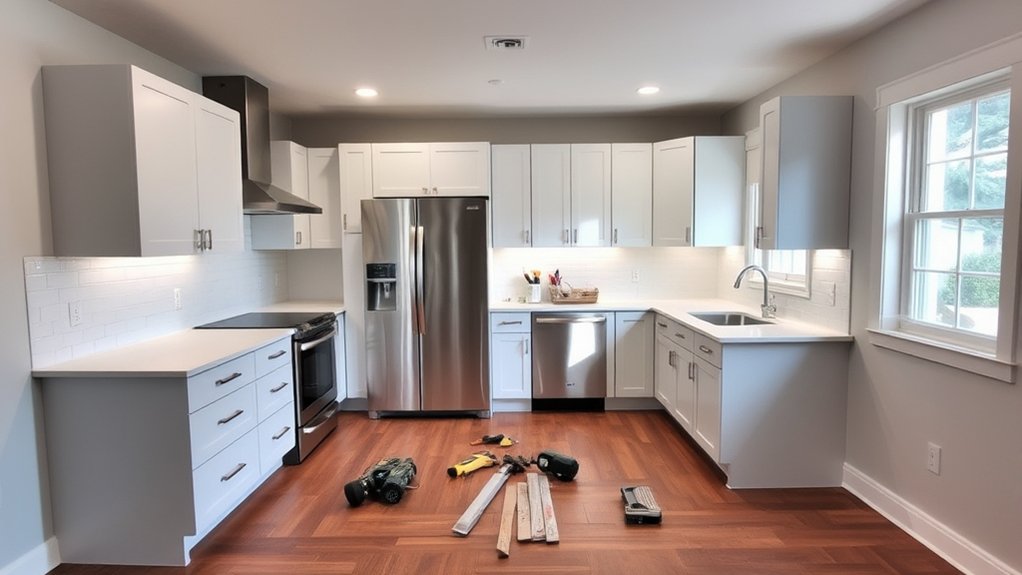
Wondering how much it costs to remodel a 10×10 kitchen? On average, you’ll spend between $12,000 and $30,000, depending on your choices. Basic updates like new cabinets, countertops, and appliances will keep costs lower, closer to the $12,000 mark.
If you go for high-end finishes, custom cabinetry, and premium appliances, expect to pay toward the upper end or even more. Labor costs also matter, especially if you’re making major structural changes or upgrades.
Keep in mind that unexpected issues such as plumbing or electrical updates can add to your budget. To get a clear idea, consider what level of renovation you want and research prices in your area.
This initial estimate can help you plan financially for your kitchen transformation.
How Design Choices Affect Your Budget
Your design choices play a big role in shaping your overall remodeling budget. Choosing high-end materials, intricate details, or custom features can quickly drive up costs.
On the other hand, sticking to a simpler, minimalist style can help you save money. The style you pick—modern, vintage, or rustic—also impacts your expenses.
Opting for a minimalist style saves money, while your chosen aesthetic—modern, vintage, or rustic—also influences costs.
Opting for durable, quality finishes might cost more upfront but can save you money on maintenance in the long run.
Layout decisions, like open plans versus traditional rooms, influence both labor and material costs.
Keep in mind that complex designs or unique features often need specialized labor or custom work, which can increase your budget.
Being strategic with your choices helps you balance your style preferences with your financial limits effectively.
How to Budget for Cabinets, Countertops, and Flooring
Budgeting for cabinets, countertops, and flooring takes some planning to make sure you get good quality materials without going overboard. Start by researching options that fit your budget, keeping both style and durability in mind.
Set a specific amount for each category and prioritize what matters most to you. For cabinets, look into different materials like plywood, MDF, or solid wood, balancing cost and how long they last.
When choosing countertops, consider options like laminate, quartz, or granite based on how you use your kitchen and what look you want. For flooring, decide between tile, hardwood, or vinyl, and think about installation costs and upkeep.
Always include a contingency fund of about 10-15% to cover surprises. Creating a detailed budget helps keep your kitchen remodel on track financially without sacrificing quality.
Estimating Kitchen Remodel Labor Costs & Picking Contractors
Estimating labor costs and choosing the right contractors are key steps to keep your kitchen remodel on budget and meet your expectations.
Labor costs can vary depending on the project scope, location, and the experience of the contractor. To get accurate estimates, ask for detailed quotes from multiple professionals.
When selecting contractors, pay attention to their reputation, experience, and licensing. Interview potential hires to get a sense of their professionalism and how well they understand your vision.
Review portfolios and references to confirm the quality of their work.
Compare bids carefully, looking beyond just the price to ensure you’re getting value.
Make sure they’re licensed, insured, and familiar with local regulations to avoid surprises later on.
Permits and Inspection Fees You Need to Know
Are you aware of the permits and inspection fees required for your kitchen remodel? These costs can vary depending on your location and the scope of work.
Typically, you’ll need permits for electrical, plumbing, and structural changes. The fees can range from $50 to several hundred dollars per permit.
Inspections are there to verify your project meets safety and building codes, which is crucial for avoiding future legal or insurance issues.
Some cities charge flat fees, while others base costs on the project value or complexity.
Remember, skipping permits can lead to fines, delays, or even having to undo work.
To stay on budget, check with your local building department early in the planning process.
Proper permits and inspections protect you and ensure your remodel is up to code.
Planning for Unexpected Expenses and Contingencies
Even with careful planning, unexpected expenses can come up during a kitchen remodel, so it’s smart to prepare for them in advance. These surprises might include hidden damages, code violations, or changes in material prices.
To keep your project on track financially, set aside a contingency fund—usually about 10–20% of your total budget. Having this buffer helps you cover unexpected costs without throwing off your plans.
Here are some common surprises you might encounter:
- Hidden structural issues or mold
- Upgrades needed to meet building codes
- Price hikes for materials or fixtures
Additional Costs: Appliances, Fixtures, and Lighting
When budgeting for your kitchen remodel, it’s important to account for appliances, fixtures, and lighting because they can significantly impact your overall costs. Quality appliances like a refrigerator, stove, and dishwasher can range from a few hundred to several thousand dollars each, depending on features and brand.
Fixtures such as sinks, faucets, and cabinet hardware add both style and functionality, with costs varying based on material and design. Lighting is essential for both ambiance and task efficiency; expect to spend on ceiling fixtures, under-cabinet lights, and accent lighting.
Custom or designer options will increase costs, so to stay within your budget, prioritize essential appliances and fixtures. Consider options that balance quality and affordability without sacrificing style or function.
Tips to Save Money During Your Kitchen Remodel
To save money during your kitchen remodel, start by setting a clear budget and prioritizing your must-have features over luxury upgrades. This helps you avoid overspending on non-essential items.
Consider doing some of the work yourself, like painting or demolition, to cut labor costs. Shopping sales and choosing standard-sized appliances and fixtures can also help reduce expenses.
Save money by DIY painting and demolition, and choose standard appliances on sale to reduce renovation costs.
Furthermore, compare quotes from multiple contractors to find the best deal. Opt for affordable, durable materials like laminate countertops instead of granite.
You can also repurpose existing cabinets or refinish them instead of replacing. Focus on essential updates first and postpone luxury features for later.
Sticking to these strategies keeps your project on track financially while still achieving a fresh, functional kitchen.
Frequently Asked Questions
How Long Does a Typical 10X10 Kitchen Remodel Take?
A typical 10×10 kitchen remodel usually takes about 2 to 4 weeks, depending on the scope of work and complexity. You’ll need time for planning, obtaining permits, demolition, installation, and finishing touches.
If you’re making major layout changes or custom upgrades, it might take longer. Communicating clearly with your contractor and scheduling efficiently can help keep the project on track and minimize delays.
What Are the Best Eco-Friendly Options for a Small Kitchen Remodel?
You should choose eco-friendly options like Energy Star appliances to save energy. Sustainable materials like bamboo or reclaimed wood work well for cabinets and flooring.
Use low-VOC paints and sealants to improve air quality in your kitchen. Incorporate LED lighting and water-saving fixtures to help cut down utility costs.
Opt for recycled or eco-friendly countertops, such as recycled glass or concrete, to minimize environmental impact. These choices make your small kitchen both stylish and sustainable.
How Can I Maximize Storage in a Compact Kitchen Space?
Imagine your kitchen as a treasure chest, and try to maximize every inch! You can do this by installing tall, vertical cabinets, adding hooks for pots and utensils, and using pull-out shelves.
Think about open shelving for easy access and small, multi-purpose furniture to save space. Cleverly utilizing corners with lazy Susans or corner cabinets reveals hidden storage.
These smart choices will transform your compact kitchen into a functional, clutter-free oasis.
Are There Financing Options Available for Kitchen Remodeling Projects?
Yes, you can find financing options for your kitchen remodel. Many lenders offer personal loans, home equity lines of credit (HELOC), or specialized renovation loans.
It’s a good idea to compare interest rates, repayment terms, and eligibility requirements to find the best fit for your situation. Check with banks, credit unions, or online lenders.
You might also consider talking to a financial advisor to make sure you choose a plan that matches your budget and goals.
What Are Common Mistakes to Avoid During a Kitchen Renovation?
Back in the day, folks knew to plan carefully, and you’ll want to do the same. Avoid rushing your decisions and take your time with each step.
Don’t overlook the importance of a detailed budget. It helps you stay on track and avoid unexpected expenses.
Check for proper permits or hire skilled professionals. Cutting corners here can lead to costly problems later.
Steer clear of cheap, low-quality materials. They might save money upfront but can cause issues down the road.
Don’t neglect proper ventilation or storage solutions. These are essential for a functional and safe kitchen.
Planning ahead prevents costly mistakes and guarantees a smooth renovation.
Conclusion
Remodeling your 10×10 kitchen is a journey filled with choices and surprises, like opening a door to endless possibilities.
By understanding costs, planning wisely, and staying flexible, you can transform your space without breaking the bank.
Remember, every dollar saved is a step closer to your dream kitchen.
So, welcome the adventure, stay vigilant for surprises, and let your vision shine through.
Because in the end, your perfect kitchen is worth every effort—especially when considering the costs to remodel a 10×10 kitchen.