Is Pickling Lime the Same as Pickling Salt?
Are you excited to make your own pickles but feel overwhelmed by the different ingredients? You’re not alone—many people struggle with understanding the roles of pickling supplies and worry about making mistakes.
Knowing the difference between key ingredients can make all the difference in your results.
No, pickling lime and pickling salt are not the same. Pickling salt is pure sodium chloride used for seasoning and preserving, while pickling lime is calcium hydroxide that helps keep vegetables crisp.
Swapping them can lead to cloudy brine or spoiled produce. Understanding their different roles is key to safe and tasty pickles.
If you want to learn more about how to use these ingredients properly, keep exploring the details below.
Key Takeaways
- Pickling lime (calcium hydroxide) and pickling salt (sodium chloride) are chemically different and serve distinct purposes.
- Pickling salt is used for flavor and brine clarity. Lime, on the other hand, helps maintain vegetable crispness.
- Substituting lime for salt can cause safety issues and spoilage because they are chemically different.
- Lime is mainly used to enhance texture, while salt helps inhibit bacteria and adds flavor.
- They are not interchangeable and should be used as specified in recipes.
Are Pickling Lime and Salt Interchangeable?
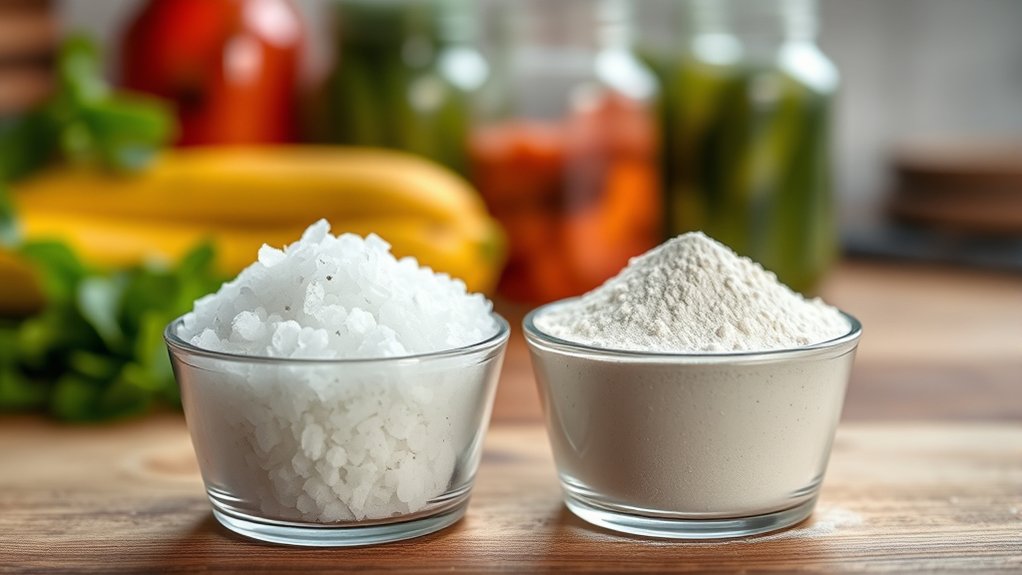
Are pickling lime and pickling salt truly interchangeable? Not quite. Although both are used in pickling, they serve different purposes and aren’t directly swapable.
Pickling salt is pure sodium chloride, used to season and preserve vegetables without clouding the brine. Pickling lime, meanwhile, is calcium hydroxide, which helps keep pickles crisp and prevents them from softening.
Pickling salt preserves without clouding; pickling lime keeps pickles crisp and prevents softening. Not interchangeable.
If you swap these ingredients, you risk messing up the texture or even compromising safety. Using the wrong one can lead to cloudy brine or spoiled produce.
Always follow the recipe’s instructions for either lime or salt. Relying on them interchangeably can ruin your batch or cause food safety issues. Stick to the designated ingredient for the best results.
What Are Pickling Lime and Salt? Definitions and Differences
Pickling lime and salt are two important ingredients used in pickling, each with its own role. Pickling lime is a food-grade calcium hydroxide, a white powder that helps improve the texture and crunchiness of pickled vegetables.
It works by helping the produce stay firm and creates a barrier against bacteria to prevent spoilage. Pickling salt, on the other hand, is pure sodium chloride made specifically for pickling.
It dissolves easily and doesn’t contain additives that could cloud the brine or change the flavor. While both are essential for different parts of the pickling process, they aren’t interchangeable.
Pickling lime shouldn’t be used as salt, and pickling salt isn’t a substitute for lime’s textural benefits. Knowing their unique roles helps ensure your pickles turn out flavorful and successful.
How Does Pickling Lime Help Preserve Food?
Pickling lime plays a big role in preserving food by helping keep vegetables firm and crunchy. It creates a calcium-rich coating that gets inside the vegetable’s cells, preventing them from turning mushy over time.
Here’s how it helps:
- Keeps things crisp, so your pickles stay satisfying with each bite.
- Stops spoilage by forming a barrier against bacteria and mold.
- Extends shelf life, so you can enjoy your preserved foods longer without losing quality.
What Is the Role of Pickling Salt in the Pickling Process?
Salt is a key part of the pickling process because it creates an environment that stops harmful bacteria and molds from growing. It pulls moisture out of vegetables and bacteria through osmosis, helping to keep their texture and flavor intact.
Pickling salt is pure and doesn’t have any additives, which means it makes a clean, consistent brine. This brine not only prevents spoilage but also helps fermentation by letting good bacteria thrive.
The salt also makes your pickles taste better, giving them that classic salty flavor everyone loves. Without enough salt, there’s a risk of bacterial contamination and spoilage.
Can You Safely Substitute Lime for Salt? Risks to Know
You can’t just swap lime for salt in pickling because their chemical makeup is really different. Using lime instead of salt can mess with the safety and preservation of your canned goods.
This could lead to spoilage or the growth of unsafe bacteria. It’s important to understand these risks before making any substitutions.
Chemical Composition Differences
Lime and salt are fundamentally different in their chemical makeup, making direct substitution risky. Pickling lime is mainly calcium hydroxide, a strong alkaline compound, while pickling salt is pure sodium chloride. This difference means they react differently during preservation and can impact safety and taste.
Consider these risks:
- Using lime instead of salt can cause dangerous chemical reactions that affect your health.
- Lime’s alkalinity can change the pH, which might ruin your pickles or make them unsafe.
- Substituting without understanding these differences can lead to spoilage or off-flavors, risking your entire batch.
Understanding these chemical differences is crucial to avoid jeopardizing your preservation efforts and safety. Never assume they’re interchangeable without proper knowledge.
Safety and Preservation Risks
Because lime and salt have such different chemical properties, substituting lime for salt in pickling can pose serious safety risks. Lime, or calcium hydroxide, doesn’t provide the same preservation effects as salt, which inhibits bacterial growth.
Using lime instead of salt can lead to unsafe fermentation, increasing the risk of botulism and other foodborne illnesses. Lime may also leave residues that alter the pH balance, potentially compromising the safety and shelf life of your preserved foods.
Moreover, improper use of lime can cause undesirable textures or flavors. You should never replace salt with lime without thorough research and proper processing methods.
To guarantee safety and preservation, stick to recommended ingredients and avoid risky substitutions like lime for salt in pickling.
How to Properly Use Pickling Lime and Salt for Safe, Tasty Preserves
Properly using pickling lime and salt is key to making sure your preserves are safe and tasty. First, always measure carefully—too much lime can cause bitterness, and too little salt might not stop spoilage.
Make sure to thoroughly rinse your pickled vegetables after soaking in lime. This step is important to remove any excess residue, which helps keep everything safe and flavorful.
Thoroughly rinse vegetables after lime soaking to ensure safety and retain flavor.
Follow trusted recipes exactly, paying attention to the timing and proportions. This helps prevent fermentation problems or texture issues in your preserves.
By sticking to these steps, you’ll keep that crisp crunch and tangy flavor you’re after. Paying attention to details keeps your preserves safe, high quality, and enjoyable.
With care and precision, your homemade pickles and preserves will turn out safe, delicious, and loved by everyone.
Frequently Asked Questions
Are There Any Health Risks Associated With Using Pickling Lime?
Yes, there are health risks associated with using pickling lime improperly. If you don’t handle it carefully, it can cause irritation or burns to your skin, eyes, and respiratory system.
Eating too much pickling lime can lead to stomach issues or even poisoning. It’s important to handle it with care, follow safety instructions, and rinse your pickled items well to remove any leftover lime.
When used properly, pickling lime is safe and helps make delicious, crisp pickles. Just be cautious and always follow the guidelines to avoid health problems.
How Long Can Pickled Foods Last With Lime or Salt?
Your pickled foods can last quite a while, like a well-aged wine, when preserved with lime or salt—typically up to a year if stored properly in a cool, dark place.
The acidity and preservation qualities act as loyal guardians, preventing spoilage and maintaining crunch.
Just make sure your jars are sealed tight and check periodically for any signs of spoilage, so your flavorful treasures stay vibrant and safe to enjoy.
Can Pickling Lime and Salt Be Used for Non-Vegetable Foods?
Yes, you can use pickling lime and salt for non-vegetable foods, but their purposes are different. Pickling lime is often used to firm fruits like peaches or cherries, helping them keep their shape during processing.
Pickling salt, on the other hand, is mainly used for curing or flavoring meats, seafood, or even eggs. Just make sure to follow specific recipes to avoid affecting the taste or safety of your food.
What Are Common Mistakes to Avoid When Using Pickling Lime?
When using pickling lime, avoid mixing it directly with vinegar or acidic ingredients, as this can cause cloudiness and affect texture. Always measure carefully to prevent using too much, which can lead to a gritty or soapy taste.
Make sure to rinse vegetables thoroughly after soaking to remove any residual lime. Don’t use pickling lime for quick pickles; it’s better suited for traditional methods.
Finally, store lime in a cool, dry place to keep it effective and fresh.
How Do Different Types of Salt Affect the Pickling Process?
Different types of salt greatly impact your pickling process. Regular table salt contains additives that can cloud your brine, while pickling salt is pure and dissolves clear, ensuring crisp, flavorful results.
Kosher salt offers larger crystals, making it easier to measure. Using the wrong salt can compromise texture and safety.
Conclusion
While pickling lime and pickling salt might seem interchangeable at first glance, their roles are quite distinct—kind of like how a twist of fate can change the course of a story. You’ve learned that using each correctly guarantees safe, tasty preserves.
It’s a coincidence, perhaps, that understanding these differences can turn your pickling efforts into a perfect harmony. Attention to detail, like life’s little surprises, makes all the difference in achieving culinary success.
And remember, when it comes to pickling lime versus pickling salt, knowing which to use is key to great results.