
10 Key Differences: Induction Vs Glass Cooktops
Are you tired of slow heating, difficult cleanup, or unclear differences between cooktop options? You’re not alone—many people struggle with choosing the right stove for their needs.
Induction cooktops heat pots directly through electromagnetic fields, offering faster, more efficient cooking and easier cleanup because of their smooth surface.
Glass cooktops rely on radiant or resistive heating, which takes longer and can be less energy-efficient.
Induction requires magnetic cookware and tends to be pricier upfront, but it saves money over time.
Glass surfaces are compatible with most cookware but may scratch or stain easier.
Keep exploring to uncover more details to help you choose!
Key Takeaways
- Induction heats cookware directly through electromagnetic fields. In contrast, glass cooktops heat by using resistive or radiant elements located beneath the surface.
- With induction, you get faster heating and more precise control over temperature settings. Glass cooktops tend to respond more slowly, making it harder to adjust heat quickly.
- Cleaning induction surfaces is a breeze. They’re resistant to stains and less prone to scratching compared to glass cooktops, which can sometimes be more delicate.
- Induction is also more energy-efficient. This means it saves time and can help reduce your energy bills over the long run.
- Keep in mind, induction requires magnetic cookware to work properly. Glass cooktops, on the other hand, are compatible with most types of cookware.
How Do Induction and Glass Cooktops Work Differently?
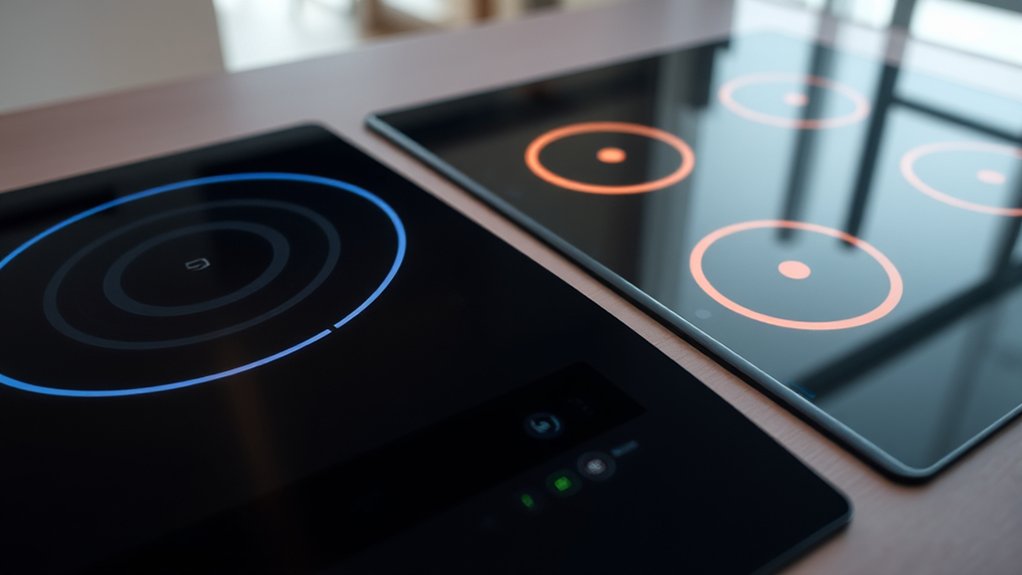
While both induction and glass cooktops have sleek, modern looks, they work quite differently. Induction cooktops use electromagnetic fields to heat pots directly.
Induction and glass cooktops look modern but heat differently—induction heats pots directly, while glass heats via radiant elements.
When you turn on an induction stove, an alternating magnetic current creates a magnetic field beneath the surface. This field induces electric currents in ferromagnetic cookware.
These currents generate heat inside the pot, not on the cooktop itself. In contrast, glass cooktops, usually electric, heat through resistive elements or radiant heat coils beneath the glass surface.
When you activate a glass stove, the heating element warms up and transfers heat through the glass. The surface then radiates heat to cook your food.
Performance: Which Is Faster and More Efficient?
Have you ever wondered which cooktop heats up faster and uses energy more efficiently? Induction cooktops heat quickly because they transfer energy directly to the cookware through magnetic fields.
Glass cooktops, on the other hand, rely on electric or radiant heating elements, which take longer to reach the desired temperature.
| Feature | Induction | Glass Cooktops |
|---|---|---|
| Heating Speed | Heats instantly, faster | Takes time to warm up |
| Energy Efficiency | Higher, less heat loss | Lower, more heat escapes |
| Response Time | Very responsive | Less responsive |
In short, induction cooktops are generally faster and more efficient than traditional glass models.
Cleaning and Maintenance: Which Cooktop Is Easier to Keep?
Cleaning and maintaining your cooktop can be straightforward once you understand the surface and upkeep. You’ll find that some surfaces are easier to wipe down and require less frequent maintenance.
Let’s compare how induction and glass cooktops stack up in these areas.
Ease of Surface Cleaning
With regard to keeping your cooktop spotless, induction surfaces are generally easier to maintain than glass cooktops. Their smooth, flat surface means spills and splatters don’t seep into cracks or crevices. When messes happen, you can quickly wipe them away with a damp cloth or soft sponge, often without needing special cleaners.
Glass cooktops, on the other hand, have a more delicate surface that can scratch or crack easily. They also tend to show stains, especially from burnt-on food or mineral deposits. This requires more effort and specific cleaners to keep them looking clear and shiny.
Maintenance Requirements
With regard to maintenance, induction cooktops typically require less effort to keep in good condition than glass cooktops. Induction surfaces have a smooth, non-porous finish that resists stains and spills, making cleaning straightforward.
Since heat doesn’t transfer to the surface, messes are less likely to burn onto the cooktop, reducing deep cleaning needs. You can wipe down an induction cooktop quickly after cooking, using a soft cloth and mild cleaner.
Glass cooktops, however, often need more attention. Spills can bake onto the surface if not cleaned promptly, and scratches or stubborn stains may develop over time. Regular cleaning with appropriate products is essential to keep them looking good.
Energy Efficiency and Cost Savings: Which Is Better?
When comparing induction and glass cooktops regarding energy efficiency, induction cooktops generally come out ahead because they heat cookware directly through electromagnetic fields, reducing wasted heat. This targeted heating means you use less energy to cook food faster, saving you money over time.
Glass cooktops, on the other hand, transfer heat through a heated surface, which loses energy to the environment and takes longer to heat up. As a result, induction models tend to be more cost-effective in the long run, thanks to their higher efficiency and quicker cooking times.
Furthermore, induction cooktops often have better temperature control, helping you avoid energy waste from overheating. Overall, if you’re looking to save on energy bills and improve efficiency, induction cooktops are the smarter choice.
Safety Features: Which Cooktop Is Safer?
Are induction and glass cooktops equally safe to use? Both have important safety features, but they protect you in different ways.
Induction cooktops only generate heat when compatible cookware is placed on them. This reduces the risk of accidental burns or fires. They also have automatic shut-off features if no cookware is detected or if overheating occurs.
Glass cooktops, on the other hand, can stay hot long after you turn them off, which increases burn risk. But many models include residual heat indicators to warn you when the surface is still hot.
While induction surfaces are generally safer because they don’t heat directly, glass cooktops often have safety locks and child-proof settings. Overall, both are safe when used properly, but induction offers extra safety benefits thanks to its responsive heating controls.
Cookware Compatibility: Can You Use Any Pots and Pans?
Your cookware needs a magnetic base for induction cooktops to work properly, so not all pots and pans are compatible. Materials like cast iron and stainless steel usually work well, but aluminum and glass typically won’t unless they have a magnetic layer.
Keep in mind, some cookware might have limitations or require specific features to perform well on these cooktops.
Compatibility With Magnetic Bases
Not all cookware works with induction cooktops because they need magnetic bases to heat efficiently. If your pots and pans aren’t magnetic, they won’t heat properly on an induction surface. To check, look for a magnetic base or test with a magnet—if it sticks, you’re good to go.
| Compatible Cookware | Not Compatible Cookware |
|---|---|
| Cast iron | Aluminum without magnetic bottom |
| Magnetic stainless steel | Glass or ceramic without metal layer |
| Certain multi-layer pans | Non-magnetic metals |
Using incompatible cookware means no heat transfer, which wastes your time and energy. Always verify that your cookware has a magnetic base before using it on an induction cooktop.
Suitable Material Types
Choosing the right cookware material is essential for efficient and safe cooking on induction surfaces. Induction cooktops need cookware with magnetic properties, so not all pots and pans will work.
Cast iron, stainless steel, and certain enameled metals are ideal because they contain ferromagnetic materials. Aluminum, copper, and glass cookware won’t work unless they have a magnetic layer added.
You can test compatibility by seeing if a magnet sticks to the bottom of your cookware. If it does, it’s suitable for induction cooking. Using incompatible materials can lead to poor heat transfer or no heating at all.
Always check your cookware’s material before using it on an induction cooktop. This guarantees safety and efficiency during your cooking.
Potential Use Limitations
While induction cooktops heat quickly and efficiently, they have specific cookware requirements. You can’t just use any pots and pans; they need to be magnetic.
If your cookware doesn’t have a ferrous base, it won’t heat on an induction surface. So, aluminum, glass, or copper pots won’t work unless they’ve been made magnetic.
Glass and ceramic cookware are usually incompatible because they lack magnetic properties. Before buying new cookware, test it with a magnet—if it sticks, you’re good to go.
This can be inconvenient if you already own non-magnetic pots. Luckily, many manufacturers now make induction-compatible cookware, making it easier to switch.
Still, it’s a good idea to verify compatibility so your cookware works effectively on an induction cooktop.
Design and Style: Visual Differences Between Them
Induction and glass cooktops each bring distinct visual elements to your kitchen. Induction cooktops usually have a sleek, smooth surface with a black or dark glass finish and touch controls built right into the surface. They often feature glowing zones when active, giving a modern, high-tech look.
Glass cooktops also have a smooth glass surface, but you might see visible heating elements or coils beneath the glass. Sometimes, they have radiant zones marked by lines or circles. Their design can feel more traditional or industrial, depending on the model.
Price and Installation: What Are the Costs Involved?
Are you wondering about the costs involved in installing an induction or glass cooktop? The price difference can really affect your budget and plans.
Induction cooktops usually cost more upfront but can save you money over time because they’re more energy-efficient. Glass cooktops tend to be less expensive initially, but they might need more frequent repairs or replacements.
Induction cooktops cost more initially but save energy; glass options are cheaper upfront but may need more repairs over time.
Installation costs depend on your kitchen setup. Induction units often require specialized wiring or upgrades, which can add to the total cost.
Think about the emotional side too: investing in a sleek, modern kitchen that feels inspiring. Or balancing your budget without sacrificing quality. And feeling confident in your choice, knowing it offers long-term savings.
In the end, your decision depends on what fits your financial comfort and your priorities for style and functionality.
Which Cooktop Is Better for Different Cooking Styles?
Different cooking styles need different features, so think about what’s most important to you, like speed and control.
Induction cooktops heat up quickly and let you adjust temperatures precisely. They’re perfect for fast-paced cooking or delicate dishes.
Glass cooktops might not respond as fast, but they provide steady heat for everyday meals you cook regularly.
Cooking Speed and Efficiency
Concerning cooking speed and efficiency, choosing the right cooktop can make a noticeable difference in your kitchen routine. Induction cooktops heat faster, rapidly bringing water to a boil and cutting down overall cooking time. Glass cooktops, while slower, still provide decent heat transfer but don’t match induction’s speed. You’ll feel more accomplished when your meals come together quickly and effortlessly.
Think about these emotional benefits:
- Save precious time for family or hobbies instead of waiting around.
- Reduce frustration during busy mornings or dinner rushes.
- Enjoy consistent results with faster, even heating.
If speed and efficiency matter to you, induction cooktops help you cook smarter, not harder.
Precision Control Abilities
Regarding precision control, induction cooktops excel by offering immediate adjustments and highly responsive heat settings, making them ideal for delicate cooking techniques like simmering or melting. You can fine-tune the temperature instantly, giving you full control over your dishes.
This responsiveness helps prevent overcooking or burning, especially with sensitive ingredients. Glass cooktops, on the other hand, rely on traditional heating elements that respond more slowly to adjustments.
While they can still provide decent control, they lack the pinpoint accuracy of induction models. If your cooking style involves precise temperature management, like making sauces or tempering chocolate, induction cooktops are the better choice.
They give you the control needed for those subtle, exact heat levels that enhance your culinary results.
Pros and Cons: Induction Vs. Glass Cooktops
When choosing between induction and glass cooktops, understanding their pros and cons can help you make an informed decision. Induction cooktops heat quickly, offering precise temperature control and energy efficiency. However, they can be more expensive upfront and require compatible cookware.
Glass cooktops are generally more affordable and versatile, compatible with most pots and pans. Yet, they tend to heat more slowly, and their surfaces are more prone to scratches and stains.
Consider these emotional factors:
- Feel confident with rapid, accurate cooking that induction offers.
- Enjoy peace of mind knowing glass surfaces are easy to clean.
- Weigh the cost against long-term energy savings and convenience.
Frequently Asked Questions
Can Induction Cooktops Be Used With Metal Cookware Only?
No, induction cooktops can’t be used with just any metal cookware. They need magnetic materials like cast iron or certain stainless steels to work properly.
If your cookware isn’t magnetic, the cooktop won’t heat up. To check, see if a magnet sticks to the bottom of your pots or pans.
Using compatible cookware ensures efficient heating and safe operation on your induction cooktop.
Do Glass Cooktops Crack Easily?
Actually, glass cooktops are pretty durable, but they can crack under certain conditions. Heavy or rough cookware, sudden impacts, or extreme temperature changes can cause cracks.
If you’re careful and avoid dropping heavy pots or placing cold items on hot surfaces, your cooktop should last for years. Just follow the manufacturer’s instructions for cleaning and care.
That way, you minimize the risk of cracking and keep your glass cooktop looking new.
Are Induction Cooktops Noisy During Operation?
Yes, induction cooktops can be noisy during operation. You might hear buzzing or humming sounds, especially when using higher power settings. These noises come from the electromagnetic coils and cooling fans.
Some users find the sounds noticeable, while others barely notice them. Overall, the noise levels are usually pretty low and shouldn’t interfere with your cooking. However, if you prefer a quieter kitchen, it’s something to keep in mind.
How Long Do Induction and Glass Cooktops Typically Last?
Induction cooktops usually last around 10-15 years with proper care, while glass cooktops often last about 7-12 years. You can extend their lifespan by cleaning spills promptly and avoiding heavy impacts.
Induction models tend to be more durable because of their solid surface and fewer moving parts. Regular maintenance and gentle handling help both types perform well over time, ensuring you get the most out of your investment.
Can You Retrofit Existing Kitchens With Induction or Glass Cooktops?
Yes, you can retrofit your existing kitchen with induction or glass cooktops.
You’ll need to check if your electrical system can handle the new cooktop’s power needs, especially for induction models that often require a dedicated circuit.
Measure your countertop space to ensure the new unit will fit and verify compatibility with your current wiring.
Hiring a professional electrician or installer is a good idea. It will make the retrofit safer and ensure everything works properly.
Conclusion
Choosing between induction and glass cooktops is like picking the right tool for a job—you want the one that fits your needs best. If speed and energy efficiency are your priorities, induction is like a lightning bolt—quick and powerful.
For easy cleaning and a sleek look, glass cooktops are more like a smooth river stone. Think about your cooking style, safety needs, and budget to make the best choice for your kitchen.
When it comes to induction versus glass cooktops, consider how each option aligns with your lifestyle. Induction offers fast heating and precise control, making it ideal for busy cooks.
Glass cooktops, on the other hand, are known for their stylish appearance and simple maintenance. They’re a great choice if you want something easy to clean and visually appealing.
Ultimately, your decision should reflect what matters most to you—whether it’s speed, safety, design, or cost. Both induction and glass cooktops have their strengths, so pick the one that best suits your cooking needs.