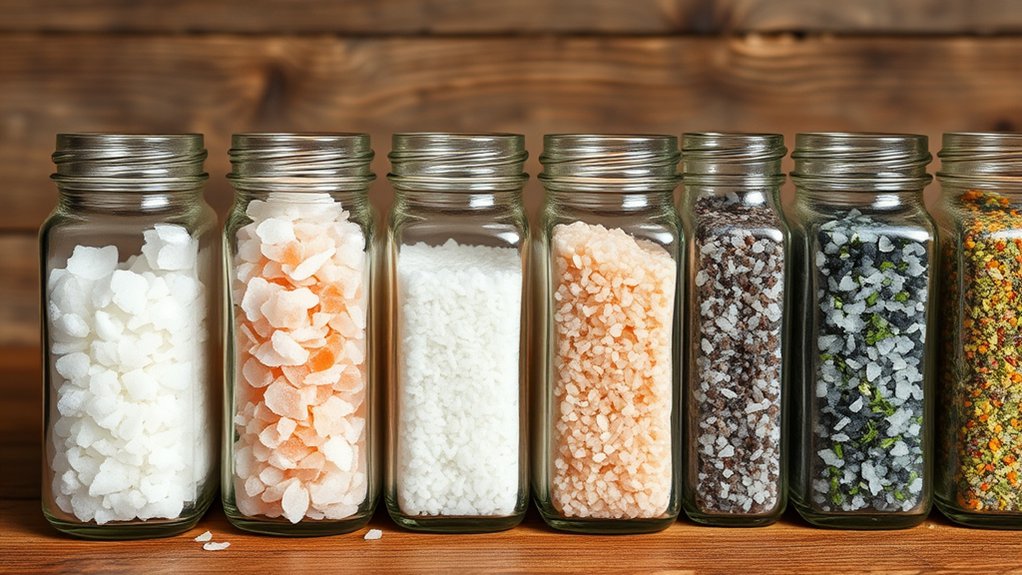
Whats Best Salt to Use – Top 8 Picks
Are you tired of guessing which salt to use in your cooking? You’re not alone—many people struggle with choosing the right salt to elevate their dishes. With so many options out there, it can feel overwhelming to pick the perfect one.
Choosing the best salt depends on your cooking needs. For versatile use, go for fine sea salt or table salt.
If you want flavor and texture, try flaky Maldon or fleur de sel as finishing salts.
For health benefits, Himalayan pink salt offers minerals, while kosher salt is perfect for baking and brining.
Specialty salts add unique appeal, but picking the right one can really enhance your dishes. Keep exploring to find the top options for your kitchen.
Key Takeaways
- Choose fine salts like table or sea salt for baking and general cooking to ensure quick dissolving.
- Use coarse salts such as kosher or Maldon for seasoning meats and adding a bit of texture.
- Opt for specialty salts like Himalayan pink or flavored salts as finishing touches to enhance the flavor.
- Think about the mineral content and flavor profile based on the dish you’re making and your personal taste.
- Consider unrefined salts if you’re looking for health benefits and richer mineral profiles.
What Should You Know Before Choosing Salt for Cooking?

Before choosing salt for cooking, it’s important to understand the different types available and how they can impact your dishes. Not all salts are the same; some have unique flavors, textures, and mineral contents that influence your culinary results.
Understanding salt varieties helps enhance flavor and texture in your cooking.
For example, table salt is fine and highly refined, making it ideal for seasoning during cooking or baking. Meanwhile, sea salt often contains trace minerals that add subtle flavors, perfect for finishing dishes.
Himalayan pink salt offers a distinct taste and color, while specialty salts like fleur de sel or Maldon salt provide unique textures. Consider your cooking style and flavor preferences when selecting salt.
Knowing these differences helps you choose the right type to improve your recipes and achieve the desired taste and texture.
Key Differences Between Common Salt Types
Different types of salt vary quite a bit in texture, mineral content, and flavor, which can really affect your cooking.
Table salt is fine and versatile, making it great for baking and seasoning dishes.
Sea salt has larger crystals and keeps minerals from seawater, giving it a more complex flavor.
Himalayan pink salt contains trace minerals and adds a subtle earthy taste to your food.
Kosher salt has coarse grains, which makes it perfect for seasoning meat and drawing out moisture.
Its flaky texture makes it easy to pinch and sprinkle over dishes.
How to Decide Which Salt Is Best for Your Cooking Needs
Choosing the right salt depends on what you’re cooking and your flavor preferences. First, think about the texture: fine salts dissolve quickly and are perfect for seasoning, while coarse salts add crunch and look nice on dishes.
Next, consider the salt’s mineral content. Unrefined salts often have richer, more complex flavors. For delicate dishes, go for milder salts like table salt or fine sea salt.
For finishing touches or grilling, coarse salts or flaky varieties work better. If you like a particular flavor profile, pick salts with distinctive mineral notes.
Also, think about how soluble the salt is and how it will blend into your dishes. Trying out different types helps you find which salts enhance your recipes and match your taste.
Benefits of Himalayan Pink Salt for Health and Flavor
Himalayan pink salt is celebrated not only for its striking appearance but also for its potential health benefits and rich flavor profile.
Its mineral content, including trace elements like magnesium and potassium, may support your overall well-being by helping with hydration, balancing electrolytes, and promoting healthy skin.
Many people find that it enhances the taste of dishes without overpowering them, adding a subtle, nuanced saltiness.
Since it’s natural and unprocessed, you’re avoiding additives often found in table salt.
Using Himalayan pink salt can also encourage mindful salt consumption, as its flavor lets you use less overall.
Whether you sprinkle it on salads, meats, or roasted vegetables, you’ll enjoy its unique flavor while potentially gaining some health perks.
Why Use Kosher Salt for Baking and Brining?
Kosher salt is a popular choice for baking and brining because of its coarse texture and clean, pure flavor. Its larger grains make it easy to control when seasoning or dissolving, helping prevent over-salting.
When brining, the salt dissolves evenly, ensuring consistent flavor throughout the meat or vegetables. Its neutral taste enhances natural flavors without adding bitterness or metallic notes.
The coarse structure also helps with even distribution, making it perfect for dry rubs or seasoning mixes. Plus, it’s easy to pinch and sprinkle, giving you precise control during cooking.
Unlike finer salts, kosher salt’s texture makes it easier to handle and measure. This is especially helpful in baking and brining, where precision and consistency really matter.
What Makes Celtic Sea Salt Great for Finishing Dishes?
Celtic sea salt stands out as a finishing salt because of its unique mineral content and moist texture, which add depth and complexity to dishes. Its naturally harvested minerals, like magnesium and calcium, enhance flavors without overpowering them.
The moist, flaky crystals dissolve slowly, giving your food a subtle crunch and a burst of fresh saltiness with every bite. You’ll notice how it amplifies the natural taste of vegetables, meats, or seafood, making each dish feel more refined.
Unlike highly processed salts, Celtic sea salt retains its natural qualities, adding a layer of richness and nuance. Its mineral complexity and delicate texture make it perfect for sprinkling just before serving, effortlessly boosting your culinary presentation.
When and How to Use Flavored or Specialty Salts
Have you ever wondered when and how to best incorporate flavored or specialty salts into your cooking? These salts add unique flavors and textures, but timing really matters.
Use them as finishing touches to enhance dishes—like sprinkling smoked salt on grilled meats or flaky sea salt on salads. Avoid cooking with them at high heat, which can diminish their flavor.
Instead, add these salts just before serving for maximum impact. They’re perfect for elevating simple dishes with a burst of flavor and texture.
How to Choose the Best Salt for Your Kitchen and Budget
Wondering how to choose the right salt for your kitchen without breaking the bank? Start by thinking about your cooking style and taste preferences. If you mainly cook simple dishes, a basic table salt might be all you need.
For more gourmet or finishing touches, consider specialty salts like flaky sea salt or Himalayan pink salt. Budget-wise, regular iodized salt offers great value, while gourmet salts tend to be more expensive but bring unique textures and flavors.
Think about how often you’ll use the salt and what for—everyday cooking, baking, or adding those final touches to dishes. Also, check the mineral content and how processed the salt is; less refined salts often keep more minerals and flavor.
Balancing quality with your budget helps you find the best salt for your needs without overspending.
Frequently Asked Questions
Is Iodized Salt Better Than Natural Sea Salts?
Iodized salt is better if you need to prevent iodine deficiency, which is essential for thyroid health.
However, natural sea salts contain trace minerals that can offer additional health benefits, and some people prefer their flavor.
If you’re aiming for a specific health goal or taste preference, choose accordingly.
How Does Salt Mineral Content Affect Flavor and Health?
Salt’s mineral content is like a painter’s palette, adding depth and nuance to flavors while influencing health. Higher mineral levels, found in natural sea salts, can create richer, more complex tastes that enhance your dishes.
Health-wise, these minerals support your body’s functions. But too much salt, regardless of mineral content, can raise blood pressure.
Balancing flavor and health means choosing salts with beneficial minerals and using them mindfully.
Can Different Salts Be Used Interchangeably in Recipes?
Yes, you can use different salts interchangeably in recipes, but keep in mind they may change the flavor and texture. Fine salts dissolve quickly, while coarse salts add crunch or bursts of seasoning.
Some salts, like sea salt or Himalayan pink salt, have unique mineral flavors that might subtly alter the dish’s taste. Adjust the quantities accordingly and taste as you go to keep your dish balanced.
What Are the Environmental Impacts of Salt Production?
Salt production impacts the environment quite a bit, especially through mining and evaporation methods. Mining can damage land, destroy habitats, and cause water pollution from runoff.
Evaporative processes use a lot of freshwater, which can strain local water supplies. Plus, the energy needed for production releases greenhouse gases that contribute to climate change.
You can help reduce these impacts by choosing sustainably sourced salts or cutting back on salt use whenever possible.
How Should I Store Salt to Maintain Its Quality?
Safeguard your salt supply by storing it in a cool, dry, and airtight container. Keep it away from moisture, heat, and sunlight to prevent clumping and spoilage.
Make sure the container is tightly sealed to prevent contamination and preserve freshness. Proper storage helps maintain its quality and keeps it flavorful and effective.
Taking care of your salt storage means it stays pristine, potent, and ready whenever you need it most.
Conclusion
Choosing the right salt improves your cooking and health, so don’t settle for just any table salt. With so many options out there, it’s easy to feel overwhelmed. But remember, your effort to pick the best salt shows how much you care about flavor and well-being.
Even if you’re on a budget, there’s a quality salt that fits your needs. Raise your dishes and enjoy the difference. Your taste buds and body will thank you for choosing the best salt.