7 Best Cuts of Beef for Grilling
Many grilling enthusiasts struggle with choosing the perfect beef cuts that deliver flavor, tenderness, and value. You’re not alone—finding the right cut can feel overwhelming with so many options out there. Luckily, knowing the best cuts for grilling makes all the difference.
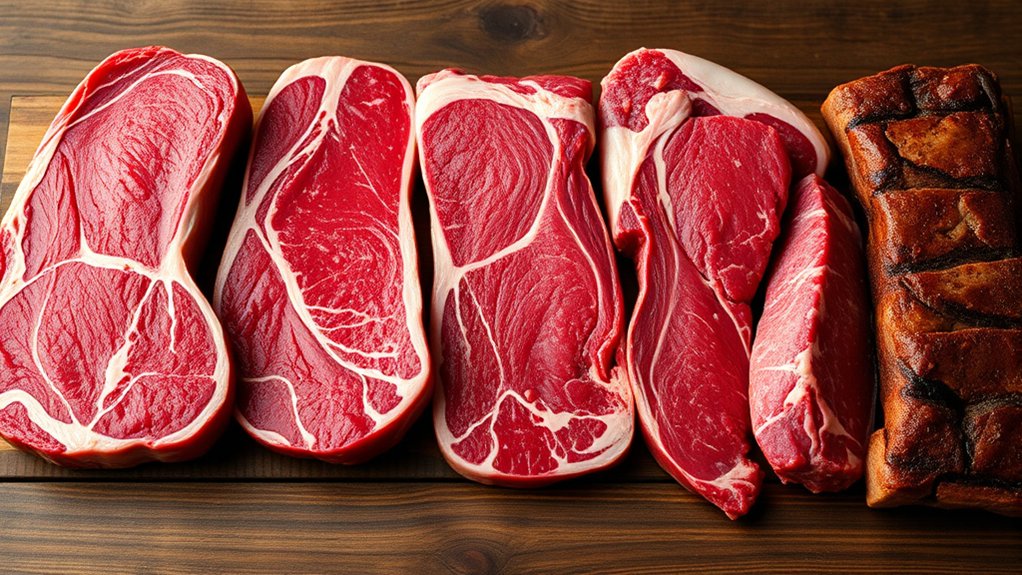
If you’re looking for the best beef cuts for grilling, focus on cuts like ribeye, sirloin, T-bone, porterhouse, flank, skirt, and short ribs. Ribeye offers great marbling and flavor, while sirloin provides balance and affordability.
Flank and skirt steaks are perfect for marinating and quick searing, and T-bone or porterhouse give you a mix of tenderloin and strip.
Want tips on picking the perfect cut? Keep exploring to get all the details.
Key Takeaways
- Ribeye is prized for its marbling, tenderness, and juiciness, making it ideal for grilling. It’s a favorite for many because of its rich flavor and melt-in-your-mouth texture.
- T-bone and Porterhouse steaks combine great flavor and tenderness. The bone adds extra taste, making each bite even better.
- Sirloin steaks offer a good balance of flavor, tenderness, and affordability. They’re perfect for quick grilling sessions when you want something delicious without breaking the bank.
- Flank and Skirt steaks are best when marinated. Slice them thinly against the grain for the most tenderness.
- When choosing your cuts, look for visible marbling. Also, aim for steaks that are at least 1 to 1.5 inches thick for the best grilling results.
What Makes a Beef Cut Great for Grilling?
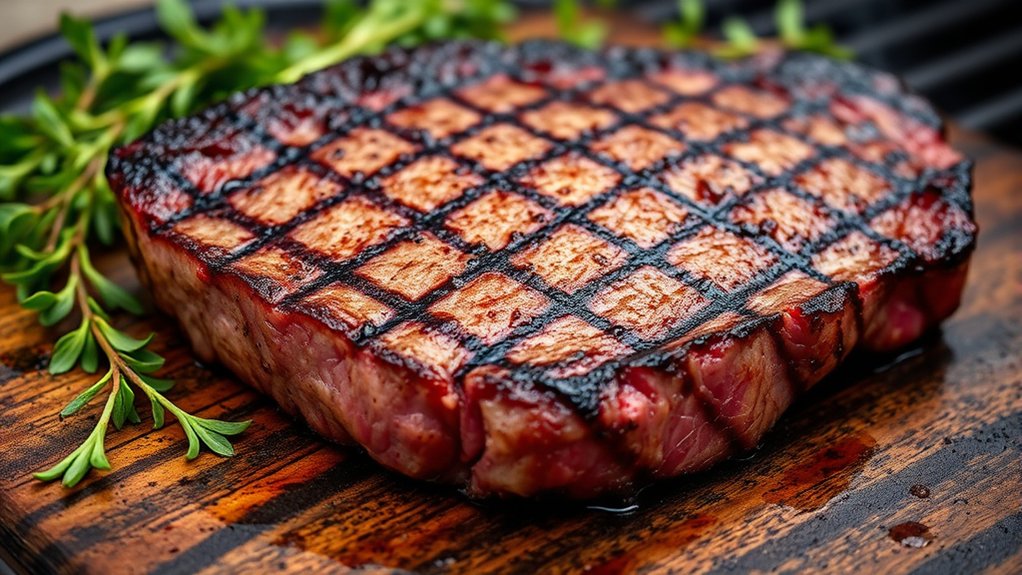
A beef cut is ideal for grilling when it has the right balance of tenderness and flavor. You want a cut that’s not too tough but still flavorful enough to stand up to high heat.
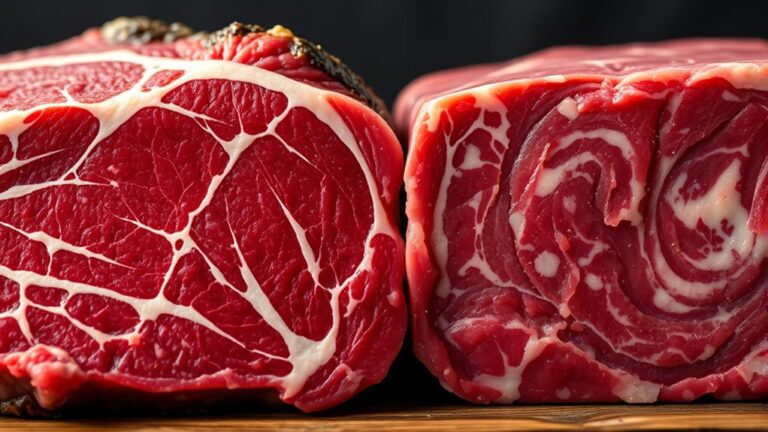
Marbling, the streaks of fat within the meat, plays a big role. More marbling usually means juicier, more tender results. Thin cuts can dry out quickly, so thicker cuts are better for grilling because they give you control over doneness.
Look for cuts that are firm but slightly springy to the touch. Avoid overly lean cuts, which tend to be dry and less flavorful. Ultimately, the best grilling beef strikes a balance—rich in flavor, tender enough to bite into, and able to withstand the heat without losing its juiciness.
Top Cuts of Ribeye for Juicy, Flavorful Grilling
When choosing a ribeye for grilling, look for cuts with plenty of marbling and thickness. These qualities help ensure your steak stays juicy and flavorful.
Check for streaks of fat evenly spread throughout the meat. When it melts during grilling, it boosts both taste and tenderness.
Go for steaks that are at least 1 to 1.5 inches thick. Thicker cuts cook more evenly and keep their juices better.
Prime and choice grades usually have the best marbling, so opt for those labels when possible.
Bone-in ribeyes, like cowboy or rib steaks, tend to have more flavor thanks to the marrow and bone.
Look for bright red color, firmness with a slight give, and avoid any discoloration or dried edges.
Best Sirloin Steaks for Tender, Budget-Friendly Grilling
Among the best options for tender, budget-friendly grilling, sirloin steaks stand out for their balance of flavor, tenderness, and affordability. They’re versatile and easy to find at most markets, making them a popular choice for casual cooks.
Look for sirloin steaks with a bright red color and minimal marbling for the best value. The top cuts include top sirloin and sirloin strip steaks, both offering good tenderness without breaking the bank.
To get the most flavor and tenderness, season them simply with salt and pepper. Avoid overcooking to keep them juicy. Grill over medium-high heat for about 4-6 minutes per side, depending on thickness.
Let the steaks rest a few minutes before slicing to help retain their juices. These steaks deliver satisfying results without a hefty price tag.
Flank and Skirt Steaks: Ideal for Marinating and Searing
Because of their loose muscle structure, flank and skirt steaks excel when marinated and seared quickly at high heat. Their open grain absorbs flavors well, so marinating is essential for tenderness and added richness. A simple marinade with soy sauce, garlic, lime, and spices works wonders.
When you’re ready to cook, preheat your grill to high. Sear the steaks for about 3-4 minutes per side for medium-rare, creating a flavorful crust. Since these cuts are thin and lean, avoid overcooking to prevent toughness.
Let the meat rest briefly before slicing it thinly against the grain. This maximizes tenderness. These steaks are perfect for fajitas, tacos, or salads, offering bold flavor and satisfying texture when prepared correctly.
T-Bone and Porterhouse Steaks for a Classic Grill
To get the best results with T-bone and porterhouse steaks, you want to master the right cooking techniques, like high-heat grilling for a perfect sear.
Choosing the freshest, well-marbled cuts really boosts flavor and tenderness, making your steak stand out.
Pay attention to how you season and rest the meat to maximize flavor profiles and get that classic, juicy finish.
Perfect Cooking Techniques
Grilling T-bone and Porterhouse steaks to perfection means paying attention to their unique structure and fat distribution. Start with high heat, around 450-500°F, and sear each side for 2-3 minutes to develop a tasty crust.
Use a meat thermometer to aim for an internal temperature of 130-135°F for medium-rare. Rest the steaks for 5 minutes before slicing to let the juices redistribute.
| Technique | Purpose | Tips |
|---|---|---|
| Searing | Creates a flavorful crust | Keep the grill hot and don’t flip too often |
| Indirect heat | Finishes cooking evenly | Move steaks away from direct flame if needed |
| Resting | Keeps the meat juicy | Cover loosely with foil for 5 minutes |
Choosing the Right Cut
Are T-bone and porterhouse steaks the perfect choices for a classic grill? Absolutely. These cuts combine tenderloin and strip steak, giving you the best of both worlds: tenderness and flavor.
The T-bone has a smaller tenderloin section, while the porterhouse boasts a larger one, making it ideal for sharing or a hearty appetite. When choosing, look for steaks with a bright, cherry-red color and fine marbling—these are signs of quality and flavor.
Make sure the meat feels firm but not hard, and avoid steaks that are excessively dry or have dark spots. Both cuts are best cooked over high heat to develop a flavorful crust while keeping the inside juicy.
With their impressive presentation and rich taste, T-bone and porterhouse steaks really elevate any grilling occasion.
Enhancing Flavor Profiles
Enhancing the flavor of T-bone and porterhouse steaks starts with simple but effective techniques that bring out their natural richness. First, season generously with coarse salt and freshly ground black pepper to create a flavorful crust.
Next, consider marinating the steaks with herbs, garlic, or a splash of olive oil to add depth. Finally, let the steaks rest after grilling to allow juices to redistribute, making every bite juicy and full of flavor.
To boost taste even further, you can:
- Use a flavor-enhancing dry rub or marinade
- Baste with melted butter or herb-infused oils during grilling
- Finish with a sprinkle of flaky sea salt or finishing salt for a delightful crunch
These steps help enhance the steak’s natural beefy profile, making each bite unforgettable.
Slow-Cooking Cuts: Short Ribs and Chuck Roast
Slow-cooking cuts like short ribs and chuck roast become incredibly tender when cooked low and slow.
This method brings out rich, deep flavors that make each bite satisfying.
If you’re after hearty results, these cuts are your best bet.
Tenderness Through Slow Cooking
Slow cooking transforms tougher cuts like short ribs and chuck roast into tender, flavorful dishes by breaking down connective tissues over time. This slow process allows collagen to turn into gelatin, creating moist, melt-in-your-mouth meat.
To get the best tenderness, use low heat and cook the meat for a long time. Keep the lid on to hold in moisture and prevent the meat from drying out. Add enough liquid to partially submerge the meat, so it cooks evenly.
This method works great because it turns less expensive, tougher meat into rich, tender bites. Patience is essential—slow cooking takes time but rewards you with deeply flavorful, fall-apart beef perfect for hearty dishes or sandwiches.
Rich, Flavorful Results
For rich, flavorful results, cuts like short ribs and chuck roast really shine when cooked slowly. They develop deep, savory taste profiles that are tough to get with quick methods.
Slow cooking breaks down connective tissues, releasing gelatin that boosts the meat’s natural flavors. As you cook these cuts over low heat, the flavors get more intense and layered.
You’ll notice the meat becoming melt-in-your-mouth tender, with flavors fully absorbed from seasonings. This process creates a complex, satisfying taste perfect for hearty dishes.
Take your time with these cuts, and you’ll be rewarded with meat that’s not only tender but packed with rich, irresistible flavor.
How to Choose the Perfect Beef Cut for Your Grill
Ever wonder how to pick the best beef cut for grilling? The key is understanding what qualities make a cut ideal. Look for cuts with good marbling, which guarantees flavor and tenderness.
Thickness matters too. Thicker cuts stay juicy and cook evenly. Finally, consider the cut’s fat content. Some fat improves flavor, but too much can cause flare-ups.
To choose the perfect beef for grilling, look for visible fat streaks within the meat. Aim for cuts that are at least 1 to 1.5 inches thick. Select cuts with moderate fat for flavor without excessive flare-ups.
Frequently Asked Questions
How Do I Determine the Best Beef Cut for Different Grilling Methods?
To figure out the best beef cut for different grilling methods, think about the tenderness and fat content of the cut.
For quick, high-heat grilling, go with tender cuts like ribeye or sirloin because they cook evenly and stay juicy.
For slower methods like smoking or indirect heat, tougher cuts like brisket or chuck are great because they break down over time and develop rich flavors.
Matching the cut to your grilling style will give you the best results.
What Are Common Mistakes to Avoid When Grilling Beef?
Think of your grill as a stage and the beef as your star performer. Don’t forget to preheat, or you’ll risk uneven cooking.
Avoid constant flipping, which can dry out your meat; instead, let it develop a beautiful sear. Overcrowding the grill stifles heat and causes steaming rather than grilling.
Also, skip the temptation to cut into the meat early. Patience reveals juicy, flavorful perfection.
How Can I Tell if a Grilled Beef Steak Is Cooked Perfectly?
You can tell a grilled beef steak is perfectly cooked by checking its internal temperature with a meat thermometer. For rare, aim for 125°F; medium-rare, 135°F; medium, 145°F; medium-well, 155°F; and well-done, 160°F.
Let the steak rest for a few minutes before cutting to allow juices to redistribute. Also, observe the color and firmness—touching the steak helps gauge its doneness.
Are There Specific Beef Grades Better for Grilling?
Yes, certain beef grades are better for grilling because of their marbling and tenderness. Prime grade has the most marbling, which makes steaks juicier and more flavorful. It grills beautifully and gives the best results.
Choice grade is also a good option. It offers a nice balance of quality and affordability, making it a popular choice for grilling.
Select grade is leaner and less tender, so it’s not the best for high-heat grilling. For the best grilling experience, go for Prime or Choice.
How Do Marinades Enhance the Flavor of Different Beef Cuts?
Marinades enhance the flavor of different beef cuts by infusing them with moisture and bold tastes. They help break down tough fibers, making the meat more tender, especially for leaner cuts.
When you marinate, you add herbs, spices, and acids like vinegar or citrus, which create a richer, more complex flavor profile. This process really boosts the natural flavors of the beef.
Conclusion
Now that you’ve got the inside scoop on these prime cuts, your grill is ready to become a stage for flavorful performances. Whether you’re searing a juicy ribeye or tenderizing a skirt steak, each cut is your ticket to a mouthwatering masterpiece.
So fire up that grill, choose your perfect cut, and let the sizzling symphony of flavors transform your backyard into a culinary carnival. Your next great grilling adventure with the best cuts of beef for grilling awaits—seize it!