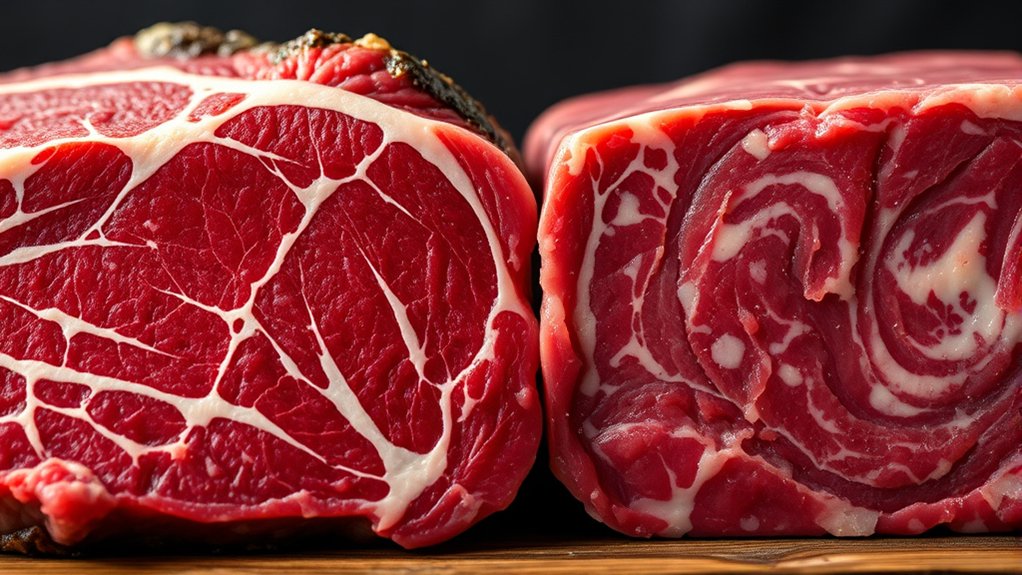
7 Key Differences Between Angus Beef and Regular Beef
Are you tired of guessing whether the beef you’re buying is truly high quality? Many people struggle with choosing the right cut for flavor, tenderness, and overall satisfaction. You’re not alone — navigating the world of beef can be confusing.
You’ll notice Angus beef stands out with strict breed standards, higher marbling, and better tenderness. It’s usually more flavorful, juicy, and easier to chew thanks to its fat content.
While it costs more, many find the quality justifies the price. Proper cooking improves its taste, and authentic Angus can be identified by USDA labels and visible marbling.
Keep exploring to uncover even more ways to choose the best beef for your meals.
Key Takeaways
- Angus beef follows strict breed standards and has higher genetic purity, which helps ensure consistent quality and marbling.
- It usually has more intramuscular fat, giving it a richer flavor and making it more tender than regular beef.
- The increased marbling in Angus beef boosts juiciness, tenderness, and adds depth to the flavor.
- Because of its superior quality, higher marbling, and popularity among consumers, Angus beef tends to be priced higher.
- To get the best flavor and tenderness from both types, use proper cooking techniques like high heat searing and letting the meat rest afterward.
What Are the Breed Standards and Quality Grades for Angus Beef?

Angus beef is known for its consistent quality, thanks to strict breed standards and grading systems. When you pick Angus, you’re choosing cattle that meet specific genetic criteria, which helps ensure good marbling, tenderness, and flavor.
Choosing Angus beef means selecting high-quality, well-marbled, tender, and flavorful meat backed by strict standards.
The American Angus Association oversees these standards, focusing on pedigree, genetic purity, and physical traits like size and muscle. This guarantees the cattle meet high-quality benchmarks.
Quality grades like Prime, Choice, and Select are based on marbling and maturity. Prime is the top grade, indicating the best marbling and tenderness, followed by Choice and then Select.
These grades help you tell how juicy and tender the beef will be. By following these standards, producers can deliver reliable, premium beef that meets what consumers expect.
How Do Flavor and Marbling Differ Between Angus and Regular Beef?
While both Angus and regular beef can be flavorful, they differ quite a bit in terms of marbling and taste. Angus beef usually has more intramuscular fat, which creates richer marbling that melts during cooking.
This results in a buttery, juicy flavor that many people find more intense and satisfying. Regular beef, depending on the breed, often has less marbling, so it tends to be leaner with a more pronounced beefy flavor.
However, it might lack the creamy richness you get with Angus. The higher marbling in Angus improves tenderness and adds depth to the flavor, making it more appealing for those after a luxurious eating experience.
How Does Tenderness Compare in Angus and Regular Beef?
The higher fat content in Angus beef not only boosts flavor but also makes it more tender. Fat helps break down muscle fibers and keeps the meat juicy and soft when you chew.
Because of this, Angus beef usually feels more tender than regular beef, which often has less marbling. The quality of the connective tissues also matters; Angus cattle are typically raised with better genetics and care, leading to finer muscle structure.
This combination of marbling and muscle quality makes Angus beef easier to cut and chew, giving you a more enjoyable eating experience. Overall, if tenderness is what you want, Angus beef generally beats regular beef.
What Are the Price Differences and Value Considerations?
Typically, Angus beef is priced higher than regular beef because of its better marbling, quality, and demand. The higher cost usually reflects improved flavor, tenderness, and overall eating experience.
To understand the value, think about these points:
- Cost vs. Quality: Usually, a higher price means better marbling and flavor, which can be worth the extra investment.
- Cooking Efficiency: Angus beef tends to be more tender, so it often cooks faster and creates less waste, saving you money over time.
- Market Demand: Its popularity pushes prices up, but it also means you get consistent quality and supply.
While Angus beef may cost more upfront, its richer flavor and tenderness can make it a better value if you’re looking for a premium experience.
How Do Farming and Raising Practices Impact Beef Quality?
Farming and raising practices directly influence the quality of beef you enjoy. When cattle are raised on nutritious, well-managed diets, the meat tends to be more tender, flavorful, and marbled.
Proper living conditions, like ample space and clean environments, reduce stress, which positively affects meat quality. Grazing on natural pastures often results in leaner, healthier beef with richer flavor profiles.
Conversely, cattle kept in crowded, unsanitary conditions or fed low-quality feed may produce tougher, less flavorful meat. Moreover, responsible practices like avoiding antibiotics and growth hormones can improve beef’s natural qualities.
What Cooking Methods Bring Out the Best in Angus and Regular Beef?
To get the best flavor and tenderness from Angus and regular beef, you need to pay attention to ideal cooking temperatures and searing techniques.
Proper resting periods after cooking help lock in juices and improve taste. By mastering these methods, you’ll maximize the quality of both types of beef on your plate.
Optimal Cooking Temperatures
Choosing the right cooking temperature is key to bringing out the best in both Angus and regular beef. Proper temps enhance flavor, tenderness, and juiciness.
For beef steaks, aim for:
- Rare (120°F–125°F): Keeps the meat tender and juicy, great for high-quality Angus.
- Medium Rare (130°F–135°F): Balances flavor and tenderness, good for both Angus and regular beef.
- Well Done (160°F+): Fully cooked but can toughen the meat if overdone, especially for leaner cuts.
A meat thermometer is your best friend for accuracy. Keep in mind, Angus beef’s marbling responds well to moderate heat, while regular beef can handle higher temps to break down connective tissues.
Controlling temperature properly boosts the flavor and texture of your beef.
Best Searing Techniques
Searing is a crucial step that develops rich flavor and appealing crust in both Angus and regular beef, but the techniques can differ slightly to maximize each type’s qualities. For Angus, start with a hot skillet or grill, making sure the surface is evenly heated to create a deep, caramelized crust. Pat the meat dry to promote better browning.
Use high heat and avoid overcrowding the pan or grill to prevent steaming. Regular beef also benefits from high heat, but it can handle slightly less intense searing to avoid overcooking. Both types should be seared carefully to develop a beautiful crust.
Resist the urge to move the meat too often—let it develop a crust before flipping. Once seared, finish with a brief rest so the juices can settle. Proper searing enhances flavor and texture, making your beef irresistibly delicious.
Suitable Resting Periods
Resting your beef after cooking allows the juices to redistribute, guaranteeing each bite is tender and flavorful. Proper rest times vary depending on the cut and cooking method. For Angus beef, resting for about 10-15 minutes helps maximize its marbling and tenderness, especially after grilling or roasting.
Regular beef benefits from a similar 5-10 minute rest, but thicker cuts may need longer. The key is to avoid cutting into the meat immediately, which causes juices to escape. Consider these guidelines:
- Thinner cuts like steaks: Rest for 5-7 minutes.
- Thicker cuts like roasts: Rest for 10-15 minutes.
Resting time improves flavor, texture, and juiciness for both types of beef. Proper resting guarantees your beef stays moist and flavorful with every bite.
How Can You Identify Authentic Angus Beef at the Store?
Ever wonder how to spot authentic Angus beef at the store? First, look for the official USDA Angus label or certification, which shows the beef meets specific quality standards.
Authentic Angus beef often has the “Certified Angus Beef” (CAB) label, indicating it comes from cattle that meet strict marbling and quality criteria. Check the packaging for breed details or a logo confirming its Angus origin.
Genuine Angus beef tends to have a deep, rich color and visible marbling throughout, which hints at tenderness and flavor. Be cautious of generic labels or vague descriptions.
Frequently Asked Questions
Are There Health Benefits Exclusive to Angus Beef?
Yes, Angus beef offers some health benefits that you might not find in regular beef. It tends to be higher in marbling, which means more healthy omega-3 fatty acids and monounsaturated fats that support heart health.
Furthermore, Angus cattle are often raised with better care and feeding practices, leading to meat that’s generally leaner and more nutrient-dense. So, choosing Angus can give you a tastier, potentially healthier beef option.
How Sustainable Are Angus Cattle Farming Practices?
You might find that Angus cattle farming varies in sustainability depending on the farm’s practices. Some operations prioritize environmentally friendly methods like rotational grazing and reduced chemical use, making them more sustainable.
However, conventional Angus farming can also have significant environmental impacts, such as water use and greenhouse gas emissions. To guarantee sustainability, look for farms that focus on responsible practices, including conservation efforts and animal welfare.
Does Angus Beef Have a Different Nutritional Profile?
Yes, Angus beef tends to have a slightly different nutritional profile compared to regular beef. It generally contains more marbling, which boosts its fat content and enhances flavor and tenderness.
This also means it may have higher calories and saturated fats. If you’re watching your fat intake, you might want to enjoy Angus beef in moderation.
Can Angus Beef Be Used for All Cooking Styles?
Absolutely, you can use Angus beef for all cooking styles—it’s incredibly versatile! Whether you’re grilling, braising, pan-searing, or roasting, Angus beef’s rich marbling guarantees tender, flavorful results every time.
Its adaptability makes it a favorite for any recipe. With Angus, you’ll transform simple dishes into culinary masterpieces and impress everyone at your table.
Are There Regional Differences in Angus Beef Availability?
Yes, regional differences in Angus beef availability do exist. You’re more likely to find it easily in areas with strong beef industries, like the Midwest and South, where cattle farming is common.
In urban or coastal regions, availability might be limited or more expensive because of transportation and sourcing challenges. To get the best quality, check local grocery stores, specialty butcher shops, or farmers’ markets, especially if you’re in a less rural area.
Conclusion
Now that you know the key differences between Angus and regular beef, you can make smarter choices the next time you’re at the butcher’s counter. Think of Angus as the star performer in a well-rehearsed show—delivering richer flavor, tenderness, and marbling.
Whether you’re grilling, roasting, or sautéing, choosing the right beef can turn a simple meal into a culinary masterpiece. So, pick wisely, and let your taste buds enjoy the performance of Angus beef.