What Part of the Cow Does Beef Bacon Come From?
Are you a fan of crispy, smoky beef bacon but often find yourself wondering where it actually comes from on the cow? You’re not alone—many people struggle to understand the different cuts and how they turn into that delicious bacon we love.
Knowing where beef bacon originates can help you pick the best quality and understand its rich flavor.
Beef bacon mainly comes from the cow’s belly and brisket, which are rich in marbling and flavor. The belly, located near the underside, is the most common source because of its fat and muscle balance.
Brisket, found in the chest, also produces good bacon due to its dense, flavorful meat. If you want to uncover how these cuts turn into tasty beef bacon, keep exploring the details below.
Key Takeaways
- Beef bacon mainly comes from the beef belly or brisket area of the cow.
- The beef belly is located near the cow’s underside and is rich in fat and muscle.
- Brisket, found in the chest, is also used for beef bacon because of its muscular and fatty qualities.
- Navel cuts add flavor and moisture to beef bacon production.
- Less common cuts like flank and sirloin are occasionally used, but they are leaner than what’s ideal for bacon.
Where Does Beef Bacon Come From on the Cow?

Beef bacon comes from a specific section of the cow known for its rich, flavorful meat—typically the beef belly or brisket. You’ll find this cut near the cow’s underside, where the fat and muscle layers are prominent.
The beef belly, similar to pork belly, provides the perfect balance of meat and fat, making it ideal for curing and smoking. Brisket, on the other hand, is located in the chest area and has a dense, muscular quality that also lends itself to bacon production.
When preparing beef bacon, these sections are sliced thin and cured with spices before being smoked or cooked. Understanding where beef bacon originates helps you appreciate its rich taste and the craftsmanship behind its preparation.
Which Cuts of Beef Are Used to Make Bacon?
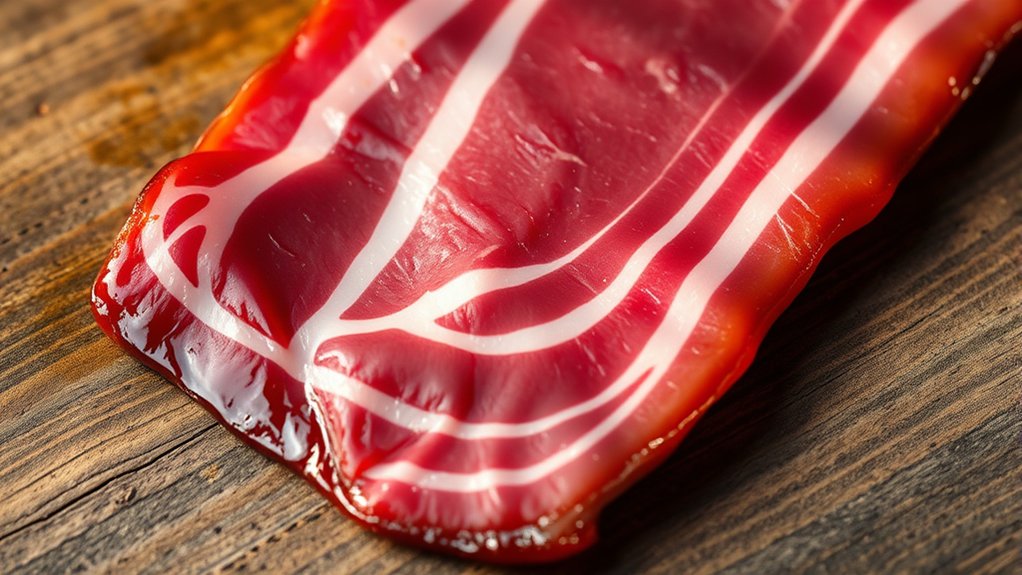
Curious about which cuts of beef are best for making bacon? The most common one is beef belly, just like pork bacon, because it’s got plenty of fat and flavor.
Beef belly is the top choice for bacon, offering rich fat and flavor.
Some butchers also use brisket or navel cuts, which give a nice balance of meat and fat. These cuts hold flavor well and can be sliced thin for that bacon-like texture.
You might also see flank or sirloin used sometimes, but they’re less common since they’re leaner. When picking beef for bacon, look for cuts with good marbling for a rich, savory taste and crispy finish.
These cuts are great for curing, smoking, and slicing into delicious beef bacon.
How Is Beef Bacon Made From These Cuts?
You start by selecting prime cuts of beef, which are then carefully cured and smoked to develop flavor.
Afterward, the meat is sliced into thin strips and packaged for freshness. Each step guarantees you get high-quality beef bacon ready to enjoy.
Selecting Prime Cuts
Choosing the right prime cuts is key for making high-quality beef bacon. These cuts give you the perfect mix of fat and lean meat for great flavor and texture.
You want cuts that taste good but aren’t too greasy, with enough fat to keep the bacon moist and tender. The best options come from parts of the cow with marbling and consistent muscle structure.
| Cut Type | Characteristics | Use in Beef Bacon |
|---|---|---|
| Chuck | Well-marbled, flavorful | Ideal for rich, flavorful bacon |
| Round | Leaner, firmer | Used for leaner, healthier bacon |
| Short Plate | Contains fat, connective tissue | Adds flavor and moisture |
| Brisket | Marbled, tender, fatty | Contributes to richness and juiciness |
Curing and Smoking Process
Once you’ve chosen the perfect cuts for your beef bacon, it’s time to cure and smoke them. First, spread a curing mixture of salt, sugar, and spices to draw out moisture and preserve the meat.
This curing process can take anywhere from a few hours to several days, depending on your recipe. Afterward, rinse off any excess seasoning and pat the meat dry.
Next, smoke the beef bacon at a low temperature, around 200°F (93°C), for several hours. Smoking adds flavor and helps preserve the meat by reducing moisture.
You can use wood chips like hickory or apple to add a nice aroma. Once it’s thoroughly smoked, let the meat rest before slicing. That’s how you get rich, flavorful beef bacon to enjoy!
Slicing and Packaging
After the beef bacon has been properly smoked and rested, the next step is to carefully slice it into thin, even pieces. Use a sharp slicer to cut across the meat, creating uniform slices that cook evenly. Precision is important to keep the desired thickness and texture.
Once sliced, inspect the beef bacon for quality and portion it accordingly. Packaging comes next—either vacuum-sealing or wrapping in airtight materials to keep it fresh. Proper packaging helps prevent spoilage and preserves the flavor.
Label the packages with weight, ingredients, and expiration date to stay organized. Then, store the beef bacon in a refrigerated or frozen environment until it’s ready to be shipped or sold. This keeps it fresh and flavorful for consumers.
What Makes Beef Bacon Different From Pork Bacon?
Beef bacon differs from pork bacon mainly in flavor, texture, and nutritional content. Beef has a richer, stronger taste that’s often described as beefier or meatier, while pork bacon is milder and slightly sweeter.
The texture of beef bacon is usually denser and chewier, compared to the crispy, tender feel of pork bacon. Nutritionally, beef bacon tends to have more protein and fat, and can also be richer in certain vitamins.
Here’s a quick comparison:
| Attribute | Beef Bacon | Pork Bacon |
|---|---|---|
| Flavor | Rich, beefy | Mild, slightly sweet |
| Texture | Dense, chewy | Crispy, tender |
| Nutritional Profile | Higher in protein and fat | Lower in protein and fat |
This difference influences your choice based on taste and dietary preferences.
Which Beef Cuts Make the Best Bacon?
Have you ever wondered which cuts of beef are best suited for making bacon? The ideal cuts are usually from areas with a good balance of fat and meat, which helps achieve that crispy, flavorful finish.
Typically, the beef belly, similar to pork bacon, is the top choice, offering rich marbling and a tender texture. Other good options include the navel and brisket sections, as they have enough fat to produce a savory, crispy result.
Beef belly, navel, and brisket are ideal cuts for flavorful, crispy beef bacon due to their rich marbling and tenderness.
These cuts are often cured and smoked to improve flavor. Avoid leaner cuts like round or sirloin, as they lack the fat needed for that classic bacon bite.
Choosing the right cut guarantees your beef bacon is flavorful, tender, and crispy every time.
Tips for Cooking Beef Bacon From Different Cuts
When cooking beef bacon from different cuts, choosing the best slices ensures even cooking and better texture.
You should adjust your cooking times based on the thickness and fat content of each cut.
Adding seasonings or marinades can boost the flavor and make your beef bacon more delicious, no matter which cut you use.
Best Cuts for Slicing
Choosing the right cut is essential for perfect beef bacon slices. Look for cuts with good marbling, like the brisket or sirloin, which give you tenderness and flavor.
These cuts have enough fat to keep the bacon juicy and help with even slicing. Flank or round might be leaner, making them less ideal—they can be tougher and harder to slice thinly.
For the best results, chill the meat thoroughly before slicing. Cold meat is easier to cut into uniform, thin strips.
Use a sharp knife or a meat slicer for precision. Remember, the cut’s texture affects the final bacon’s quality.
Selecting well-marbled, tender sections guarantees you get flavorful, evenly sliced beef bacon every time.
Adjust Cooking Times
Different cuts of beef bacon require different cooking times to get the best texture and flavor. Thinner cuts, like from the brisket or sirloin, cook quickly and can become crispy in just a few minutes.
Thicker cuts, such as from the short rib or chuck, need more time to render fat and develop richness. Keep an eye on it while cooking to prevent burning or undercooking.
For crispy bacon, cook on medium heat and flip frequently. If you prefer a chewier texture, just reduce the cooking time a bit. Remember, different cuts hold varying amounts of moisture and fat, so adjust your timing accordingly.
Getting the timing right helps you achieve the perfect balance of flavor, texture, and doneness for each cut.
Flavor Enhancements
Cooking beef bacon from different cuts is a great chance to boost its natural flavors with simple tricks. Start by marinating the slices in soy sauce, Worcestershire, or a bit of smoked paprika before cooking.
Seasoning with black pepper, garlic powder, or chili flakes can add extra depth. During the last few minutes, try glazing with honey, balsamic vinegar, or maple syrup for a tasty sweet-savory combo.
Using a hot skillet or broiler helps get crispy edges and intensifies the flavor. Let the cooked bacon rest briefly so the juices settle, giving you a richer bite.
These small tweaks can turn plain beef bacon into a flavorful, memorable dish that’s tailored just for you.
Choosing the Right Part of the Cow for Homemade Beef Bacon
Have you ever wondered which part of the cow makes the best meat for homemade beef bacon? For a rich, flavorful result, look for cuts from the brisket or the plate. These areas have the right balance of fat and meat, giving your bacon a satisfying texture and taste.
The brisket offers a good mix of marbling, making it perfect for curing and smoking. The plate, located just below the ribs, is another excellent choice because it’s naturally fatty and tender.
Avoid leaner cuts like sirloin or round, as they won’t provide the same flavor or juiciness. Picking the right part guarantees your homemade beef bacon will be tender, flavorful, and just right for curing.
Final Thoughts: Picking the Best Cuts for Delicious Beef Bacon
Choosing the right cuts is essential for making delicious beef bacon. Look for well-marbled, fatty cuts like brisket, navel, or plate areas, which provide flavor and moisture. These parts have enough fat to mimic traditional pork bacon’s richness.
Avoid leaner cuts that lack the fat needed for that crispy, savory texture. When selecting your beef, consider how the cut will cure and smoke so it develops flavor and tenderness.
Thicker cuts can be sliced into bacon strips, but make sure they’re uniform for even cooking. Ultimately, your choice depends on your flavor preferences and cooking style.
Frequently Asked Questions
Is Beef Bacon Healthier Than Pork Bacon?
Beef bacon can be healthier than pork bacon, but it depends on how it’s prepared.
Generally, beef bacon is leaner and has less fat and fewer calories, making it a better choice if you’re watching your intake.
However, both types can be high in sodium and preservatives.
How Does the Flavor Vary Between Different Beef Cuts?
You’ll notice that flavors differ greatly between cuts. For instance, brisket offers a rich, smoky taste with a tender, juicy texture.
Conversely, sirloin provides a leaner, slightly firmer bite with a more subtle beef flavor. It’s like comparing a bold red wine to a crisp white—each has its own character.
Your choice depends on whether you crave intense, melt-in-your-mouth richness or a lighter, more delicate experience.
Can Beef Bacon Be Made From Leftover or Trimmed Beef?
Yes, you can make beef bacon from leftover or trimmed beef. You just need to cure and smoke the meat, like traditional bacon, to get that classic flavor.
Common cuts for this include brisket, sirloin, or other trimmed beef pieces. It’s a smart way to use up leftovers and turn them into a tasty, bacon-like treat.
Just make sure you follow proper curing and smoking techniques for safety and the best flavor.
What Is the Best Way to Store Beef Bacon?
You should store beef bacon in the refrigerator at 40°F or below, and it’s best to keep it in its original packaging or an airtight container.
Did you know properly stored beef bacon can last up to a week? If you won’t eat it within that time, freeze it for up to three months.
Always label packages with dates to stay organized and guarantee freshness when you’re ready to enjoy it.
How Long Does Beef Bacon Typically Last?
Beef bacon usually lasts about 1 to 2 weeks in the fridge if you store it properly.
If you want it to last longer, freezing it for up to 6 months is a good option.
Always check the packaging for specific expiration dates, and look for signs of spoilage like a sour smell or slimy texture before eating.
Storing it correctly helps keep your beef bacon fresh and safe to enjoy.
Conclusion
Now that you know where beef bacon comes from and which cuts are best, you’re ready to craft your own savory slices. Think of it as revealing a hidden treasure chest within the cow—each cut offering a unique flavor.
With a little practice, you’ll turn these cuts into crispy, smoky delights that rival their pork counterpart. So, grab your knife and get ready to transform simple beef into bacon magic.
It’s a journey worth savoring, and knowing which part of the cow beef bacon comes from makes the process even more exciting.