7 Effective Ways to Get Rid of Kitchen Ants Fast
Dealing with kitchen ants is a common frustration many people face, and you’re not alone in struggling to keep them at bay.
These tiny invaders can be persistent, making it tough to enjoy your space without worry.
To get rid of kitchen ants quickly, start by wiping trails with vinegar and water, and sprinkle cinnamon or cayenne pepper along entry points.
Seal cracks and keep food in airtight containers to cut off their food sources.
Use bait stations or traps near trails and entry spots, and regularly monitor for activity.
For stubborn infestations, consider natural remedies like diatomaceous earth or baking soda.
Keep things tidy—if ants keep coming back, there’s more you can do to stop them permanently.
Key Takeaways
- Identify and seal entry points using caulk, weather stripping, and repairing cracks to prevent ant access.
- Clean surfaces with vinegar and water to disrupt ant trails and remove attractants.
- Use natural repellents like cinnamon, lemon juice, or black pepper along entry points and trails.
- Set bait stations or traps near trails and food sources to attract and eliminate ants.
- Keep your kitchen clean and clutter-free by wiping up spills quickly, storing food in airtight containers, and taking out the trash regularly.
Why Are Ants Invading Your Kitchen?

Have you ever wondered why ants seem to zero in on your kitchen? It’s because your kitchen provides the perfect environment for them.
Ants are always on the lookout for food, water, and shelter. Your kitchen often has all three. Crumbs on the counter, spills in the sink, or uncovered food attract them quickly.
Plus, the warmth and moisture from sinks, pipes, or leaking faucets make it an inviting spot for colonies to thrive. Ants also leave a scented trail that guides others to the food source.
This makes it easier for more ants to find their way inside. Understanding these reasons helps you see why your kitchen becomes a hotspot for ant activity. It also highlights the importance of keeping things clean and sealing entry points.
How to Quickly Get Rid of Ants in Your Kitchen
When ants invade your kitchen, acting quickly is key to getting rid of them. First, find where they’re coming in and wipe away any trails with a damp cloth to erase their scent markers.
Next, clean your countertops and surfaces with a mix of equal parts vinegar and water. The strong smell repels ants and keeps them away.
You can also sprinkle cinnamon, black pepper, or cayenne pepper along entry points and trails. It’s a natural way to deter them from returning.
For faster results, place bait stations or ant traps near their nests or along their paths. These will attract the ants and eliminate the colony from inside.
Using these quick steps will help cut down the ant problem fast and get your kitchen back to clean and pest-free.
How to Spot and Identify Ant Trails
Look for thin, dark lines or scattered crumbs that ants leave behind—these are your trail signs. Once you spot them, follow the trail carefully to find where the ants are coming from.
Tracking their path helps you identify the source and plan your next move to eliminate the infestation.
Recognize Ant Trail Signs
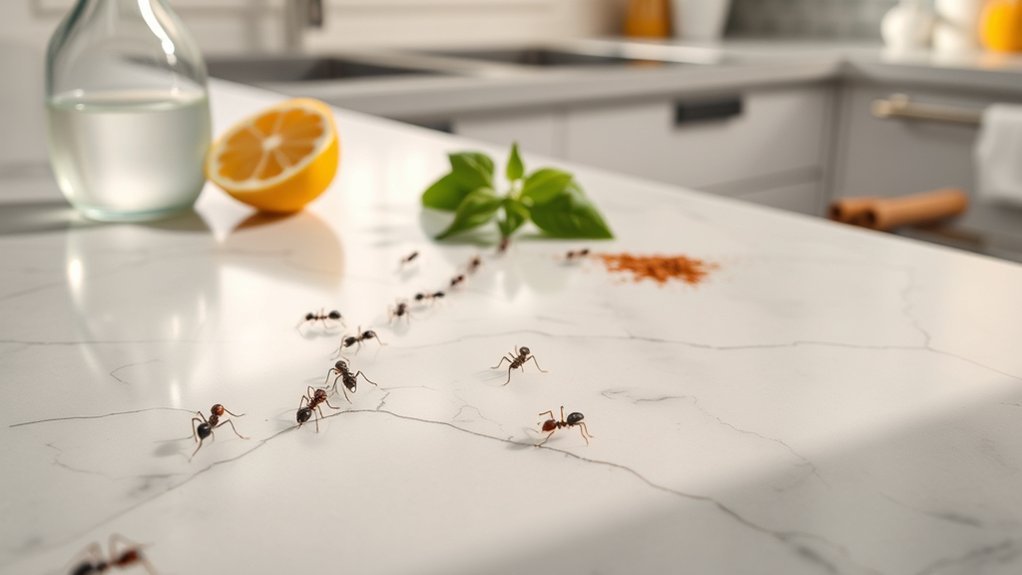
Ant trails are the clearest signs that ants are invading your kitchen, and catching them early helps you act fast. Look for thin, dark lines on countertops, floors, or walls—these are the ants’ scent trails, guiding others to food sources.
You might see tiny, moving ants along these paths or small piles of debris and crumbs nearby. Sometimes, trails look like shiny, smooth lines that seem to glisten in the light.
Pay attention to areas around sinks, pantry shelves, and cracks where ants might hide or travel. Spotting these signs quickly helps you find the entry points and food sources, giving you a better shot at stopping the colony before it spreads further.
Follow Trail to Source
To effectively follow an ant trail to its source, you should observe the path carefully and track their movement.
Look for thin lines of ants marching along walls, countertops, or floors. These trails often show the route they take from food sources to their nest.
Keep an eye out for tiny specks of dirt or sugar along the trail, which ants leave behind as scent markers. Follow the trail steadily, noting any intersections or dead ends.
As you get closer, the trail might become more concentrated and easier to follow. Be patient and keep your eyes peeled.
Once you find where the trail begins, focus on eliminating the nest and disrupting their access points.
Best Natural Remedies to Kill Kitchen Ants
When you’re trying to eliminate kitchen ants naturally, there are several effective remedies that won’t introduce harsh chemicals into your home. One popular option is a mixture of vinegar and water, which disrupts ant scent trails and confuses them. Spray this solution along entry points, countertops, and ant pathways.
Use vinegar and water to disrupt ant trails and keep them away naturally.
Cinnamon is another natural deterrent. Just sprinkle it near doorways or behind appliances to repel ants. Lemon juice also works well—its strong scent masks their trails and discourages ants from returning.
Diatomaceous earth is a safe, abrasive powder that damages ants’ exoskeletons upon contact, ultimately killing them. Baking soda combined with sugar attracts ants and kills them when ingested.
Using these remedies together can effectively reduce your ant problem without exposing your home to chemicals.
Using Baits and Traps to Control Ant Infestations
To effectively control ant infestations with baits and traps, you need to choose the right bait that attracts them. Place the traps where they’re most active for the best results.
Keep an eye on the traps and be ready to replace them when they’re filled or no longer effective. Proper placement and regular monitoring are key to eliminating the ants quickly and efficiently.
Selecting Effective Baits
Choosing the right bait is essential for controlling ant infestations in your kitchen. You want a bait that attracts ants quickly and appeals to what they prefer.
Look for sweet or protein-based baits, depending on the ant species in your home. For sugar-loving ants, use gels or liquids with honey or syrup.
If you notice more protein-based foraging, go for bait containing insect parts or proteins. Place the bait near ant trails or entry points where they’re active.
Avoid using old or generic bait, as it may lose effectiveness. Fresh, appealing bait will lure ants away from your food and toward the trap.
This helps you eliminate the colony faster. Picking the right bait is key to quick, successful eradication.
Proper Trap Placement
Placing your bait and traps in the right spots is key to making them work better. You want to put them where ants are active or often seen, like near trails, entry points, or food sources.
Set traps along walls, behind appliances, and in corners where ants usually travel. Try to avoid areas with direct sunlight or moisture, as these can make traps less effective.
Make sure traps are stable and easy for ants to find and enter. Use multiple traps if needed, especially in busy areas. Proper placement helps ants find the bait quickly and speeds up the elimination process.
| Ideal Placement Ideas | Common Ant Pathways |
|---|---|
| Near entry points | Along walls |
| Close to food sources | Behind appliances |
| In dark corners | Along ant trails |
| Away from sunlight | Near moisture areas |
Monitoring and Replacing
How can you guarantee your ant control efforts stay effective over time? Monitoring and replacing bait stations and traps is key. Check them regularly—at least weekly—to see if they’re full or if ants are still active.
If traps are empty or ants persist, replace the bait or trap immediately. This helps ants keep finding the poison, which is crucial for eliminating the colony.
Use fresh bait to attract new ants and prevent the infestation from spreading. Keep an eye on the bait’s effectiveness; if it stops working, switch to a different type or brand.
Consistent monitoring and timely replacement prevent reinfestation and keep control ongoing. This will help you achieve long-term relief from kitchen ants.
How to Seal Entry Points and Prevent Future Ants
To keep ants out of your kitchen permanently, start by spotting and sealing their entry points. Check your walls, floors, and cabinets for tiny cracks or gaps where ants might squeeze through. Pay special attention around pipes, electrical outlets, and window frames.
Identify and seal cracks around pipes, outlets, and windows to prevent ants from entering your kitchen.
Use caulk or weatherstripping to seal these openings tightly. For larger holes, plug them with steel wool because ants can’t chew through it. Keep doors and windows closed or install door sweeps to eliminate gaps.
Regularly inspect these areas, especially after repairs or renovations. Sealing these access points helps prevent ants from entering and makes your kitchen less inviting.
Consistent sealing acts as a barrier, reducing the chances of future infestations.
When to Call Pest Control for Severe Ant Problems
When ant problems keep coming back despite your efforts to seal entry points and eliminate nests, it’s time to call in professional pest control. Severe infestations can be tough to handle on your own, especially if ants have set up multiple colonies or become resistant to DIY treatments.
If you notice ants returning quickly after treatment or see large groups crawling through your kitchen, don’t wait. Pest control experts can find hidden nests and use targeted, effective treatments that aren’t sold over the counter.
They also offer advice to help prevent future outbreaks. Ignoring a serious ant problem can lead to ongoing contamination and frustration.
Reaching out to professionals ensures a thorough solution, giving you peace of mind and a pest-free kitchen faster.
Frequently Asked Questions
How Long Does It Take for Natural Remedies to Work?
Natural remedies usually take a few days to a week to show noticeable results, depending on the severity of your ant problem.
You might see a reduction in ants within the first couple of days, but complete elimination can take longer.
Consistently applying remedies like vinegar, cinnamon, or lemon juice is key.
Patience is essential, and combining methods can speed up the process.
Can Homemade Repellents Harm My Family or Pets?
Homemade repellents can be safe if you use non-toxic ingredients like vinegar, lemon juice, or cinnamon.
But be careful with some essential oils or strong substances—they might harm your family or pets if ingested or applied directly.
Always dilute concentrated oils and steer clear of anything that could cause allergic reactions.
Keep homemade repellents out of reach of children and pets, and test a small area first to prevent any potential harm.
Are Certain Foods More Attractive to Kitchen Ants?
Certain foods definitely attract kitchen ants more than others. You’ll find ants are especially drawn to sweet, oily, and protein-rich items like sugar, honey, peanut butter, and pet food.
Investigating this, it’s clear they seek out carbohydrates and proteins for energy. To keep ants away, store these foods in airtight containers and clean up crumbs promptly.
Understanding what attracts them helps you prevent infestations and protect your kitchen effectively.
What Are the Signs of a Severe Ant Infestation?
You’ll notice a severe ant infestation when you see large colonies or trails of ants marching across your countertops or floors.
You might find them in hard-to-reach places, like behind appliances or inside walls.
If you spot winged ants or see multiple sightings over several days, it indicates a deep nest nearby.
Persistent ant presence despite cleaning efforts suggests a serious problem that needs prompt action.
How Can I Prevent Ants From Returning After Treatment?
To prevent ants from returning after treatment, make sure to seal all entry points like cracks and gaps around windows, doors, and walls.
Keep your kitchen clean by wiping down surfaces and storing food in airtight containers. Regularly remove crumbs and spills, and fix leaks that attract ants.
You might also consider applying a natural barrier, like cinnamon or vinegar, around your kitchen’s perimeter. Consistency is really important for long-term ant prevention.
Conclusion
Now that you know how to quickly quell and eliminate the ant invasion, it’s time to take proactive steps. Seal sneaky entry points, keep your kitchen spotless, and set traps strategically to prevent future infestations.
Remember, persistent prevention is key to avoiding pest problems down the line. With these simple, smart strategies, you’ll protect your space and keep ants out of your kitchen.
Stay vigilant, stay victorious, and maintain a pest-free kitchen with confident, consistent care. Using effective methods to get rid of kitchen ants fast will keep your home comfortable and ant-free.