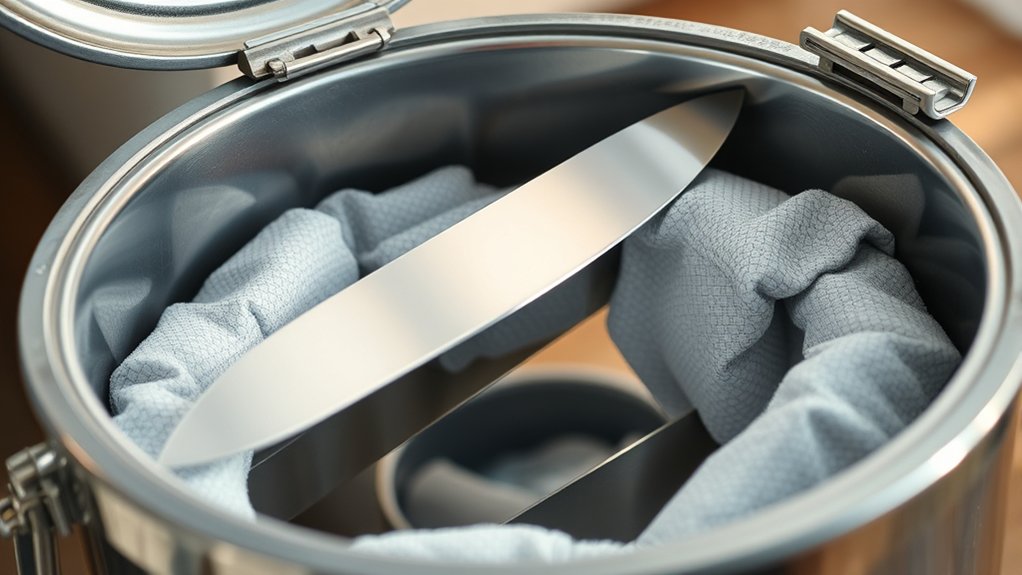
Safe Ways to Dispose of Kitchen Knives
Many people struggle with safely disposing of kitchen knives, especially when they’re no longer sharp or needed. It’s a common concern, and you’re not alone in wanting to do it the right way.
To safely dispose of kitchen knives, always wrap the blades securely with heavy-duty paper, cardboard, or bubble wrap, ensuring the sharp edge is fully covered.
Place the wrapped knife in a sturdy, puncture-proof container and clearly label it to alert others.
Avoid tossing knives loose into trash or recycling bins. Develop a regular disposal routine and follow local regulations.
If you’re interested in more safety tips and proper handling practices, keep exploring for helpful guidance.
Key Takeaways
- Wrap knives securely with heavy-duty paper or cardboard to prevent injuries during disposal.
- Use designated sharps containers or puncture-resistant bins labeled “dangerous” for safe disposal.
- Avoid tossing knives directly into the trash. Always make sure the blade is completely secured before disposal.
- Follow your local regulations and notify waste services when disposing of sharp objects.
- Regularly check your knives and replace any that are damaged or dull to help reduce safety risks.
Why Safe Disposal of Kitchen Knives Is Important
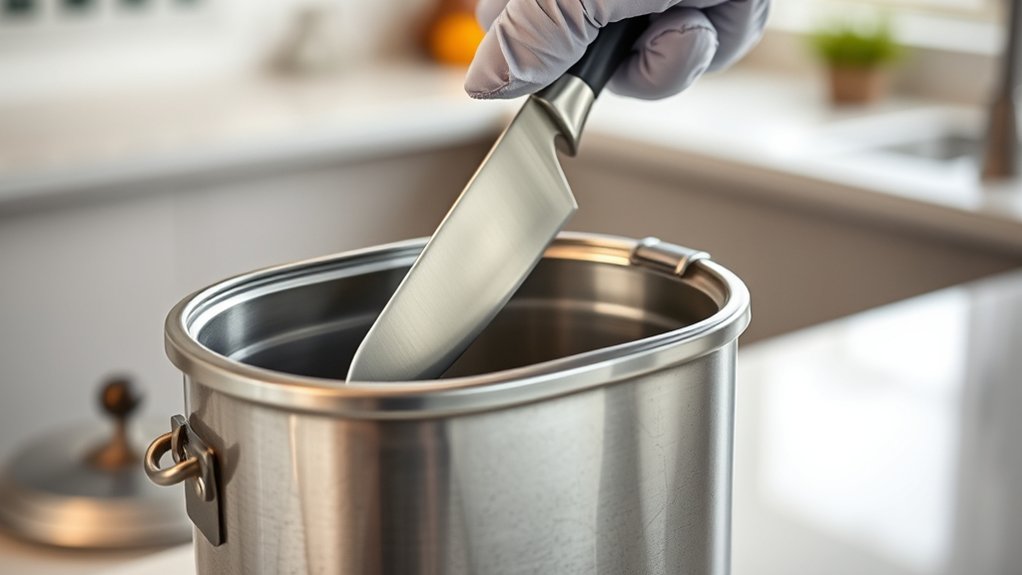
Disposing of kitchen knives safely is really important because they can be dangerous to anyone handling or nearby. If someone accidentally touches a sharp blade, it can cause serious cuts or injuries.
If knives aren’t wrapped properly or placed carefully in the trash, they might puncture bags or cause harm to waste workers. Children and pets are especially at risk, so safe disposal helps prevent accidents.
Taking the time to get rid of knives correctly keeps your household and community safe. It also protects sanitation workers from getting hurt.
When Should You Discard a Damaged Knife?
A damaged knife can be dangerous, so it’s important to know when to discard it. You should get rid of a knife if:
- The blade is chipped or cracked, which increases the risk of cuts or the blade breaking while you’re using it.
- The handle is loose, cracked, or missing parts, making it hard to control the knife safely.
- The edge is dull or bent, so you have to use more force, which can cause slips and injuries.
If any of these problems exist, using the knife becomes unsafe. Continuing to use a damaged knife can lead to accidents or cuts. For safety’s sake, replace or properly dispose of it as soon as possible.
How to Choose the Right Container for Knife Disposal
Choosing the right container for knife disposal is an important step to stay safe after discarding a damaged or unwanted knife.
Look for a container that’s sturdy, puncture-resistant, and clearly labeled. A dedicated sharps or metal container works best because it’s designed to hold blades securely.
Avoid regular trash bins since they can be easily pierced or mishandled. If you don’t have a specialized container, opt for a thick, puncture-proof option like a sturdy cardboard box reinforced with tape or a plastic container with a tight-fitting lid.
Be sure to clearly mark the container as “dangerous” or “sharp objects” so others know it’s a hazard. Picking the right container helps prevent injuries during disposal and keeps everyone safe.
How to Wrap Knives Safely With Cardboard or Paper
To wrap your knife safely, pick sturdy cardboard or thick paper that won’t tear easily.
Make sure to cover the blade securely, folding the material tightly around it.
This helps prevent accidental cuts and keeps the knife safely contained during disposal.
Selecting Suitable Wrapping Material
When wrapping knives for disposal, choosing the right material is key to preventing injuries and ensuring safe handling. You want something sturdy enough to hold the blade securely and stop accidental cuts.
Use thick cardboard or heavy-duty paper that won’t tear easily. Make sure the wrapping material is clean and dry to avoid slipping or tearing.
Wrap the blade tightly, covering the entire sharp edge securely. Avoid loose ends to keep everything in place.
Here are some important points to remember:
- Pick thick, durable cardboard or heavy-duty paper.
- Ensure the material is clean, dry, and free of tears.
- Wrap the blade tightly, covering all sharp edges.
Making the right choice helps reduce risks during disposal and keeps everyone safe.
Properly Securing the Knife
Securing a knife properly before disposal is key to preventing accidents. Wrap the blade tightly with sturdy paper or cardboard, making sure the sharp edge is fully covered. Fold the material around the knife several times for extra safety. Tape the wrapping securely to keep everything in place.
Use the table below to pick the best wrapping option:
| Material | Benefits |
|---|---|
| Cardboard | Durable, easy to fold |
| Heavy Paper | Flexible, easy to find |
| Bubble Wrap | Extra protection, cushioning |
After wrapping, place the knife in a puncture-proof container or a thick trash bag. Properly securing the knife helps reduce risks to waste handlers and keeps your surroundings safe.
Tips for Transporting Knives Safely Before Disposal
Transporting knives safely before disposal is really important to avoid injuries to yourself and others. To do it right, follow these simple tips:
Wrap the blade securely with thick cardboard or heavy-duty paper, taping it firmly in place. This helps prevent accidental cuts if someone touches it.
Next, put the wrapped knife in a sturdy, puncture-proof container like a plastic or metal box with a tight lid. Make sure it’s clearly labeled as containing a sharp object.
Keep the container out of reach of children and pets, ideally in your car’s trunk or a secure bag. This way, it stays safe until you reach the disposal site.
Where and How to Dispose of Knives at Local Waste Centers
When disposing of knives at your local waste center, make sure to package them properly to avoid injuries. Use a sturdy, puncture-proof container or wrap the blades securely in thick tape or cardboard.
It’s a good idea to check with your waste center beforehand to see which disposal materials they accept. This helps ensure you’re disposing of your knives safely and correctly.
Proper Packaging Methods
To safely dispose of kitchen knives at local waste centers, it’s important to package them properly to prevent injuries. First, wrap the blade securely with thick cardboard or several layers of newspaper, making sure the sharp edge is covered.
Next, tape the wrapping tightly to keep it in place and prevent it from unraveling. Then, place the wrapped knife inside a sturdy, puncture-proof container like a plastic or metal bin, and seal it shut.
This method keeps the blade contained and reduces the risk to waste workers. Always label the package clearly as “Sharp Knife” to alert handlers.
Proper packaging not only protects sanitation workers but also ensures your safety and the safety of everyone involved in the disposal process.
Accepted Disposal Materials
Most local waste centers accept knives if they’re properly prepared and categorized as designated disposal materials. To ensure safe disposal, check with your center about their specific guidelines. They usually accept knives wrapped securely or placed in designated sharps containers.
Some centers may require knives to be labeled as “metal waste” or “sharps.” Use the table below to see what materials are accepted and how to package them:
| Material | Packaging Method | Disposal Category |
|---|---|---|
| Stainless steel knives | Wrapped in cardboard or thick paper | Metal waste |
| Ceramic knives | Encased in rigid container | Sharp objects |
| Dull knives | Wrapped securely in paper or cloth | Non-sharp waste |
| Damaged knives | Placed in puncture-proof container | Hazardous waste |
| Broken handles | Disposed with metal or plastic waste | Mixed waste |
Recycling and Reusing Old Kitchen Knives
Recycling and reusing old kitchen knives can be a practical way to minimize waste and make the most of their materials. Instead of just throwing them out, you can find creative or useful ways to repurpose or recycle them.
For example, you could turn the blades into art or jewelry. With some skill, you can reshape or etch the metal into unique pieces or decorations.
Old knives can also be used in DIY projects. You might grind them down and turn them into tools or parts for custom creations.
Many recycling centers accept metal blades, so you can recycle them at scrap metal facilities. This way, they get processed safely and in an environmentally friendly manner.
Common Mistakes to Avoid When Disposing of Knives
While repurposing old knives can be a smart way to reduce waste, improper disposal methods can lead to safety hazards and environmental issues. One common mistake is tossing knives in the trash without proper wrapping, which risks injury during handling.
Another mistake is ignoring local disposal regulations, which can result in fines or environmental harm. Failing to label or notify waste services about sharp objects can also cause accidents.
Here’s a quick guide to avoid these mistakes:
| Mistake to Avoid | Better Practice |
|---|---|
| Throwing knives in trash without wrapping | Wrap in newspaper or bubble wrap before disposal |
| Ignoring local disposal rules | Check and follow local regulations |
| Not informing waste services | Notify them if disposing of sharp objects |
Avoid these errors for safer, responsible disposal.
Creating a Routine for Safe Knife Disposal
To keep your family safe, set a regular schedule for disposing of used knives and stick to it.
Use dedicated containers specifically designed for sharp objects to prevent accidents.
Make sure everyone in your household understands the routine so knives are handled safely and consistently.
Establish a Disposal Schedule
Creating a disposal schedule is crucial for keeping your kitchen safe. When you have a routine, you reduce the risk of accidents and prevent your knives from piling up.
Start by deciding how often you’ll review and dispose of dull or damaged knives, like weekly or bi-weekly. Then, pick a specific day for knife disposal so it becomes a regular habit.
Next, mark your calendar or set reminders to stay consistent with this schedule. This routine ensures you’re always handling knives safely and keeps clutter or dangerous blades out of the way.
Use Designated Containers
Using designated containers is essential for safely disposing of kitchen knives. These containers are specially designed to prevent accidental cuts and keep sharp blades contained.
Always use a sturdy, puncture-proof container, like a thick plastic or metal bin with a secure lid. When disposing of a knife, carefully slide it into the container handle-first to avoid injury.
Avoid tossing knives loosely into trash bags, as they can tear the bag or cause injuries when handling the waste later. Be sure to label the container clearly as “sharp objects” to alert others.
Establishing a routine, like always using the same container for knives, helps you remember proper disposal and keeps your home safer. Consistency minimizes risk and ensures knives are disposed of safely every time.
Educate Household Members
Getting everyone in your household involved in knife disposal makes things safer and more consistent. When everyone understands why it’s important, following the right steps becomes easier.
Start by explaining the dangers of mishandling knives and potential injuries. Show the correct way to use designated containers and dispose of blades safely. Make it a habit to clean and put away knives right after using them so it feels natural.
Encourage family members to ask questions and practice safe disposal regularly. Make it a shared responsibility so everyone stays alert. Educating everyone helps create a safer home and lowers the risk of accidents. Regular training makes safe knife handling and disposal part of your daily routine.
Final Tips for Handling Kitchen Knives Safely
To handle kitchen knives safely, always pay close attention to your technique and surroundings. Keep your fingers away from the blade’s path and use a firm grip on the handle.
Always focus on your technique and stay aware of your surroundings when handling knives.
When cutting, stabilize the item on a non-slip surface to prevent slips. Store knives securely, ideally in a knife block or on a magnetic strip, to avoid accidental contact.
Always wash knives carefully by hand, avoiding the blade edge, and dry them thoroughly before storing. Never leave knives in sinks or soaking in water where they’re hidden or concealed.
Pay attention to your environment and avoid distractions while using or handling knives. Regularly inspect knives for damage, and sharpen them properly to reduce the risk of slips.
Practice these habits to guarantee safe, confident use every time.
Frequently Asked Questions
Are There Eco-Friendly Alternatives to Disposing of Old Kitchen Knives?
Yes, you can recycle or donate your old kitchen knives. Some recycling centers accept metal blades, but it’s best to check first.
Alternatively, you can donate them to community workshops or art programs. They might repurpose the blades for sculptures or tools.
You could also repurpose the handles or blades for DIY projects around your home.
These options help reduce waste and give your knives a second life, making your disposal eco-friendly and responsible.
Can I Donate Functional but Unwanted Knives to Charity?
Yes, you can donate functional but unwanted knives to charity. Imagine passing on a trusty tool that’s still sharp and useful. It’s like giving a helping hand to someone in need.
Reach out to local shelters, community kitchens, or thrift stores to see if they accept kitchen utensils. Just verify the knives are clean, secure the blades safely, and confirm the charity’s donation policies.
This way, the process stays smooth and safe for everyone involved.
What Safety Precautions Should Children Take Around Discarded Knives?
Children should avoid contact with discarded knives altogether. It’s important to teach them to recognize sharp objects and stay away from trash bins or areas where knives might be hidden.
Always supervise children around disposal areas, and make sure knives are wrapped securely or placed in puncture-proof containers. This helps prevent accidents and keeps everyone safe.
Remind children never to touch or pick up knives, even if they think they’re safe. If they find a knife, they should report it to an adult immediately.
How Do Different Types of Knives Require Different Disposal Methods?
You should dispose of different types of knives properly to guarantee safety.
For metal knives, wrap the blades in thick newspaper or place them in a puncture-proof container before discarding. Ceramic knives need careful handling—wrap the blade securely or use a dedicated ceramic knife disposal container.
For serrated or specialized knives, use a blade guard or wrap them tightly. Always label the package as “sharp” to alert waste workers and prevent injuries.
Are There Any Legal Restrictions on Disposing of Certain Types of Knives?
Yes, there are legal restrictions on disposing of certain knives, especially those considered weapons like switchblades or butterfly knives. You should check local, state, or federal laws before discarding such knives.
Some areas prohibit their disposal or require special procedures. To stay compliant, consider taking prohibited knives to law enforcement or licensed disposal facilities.
Ignoring these laws can lead to fines or legal trouble. It’s always better to be cautious and informed about the rules in your area.
Conclusion
Disposing of kitchen knives safely is essential. You’re 20 times more likely to be injured by a dull or damaged knife than a sharp one.
Choose the right container, such as a sturdy box or a designated sharps container, to prevent accidents. Wrap knives carefully in newspaper or bubble wrap, or use a knife block for storage.
Create a disposal routine so you don’t forget. Proper disposal not only keeps you safe but also helps protect the environment.
Remember, proper disposal reduces accidents and keeps your kitchen safe for everyone. Stay vigilant, handle knives responsibly, and make safe disposal a regular habit.