How to Cook Beef Brisket on a Charcoal Grill in 8 Easy Steps
Many people struggle with achieving tender, flavorful beef brisket on their charcoal grills. It can feel overwhelming to get that perfect smoky taste while keeping the meat juicy and tender.
Start by trimming excess fat and applying a flavorful dry rub or marinade, then let the brisket sit for 30 minutes.
Set up your charcoal grill with two-zone heat—direct and indirect—using a chimney starter to light the charcoal evenly.
Maintain a temperature of 225-250°F and cook until the internal temp reaches 195-205°F.
Rest the meat before slicing for maximum juiciness.
If you keep exploring, you’ll uncover even more tips for perfect results.
Key Takeaways
- Prepare and season the brisket with a dry rub, then let it sit for 30 minutes at room temperature.
- Set up a two-zone charcoal grill with indirect heat and add wood chunks for smoke.
- Maintain grill temperature between 225-250°F and cook until the internal meat reaches 195-205°F.
- Check for probe tenderness and let the brisket rest for 15-30 minutes before slicing.
- Wrap leftovers tightly, reheat slowly with moisture, and explore creative uses like sandwiches or tacos.
How to Prepare Your Brisket for Grilling
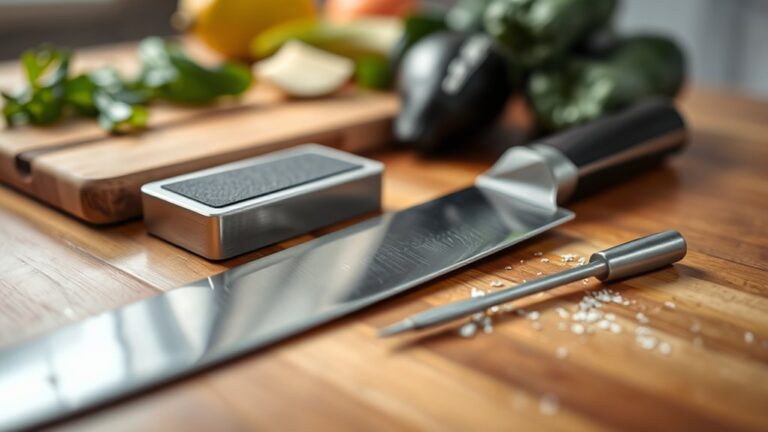
To get your brisket ready for grilling, start by trimming away excess fat to prevent flare-ups and ensure even cooking. Use a sharp knife and remove the thick layer of fat on top, leaving a thin layer for flavor. This helps the meat cook consistently and keeps it from getting greasy and charred.
Next, pat the brisket dry with paper towels to remove moisture, which helps it brown better. If you like, apply a dry rub or marinade now to boost the flavor. Make sure to cover all sides evenly for the best results.
Finally, let the brisket sit at room temperature for about 30 minutes before grilling. This step helps it cook more uniformly and results in a tender, flavorful brisket that’s perfectly cooked on your grill.
Setting Up Your Charcoal Grill for Perfect Heat and Smoke
To get your brisket just right, start by arranging your charcoal for consistent heat, like using a two-zone setup.
Keep an eye on smoke production and add wood chunks sparingly to avoid overpowering flavors.
Properly managing both will help you maintain steady temperatures and rich smoke for a perfect cook.
Proper Charcoal Arrangement
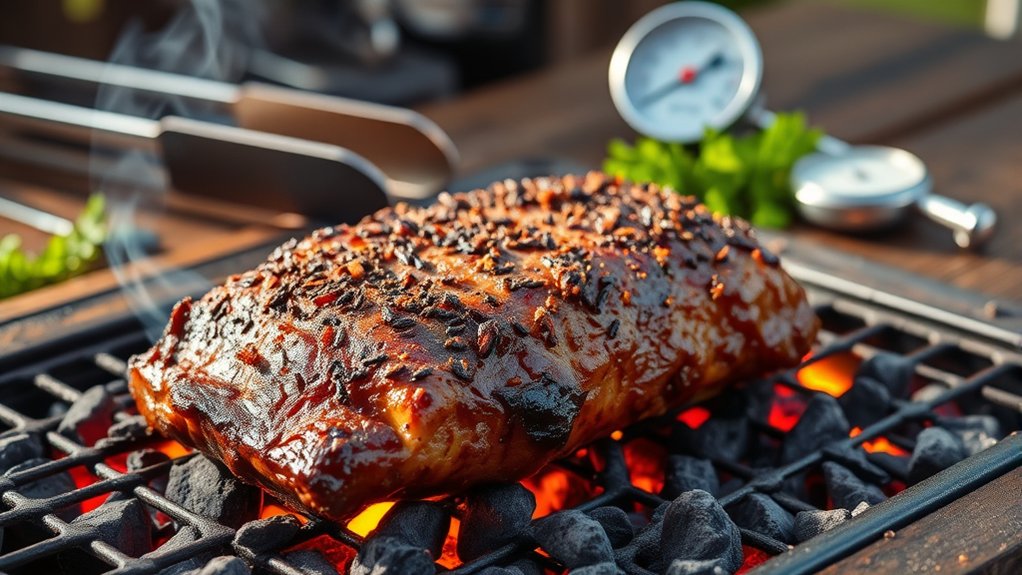
Arranging your charcoal properly is key to controlling heat and smoke while you cook. Start by creating your heat zones: pile most of the charcoal on one side for direct heat, and leave the other side free for indirect cooking.
Use a chimney starter to light the charcoal evenly, then let it ash over before spreading it out. For a steady, low-and-slow cook, keep the coals on one side and place a drip pan filled with water on the other.
This setup makes it easy to adjust the temperature and keep the heat consistent. Make sure the charcoal is evenly distributed for uniform cooking.
Proper arrangement guarantees your brisket cooks evenly, stays moist, and gets that perfect smoky flavor.
Controlling Smoke Production
Controlling smoke production is key to getting a rich, smoky flavor without overpowering the meat. Manage your charcoal and wood chips carefully to achieve this. Use fewer wood chips for a subtle aroma or add more for a stronger smoke.
Keep the vents open to regulate airflow, which helps control the temperature and smoke output. Avoid overloading the grill with too many coals, as this creates excess smoke.
Instead, set up a balanced fire that allows for steady, low heat and consistent smoke. Here’s a quick visualization:
| Fuel Amount | Smoke Intensity |
|---|---|
| Few coals | Light, delicate smoke |
| Moderate | Balanced smoke |
| Full load | Heavy, intense smoke |
Adjust the amount of fuel based on your desired flavor and cooking time.
Seasoning and Marinating: Boosting Flavor Before Cooking
To get the most flavor out of your brisket, focus on effective seasoning and marinating techniques. Using the right herbs, spices, or marinades can really transform your meat and add depth to the final dish.
Try different tricks to improve the taste and make sure your brisket stays juicy and flavorful. Experimenting with flavors can take your barbecue to the next level.
Flavor Enhancing Techniques
Enhancing the flavor of your beef brisket starts with smart seasoning and marinating techniques. To boost flavor before cooking, consider these approaches:
- Rub with a spice blend, combining salt, pepper, paprika, and garlic powder for a flavorful crust.
- Let the brisket rest after seasoning to allow the flavors to penetrate the meat.
- Use a marinade with acid, such as vinegar or citrus juice, to tenderize and add tang.
- Add herbs like thyme or rosemary for aromatic depth that complements the beef.
These techniques maximize taste and prepare your brisket for a delicious grilling experience. Keep it simple and focus on building layers of flavor before you start cooking.
Marinating Tips and Tricks
Marinating your beef brisket is a fantastic way to add extra flavor and tenderize the meat before cooking. A good marinade enhances the natural beefiness and layers of taste.
For the best results, pick a marinade with acid like vinegar or citrus, along with oil, herbs, and spices. Marinate for at least 4 hours or overnight for a deeper flavor.
Be sure to pat the meat dry before grilling to prevent flare-ups.
| Tip | Explanation |
|---|---|
| Use a Ziploc bag | Ensures even coating and easy marinating |
| Don’t over-marinade | Can make the meat mushy or overpower the flavor |
| Turn occasionally | Helps the flavor absorb evenly |
Controlling Grill Temperature for Tender, Juicy Brisket
Controlling grill temperature is key to getting tender, juicy brisket. To do this well, follow these simple steps:
- Use a reliable thermometer to keep an eye on the grill’s temperature at all times.
- Distribute the coals evenly and add more gradually to keep the heat steady.
- Adjust the air vents to control airflow; opening them boosts heat, while closing slows it down.
- Aim for a target temperature of around 225-250°F, and tweak the vents as needed to stay within that range.
Best Techniques for Cooking Brisket on a Charcoal Grill (Direct vs. Indirect Heat)
When cooking brisket on a charcoal grill, choosing the right heat method can really make a difference in getting tender, flavorful meat.
Direct heat means placing the brisket right over the hot coals, which works well for quick searing or smaller cuts.
But for larger, tougher cuts like brisket, indirect heat is usually better.
To set up indirect heat, mound the coals on one side of the grill and place the meat on the opposite side, away from direct flames.
Arrange the coals on one side and position the brisket on the opposite side for indirect heat cooking.
This method slow-cooks the brisket at a steady temperature, helping prevent it from drying out or burning.
Many grillers prefer indirect heat for brisket because it promotes even cooking and tenderizes the meat over several hours.
Adjust the vents to control airflow and keep the temperature steady during the cooking process.
How to Check for Doneness and Avoid Overcooking
Wondering how to tell when your brisket is perfectly cooked? The key is checking for the right internal temperature and tenderness. Here’s what to do:
- Use a meat thermometer and aim for an internal temperature of around 195-205°F.
- Check for a probe tender feel — insert a skewer or probe; it should slide in easily.
- Look for a slight jiggle, not a firm or rubbery texture.
- Observe the meat’s color; it should be deep and rich, with juices running clear.
Avoid overcooking by monitoring these signs closely. If you notice the temperature rising past 205°F or the meat becoming too firm, remove it from the heat immediately. Proper checks help guarantee juicy, tender brisket every time.
Resting and Slicing Your Brisket for Maximum Flavor
Once your brisket reaches the right temperature and tenderness, it’s time to let it rest. Resting helps the juices redistribute, which makes the meat more flavorful and moist.
Wrap the brisket loosely in foil and place it on a cutting board for 15 to 30 minutes. When slicing, cut against the grain to break up the muscle fibers, resulting in tender bites.
Use a sharp knife for clean cuts. Resting time affects the final result—15 minutes lets the juices settle and boosts flavor, while 30 minutes maximizes moisture retention.
Avoid slicing immediately after cooking, as the juices can run out and cause dryness. About 20 minutes of resting provides ideal tenderness and flavor.
Tips for Serving and Saving Leftover Brisket
To serve leftover brisket at its best, thinly slice or shred the meat and reheat it gently to keep its moisture and flavor. Once reheated, consider these tips:
- Store leftovers in an airtight container to prevent drying out.
- Reheat slowly in the oven or on a stovetop with a splash of broth or water.
- Use leftover brisket in sandwiches, tacos, or salads for quick, tasty meals.
- Freeze portions in vacuum-sealed bags or airtight containers for longer storage.
When you’re ready to eat, avoid microwaving directly from the fridge. Instead, let it come to room temperature first.
These steps help keep your brisket flavorful, tender, and ready for your next meal.
Frequently Asked Questions
How Long Does It Typically Take to Cook Brisket on a Charcoal Grill?
You’ll typically spend about 1 to 1.5 hours per pound of brisket on a charcoal grill, aiming for an internal temperature of 195-205°F. Keep the grill at a steady, indirect heat around 225°F.
It’s important to monitor the temperature regularly and be patient, as slow-cooking guarantees tender, flavorful meat.
Can I Use Wood Chips With Charcoal for Extra Smoky Flavor?
Yes, you can definitely use wood chips with charcoal to add extra smoky flavor to your brisket.
Soak the wood chips in water for about 30 minutes, then drain and toss them onto the hot coals. This will create smoke that infuses your meat with a rich, smoky aroma.
Keep the lid closed as much as possible to trap the smoke, and enjoy that deep, authentic barbecue flavor.
What’s the Best Way to Prevent the Brisket From Drying Out?
A watched pot never boils, and a dry brisket never melts in your mouth. To keep it moist, maintain a steady grill temperature around 225°F, and use a water pan to add humidity.
Basting the meat regularly also helps, and wrapping the brisket in foil or butcher paper during cooking traps in moisture. Remember, patience and proper care make all the difference in a tender, flavorful brisket.
Should I Wrap the Brisket During Grilling?
Yes, wrapping the brisket during grilling helps keep it moist and speeds up the cooking time. You can use aluminum foil or butcher paper once it hits your desired internal temperature, usually around 160°F.
This technique, called the Texas Crutch, makes the meat tender and juicy by trapping heat and moisture inside. Just remember to unwrap it near the end to get that flavorful, crispy bark.
How Do I Store Leftover Brisket Safely?
You should store leftover brisket in an airtight container or tightly wrap it with aluminum foil or plastic wrap.
Let it cool to room temperature first, then refrigerate it within two hours of cooking.
For longer storage, you can freeze it for up to three months.
Reheat leftovers thoroughly before eating, and always check for any signs of spoilage like a sour smell or slimy texture.
Conclusion
Now that you’ve mastered the art of grilling brisket, you’re ready to turn your backyard into a smoky haven. With each step, you’ve woven a flavorful tapestry, transforming simple meat into a tender masterpiece.
Like a skilled artist, you’ll craft mouthwatering bites that sing with smoky harmony. So fire up that grill, welcome the process, and let your culinary creation be the star of every gathering.
Enjoy your beef brisket on the charcoal grill and create delicious memories that everyone will savor.