

How Long to Soak Corned Beef to Remove Salt
Many home cooks love making corned beef, but figuring out how to tame its saltiness can be a challenge. You’re not alone—soaking is a simple trick that can make a big difference.
To reduce the saltiness of corned beef, soak it in cold water for about 1 to 4 hours, changing the water every 1 to 2 hours.
The longer you soak, the more salt it loses, but avoid over-soaking to prevent blandness or texture changes.
Factors like meat thickness and salt level affect soaking time. Stick with cold water, monitor the flavor, and you’ll get the best results—keep going for more helpful tips.
Key Takeaways
- Soak corned beef for 1 to 3 hours, changing the water once. This helps to effectively reduce the saltiness.
- Make sure to use cold water throughout the soaking process. Cold water prevents cooking the meat and keeps it safe.
- Taste the meat periodically to see if the salt level is right. Everyone’s preference is a little different, so trust your taste buds.
- If you need to soak it longer than 4 hours, be cautious. Extended soaking might change the meat’s texture in ways you might not like.
- Keep in mind, the soaking time depends on how thick the meat is and how salty it originally was. Adjust the time accordingly for the best flavor.
Why Soaking Corned Beef Helps Reduce Saltiness
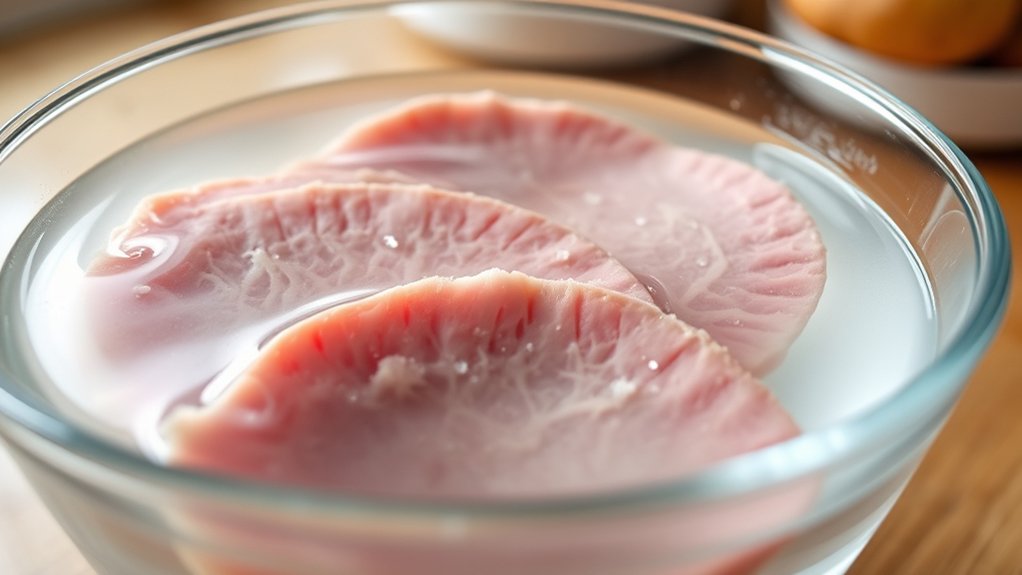
Soaking corned beef before cooking helps cut down its saltiness because it leaches out some of the excess salt from the meat. When you submerge the beef in water, the salt dissolves into the liquid, gradually reducing the overall salt content.
This process makes the meat less salty and more balanced in flavor. The salt molecules move from the beef into the water through osmosis, which helps to draw out the salt without affecting the meat’s texture too much.
How Long Should You Soak Corned Beef to Cut Salt?
The length of time you soak corned beef directly affects how much salt is pulled out. Typically, soaking for 1 to 4 hours helps reduce excess salt effectively.
If you prefer a milder flavor, soak it longer, changing the water every hour. Here’s a quick guide to help you decide:
| Soaking Time | Result | Water Changes Needed |
|---|---|---|
| 1 hour | Slight salt reduction | No |
| 2 hours | Moderate salt reduction | Yes |
| 3 hours | Significant salt removal | Yes |
| 4 hours | Very mild, low salt taste | Yes |
| Over 4 hours | Potential texture change | Yes |
Adjust your soaking time based on how salty you want it. Remember to rinse the beef well before cooking.
What Factors Affect How Long You Need to Soak?
The amount of salt in the brine affects how long you need to soak your corned beef. If the cure is saltier, you’ll need to soak it longer.
Temperature also matters. Warmer water speeds up the soaking process, while colder water makes it slower.
Plus, how long the beef spends in the salty brine impacts how much salt you’ll need to rinse out before cooking.
Salt Concentration Levels
Salt concentration levels in the corned beef largely determine how long you should soak it. If the meat is heavily salted, you’ll need to soak it longer to remove excess salt.
Conversely, if the beef has a lower salt content, a shorter soaking time may suffice. The curing process influences salt levels; commercially prepared corned beef often has a consistent salt concentration, but homemade or older cuts may vary.
You can test the saltiness by tasting a small piece after some soaking. Remember, the goal is to reduce salt without over-soaking, which can affect texture and flavor.
Adjust soaking time based on initial salt levels, and always check periodically to guarantee you achieve the desired saltiness before cooking.
Soaking Temperature Effects
Temperature plays a big role in how quickly salt dissolves and escapes from the corned beef during soaking. When you soak at higher temperatures, the salt dissolves faster, making the desalting process quicker.
Warm water increases molecular movement, which helps salt molecules leave the meat more rapidly. On the other hand, soaking in cold water slows things down, so it takes longer to reduce the salt content.
It’s important to find the right balance: hot enough to speed things up, but not so hot that it starts cooking the meat or changes its texture. Usually, soaking in cool or room temperature water is best for gentle, controlled desalting.
Adjusting the temperature lets you customize the process based on your timeline and how much salt you want to remove.
Duration of Salty Brine
Several factors influence how long you need to soak corned beef in a salty brine, and understanding these can help you get the level of desalting just right.
The thickness of the meat is a big one—thicker cuts need more time to remove the excess salt. The saltiness of the brine also matters; a saltier solution might require longer soaking.
Your personal preference for saltiness is important too. If you like less salty meat, go for a longer soak. Temperature affects the process as well; cooler water slows salt diffusion, which can mean more time, while warmer water speeds things up.
Tips for Soaking Corned Beef for Best Results
To get the best results, pay attention to soaking time and use cold water only to draw out excess salt.
Be sure to change the water regularly to keep the process effective.
Keeping these tips in mind helps guarantee your corned beef turns out tender and flavorful.
Optimal Soaking Time
For the best results, soak your corned beef for at least 12 to 24 hours. This gives the salt enough time to draw out, making the meat less salty and more tender.
If your beef is especially salty, extending the soak to 48 hours can help ensure thorough desalting. Just remember, soaking times can vary based on the thickness and saltiness of your meat.
Check the beef periodically by tasting a small piece. If it’s still too salty, give it more time. The goal is to remove excess salt without sacrificing the meat’s texture.
Patience is key. Rushing the process might leave you with overly salty or tough corned beef.
Use Cold Water Only
Using cold water is key when soaking corned beef. Cold water helps draw out excess salt gradually without cooking the meat or making it tough. Always use fresh, cold water and change it regularly to keep the process effective.
Hot water can start cooking the meat too early and trap salt inside, making it overly salty. To get the best results, remember these points:
| Tip | Why it Matters | Best Practice |
|---|---|---|
| Use cold water only | Prevents cooking and salt absorption | Keep water cold, refresh often |
| Change water frequently | Keeps salt removal consistent | Change every 30 minutes |
| Avoid hot water | Stops salt from being released | Stick to cold water throughout |
Stick to cold water for the best-tasting corned beef.
Change Water Regularly
Changing the water regularly is key to removing excess salt from corned beef effectively. When you soak the meat, fresh water draws out the salt, making it less salty and more tender.
If you don’t change the water, the salt levels won’t decrease properly, and the beef might stay too salty. To get the best results, plan to change the water every 1 to 2 hours during soaking.
This helps remove salt steadily and prevents the water from becoming saturated. Keep the beef fully submerged and use cold water for consistent results. Regularly changing the water really improves the flavor and texture of your corned beef.
How Do You Know When Your Corned Beef Is Done Soaking?
Knowing when your corned beef is done soaking is key to making sure it’s flavorful and tender. You should taste a small piece to see if the saltiness has decreased to your liking.
If it’s still too salty, keep soaking and change the water regularly. Once the beef tastes less salty but still has good flavor, it’s ready for cooking.
Keep soaking and changing water until the beef is less salty but still flavorful.
Also, check the texture; it should feel firm yet tender, not mushy or overly tough.
If you’re unsure, soaking for a full 24 hours works, but tasting it along the way helps avoid over-soaking.
Remember, the goal is to remove enough salt without losing flavor or moisture.
When these signs line up, your corned beef is ready for the next step.
Common Mistakes to Avoid When Soaking Corned Beef
One common mistake to avoid when soaking corned beef is leaving it in the water for too long. This can make the meat overly bland or cause it to lose too much flavor. You might think soaking longer helps, but it actually strips away essential salts and spices, reducing taste.
Also, avoid using hot water. It can cause uneven salt removal and affect the texture of the meat. Be sure to change the water frequently, at least every few hours, to prevent the meat from absorbing impurities or becoming too salty.
Don’t forget to taste the meat periodically during soaking. Relying only on time can be a mistake—checking the flavor helps you avoid over-soaking. Lastly, never soak corned beef at room temperature, as this can promote bacterial growth.
Proper timing, temperature, and regular water changes are key to getting your corned beef just right.
Frequently Asked Questions
Can Soaking Remove All the Salt From Corned Beef?
Soaking can greatly reduce the saltiness of corned beef, but it may not remove all the salt completely. You can soak it for several hours or overnight, changing the water a few times to draw out more salt.
Keep in mind, the longer you soak, the milder the flavor becomes. However, some residual salt might still remain, especially if the beef is very salty initially.
Is There a Recommended Water Temperature for Soaking?
You should soak corned beef in cold water to effectively remove excess salt. Using hot or warm water can make the meat tough and might not remove the salt as well.
Keep the water cold or at room temperature, and change it frequently—about every hour or so—for the best results. Cold water helps draw out the salt gradually, which makes the meat tender and less salty.
Can Soaking Affect the Flavor of the Corned Beef?
Yes, soaking can affect the flavor of your corned beef. If you soak it too long or use fresh water that isn’t seasoned, the beef might lose some of its savory, salty taste.
To keep the flavor intact, soak it for the recommended time and consider adding spices or seasoned water. This way, you can cut down on the saltiness without losing that delicious flavor you want in your dish.
How Often Should You Change the Soaking Water?
You should change the soaking water every 2 to 3 hours, like turning a page in a book to keep the story fresh. This helps prevent the salt from leaching back into the meat and ensures even salt removal.
If you’re soaking for a longer period, changing the water more often keeps things running smoothly. Regularly swapping out the water stops the beef from becoming overly salty again and boosts its overall flavor.
Does the Size or Cut of the Beef Change Soaking Time?
Yes, the size and cut of the beef do affect soaking time. Larger or thicker cuts need more time to reduce salt effectively, while smaller or thinner pieces soak faster.
For example, a whole brisket might need 24-48 hours, but sliced or smaller cuts could only take 4-8 hours.
It’s a good idea to check the beef periodically and taste a piece to make sure it’s no longer too salty before cooking.
Conclusion
Soaking corned beef is like washing away the salt’s stubborn grip, exposing a tender, flavorful core beneath. While patience is key, rushing can leave you with an underwhelming dish, just as a hurried rinse can’t undo too much salt.
Take your time, monitor the process, and enjoy the transformation from salty to savory. With each soak, you peel back the harshness, revealing the rich, satisfying taste hidden inside.
For best results, soak corned beef for about 2 to 4 hours, changing the water once or twice. This helps remove excess salt and ensures a more balanced flavor.