7 Essential Steps to Build Your Dream Outdoor Kitchen
Dreaming of the perfect outdoor kitchen but feeling overwhelmed by where to start? You’re not alone. Many people struggle with turning their backyard visions into reality, especially when it comes to planning, materials, and budget.
Luckily, building your dream outdoor space is easier than you think with a clear step-by-step plan.
To build your dream outdoor kitchen, start by planning a layout that maximizes efficiency with designated cooking, prep, and seating areas.
Choose durable, weather-resistant materials like stone, stainless steel, and treated wood to guarantee longevity.
Select appliances designed for outdoor use that suit your cooking style.
Focus on style and comfort with cohesive designs and cozy seating.
Budget carefully, including permits and unexpected costs, and keep maintenance simple with regular cleaning.
Continue exploring for detailed steps to bring your vision to life.
Key Takeaways
- Plan an efficient layout with designated cooking, prep, and seating areas for smooth workflow. This helps you move easily between different zones without hassle. Think about how you’ll use the space daily and arrange accordingly.
- Select durable, weather-resistant materials like stone, brick, and stainless steel for longevity. These materials can handle the elements and still look great year after year.
- Choose appliances suited for outdoor use, ensuring they withstand environmental elements. It’s worth investing in quality that can handle rain, sun, and wind.
- Design for style and comfort by coordinating aesthetics and including weatherproof seating options. Your outdoor kitchen should be inviting and match your overall outdoor decor.
- Establish a comprehensive budget, including contingency funds, and track expenses throughout the project. This way, you’ll stay on top of costs and avoid surprises along the way.
Plan Your Outdoor Kitchen Layout for Maximum Functionality
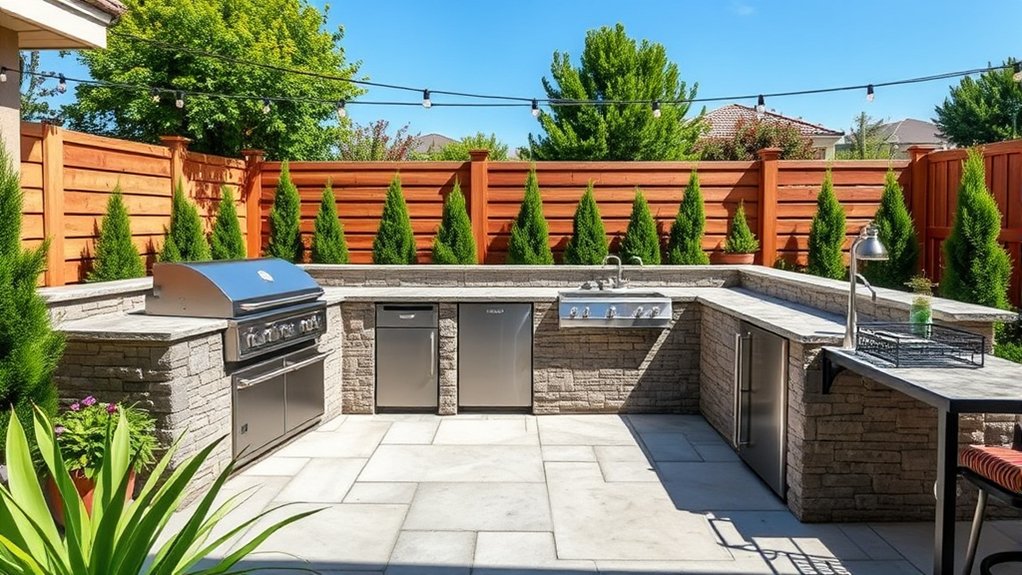
To create an outdoor kitchen that’s both efficient and enjoyable to use, you need to carefully plan its layout. Start by identifying your main cooking and prep areas, making sure they’re close enough for easy workflow but still separated enough to avoid crowding.
Place the grill in the center, with counter space on either side for prep and serving. Include a dedicated spot for a sink if possible, so washing ingredients isn’t a hassle. Think about storage options nearby for utensils, cookware, and supplies.
Consider seating arrangements and how guests will move around the space. Keep pathways clear and logical, minimizing steps between key zones. A well-thought-out layout makes cooking, entertaining, and cleaning seamless, turning your outdoor kitchen into a practical, inviting space.
Choose Durable, Weather-Resistant Materials for Your Outdoor Kitchen
Choosing the right materials is key to making sure your outdoor kitchen can handle the weather and stays functional over time. You want materials that resist weather, moisture, and temperature changes so your space stays beautiful and durable.
Look for stone or brick for countertops and surfaces because they’re strong and weather-resistant. Stainless steel is great for appliances and fixtures since it won’t rust or corrode.
Weatherproof cabinetry made from composite or treated wood will last despite rain or sun. These choices help prevent warping, cracking, or rust, which means less maintenance for you.
Investing in high-quality, weather-resistant materials guarantees your outdoor kitchen remains a functional and attractive space for years to come. Don’t cut corners—choose durability for a worry-free outdoor cooking experience.
Select the Best Appliances and Equipment for Outdoor Cooking
Selecting the right appliances and equipment is key to creating a functional and enjoyable outdoor kitchen. Your choices impact how efficiently you cook and the overall experience.
Prioritize durable, weather-resistant options like stainless steel grills, side burners, and refrigeration units designed for outdoor use. These will stand up to the elements and last longer.
Think about the size and power of your appliances to match your cooking style. This ensures your outdoor setup is both practical and enjoyable.
Design Your Outdoor Kitchen for Style and Comfort
To create an inviting outdoor kitchen, choose a cohesive style that complements your home and personal taste. This helps make the space feel intentional and put together.
Make sure your seating is comfortable enough for long conversations and relaxed meals. After all, you want to enjoy your time outside without feeling cramped.
When you balance style with comfort, your outdoor space becomes both beautiful and functional. It’s all about creating a space where you want to spend time, day after day.
Choose A Cohesive Style
Creating a cohesive style for your outdoor kitchen sets the tone for both its appearance and functionality. When you choose a unified design, it creates a seamless look that feels intentional and inviting.
Think about how your materials and colors work together. Whether you prefer modern sleekness, rustic charm, or coastal breezes, aim for harmony in your choices.
To help visualize, consider these elements:
- Consistent material choices like stone countertops paired with matching cabinetry
- A unified color palette that complements your home’s exterior
- Design details that reflect your personal style, such as modern hardware or vintage accents
Prioritize Seating Comfort
Comfortable seating transforms your outdoor kitchen into a welcoming space where guests can relax and linger. You want furniture that offers support without sacrificing style, so choose cushions with weather-resistant fabric.
Consider the layout too. Arrange seats to encourage conversation and ensure easy access to the cooking areas. Think about different seating options like bar stools, lounge chairs, or benches, depending on your space and needs.
Adding soft pillows and blankets can boost comfort and create a cozy atmosphere. Prioritizing comfort encourages your guests to stay longer and enjoy the setting.
Estimate Costs and Budget for Your Outdoor Kitchen Project
To plan your outdoor kitchen budget, start by itemizing all material costs, from countertops to appliances.
Don’t forget to set aside contingency funds for unexpected expenses that might come up along the way.
This approach helps keep your project on track financially and reduces surprises.
Itemize Material Expenses
Before diving into your outdoor kitchen build, it’s important to itemize your material expenses so you can stick to your budget. This step helps you see exactly what you’ll need and avoid surprises later on.
Start by listing big items like cabinetry, countertops, and appliances. Then, break down costs for each, considering quality and how long they’ll last. You’ll want to include building materials like bricks, concrete, or stone.
Don’t forget kitchen appliances such as grills, refrigerators, and sinks. Finish up with details like lighting, hardware, and decorative touches. Creating a detailed list ensures you don’t miss anything or overspend on extras.
It also makes comparing prices across suppliers easier, helping you make smarter choices. Staying organized with a clear budget will keep your project on track from start to finish.
Allocate Contingency Funds
Allocating contingency funds is a key part of keeping your outdoor kitchen project within budget. Unexpected costs can come up, so setting aside some extra money helps you avoid overspending.
Typically, you should allocate about 10-15% of your total budget for contingencies. This buffer helps cover surprises like material price increases or extra labor needs without stressing out.
Be realistic about potential issues and plan accordingly. Use the table below to identify common contingency expenses and their estimated costs:
| Expense Type | Estimated Cost | Notes |
|---|---|---|
| Material Price Fluctuations | 10-15% of total | Buffer for unexpected increases |
| Design Changes | Varies | Adjustments during build |
| Labor Overruns | 5-10% of total | Extra hours needed |
| Permits & Fees | Fixed | Unexpected permit costs |
| Equipment Repairs | Variable | Possible repair needs |
Understand Permits and Building Codes for Outdoor Structures
Are you aware of the permits and building codes needed for your outdoor kitchen project? Checking local regulations is key to avoiding costly delays or fines. It’s important to understand zoning restrictions, setback rules, and safety standards.
These guidelines help ensure your structure is safe and fits within community rules. To get started, keep in mind these essential points:
- Building permits: Usually required for structures above a certain size or height.
- Zoning laws: Might restrict the type, placement, or use of your outdoor kitchen.
- Electrical and plumbing codes: Important for safe installation of utilities and appliances.
Maintain Your Outdoor Kitchen to Keep It Looking New
Keeping your outdoor kitchen in top shape means doing regular maintenance to prevent wear and keep it looking great. Always clean surfaces after each use to avoid stains and buildup. Seal stone countertops once a year to protect against moisture damage.
Check and tighten fixtures regularly so you don’t get leaks. Clear out gutters and drainage areas often to stop water from pooling.
Picture your outdoor space like this:
| Surface Type | Maintenance Tip | Frequency |
|---|---|---|
| Stone Counter | Seal annually | Once a year |
| Stainless Steel | Clean with mild soap | Weekly |
| Grill Grates | Scrub and oil after each cook | After each use |
| Wooden Cabinets | Treat with weatherproof sealant | Every 2 years |
| Lighting Fixtures | Check and replace bulbs | Monthly |
Keeping up with these simple tasks will keep your outdoor kitchen looking fresh and inviting all year long.
Frequently Asked Questions
How Do I Incorporate Outdoor Lighting Into My Kitchen Design?
To incorporate outdoor lighting into your kitchen design, start by choosing functional and ambient fixtures like task lights over counters and pendant lights for style. Use weatherproof LED options for energy efficiency and durability.
Strategically place lights along pathways, under cabinets, and around seating areas for safety and ambiance. You can also add dimmers or smart controls to adjust brightness, creating the perfect mood for cooking, dining, or relaxing outdoors.
What Are the Best Storage Solutions for Outdoor Kitchens?
You should opt for weather-resistant storage options like stainless steel cabinets, waterproof drawers, and sealed cabinets to keep your outdoor kitchen organized and protected from the elements.
Incorporate built-in shelves or drawers for utensils, spices, and cookware. Consider adding a storage bench or cabinet with locks for extra security.
Use clever organization tools like hooks, racks, and magnetic strips to maximize space and keep everything within easy reach.
How Can I Create a Seamless Indoor-Outdoor Flow?
Creating a seamless indoor-outdoor flow is like opening a welcoming door to endless possibilities. You can do this by using consistent materials and colors that blend both spaces.
Install large, retractable glass doors and align flooring patterns to make the transition smooth. Keep the change minimal with few steps or thresholds.
Make sure the outdoor space feels inviting and connected. This way, your guests will feel at home whether inside or outside, making entertaining effortless.
What Safety Features Should I Consider for Outdoor Cooking Areas?
You should prioritize installing fire-resistant materials and ensuring proper ventilation in your outdoor cooking area. Use weatherproof, non-slip flooring to prevent accidents and keep the space safe.
Keep a fire extinguisher nearby, and consider adding safety barriers or screens around the grill to contain sparks. Adequate lighting is essential for nighttime cooking, and secure electrical outlets to prevent water exposure.
These features help keep your outdoor kitchen both safe and enjoyable.
How Do I Choose Eco-Friendly Materials for My Outdoor Kitchen?
You should prioritize sustainable materials like recycled steel or reclaimed wood for your outdoor kitchen. For example, a homeowner in California chose reclaimed cedar for their countertops, which helped reduce waste and lessen environmental impact.
When selecting eco-friendly options, look for certifications like FSC or LEED. These can help ensure you’re choosing genuinely sustainable materials.
Also, consider durability, maintenance, and local sourcing. This way, your materials will not only be eco-friendly but also suitable for outdoor use, helping you create a beautiful, environmentally conscious outdoor space.
Conclusion
As you bring your outdoor kitchen to life, remember that the perfect space often comes from unexpected moments. Maybe you’ll find a weather-resistant countertop during a rainstorm or stumble upon a cozy spot for seating after a long day.
With a bit of planning and a little luck, your dream outdoor kitchen becomes more than just a project. It’s a place where memories are made and shared.
Keep your vision flexible and enjoy the journey of creating your outdoor haven. The key is to stay open to surprises along the way, making your outdoor kitchen truly special.