How to Use an Electric Stove for Beginners
Starting out with an electric stove can feel overwhelming, especially if you’re new to cooking or switching from gas. Many people struggle with understanding the controls and safety precautions, but don’t worry—you’re not alone. With a little guidance, you’ll soon feel confident in your kitchen.
To use an electric stove, first familiarize yourself with the controls, whether they’re knobs or digital buttons, and start with low heat to prevent burning. Connect the stove to a properly grounded outlet, keep the area dry and clear, and use the right cookware with flat bottoms for even heating.
Always watch your food and use oven mitts when handling hot items. If you keep practicing and follow safety tips, you’ll become more confident.
There’s much more to explore for better cooking, so take it step by step and enjoy the process.
Key Takeaways
- Familiarize yourself with the stove’s controls and indicator lights before cooking.
- Make sure everything is set up correctly. Use a grounded outlet and place the stove on a stable, level surface.
- Choose the right cookware. It should have a flat bottom and be the right size for the burner you’re using.
- Start with lower heat settings and gradually increase. This helps prevent food from burning or sticking.
- Keep the area clean by wiping up spills right away. Regularly check for any damage to keep everything safe and working well.
How Does an Electric Stove Work?
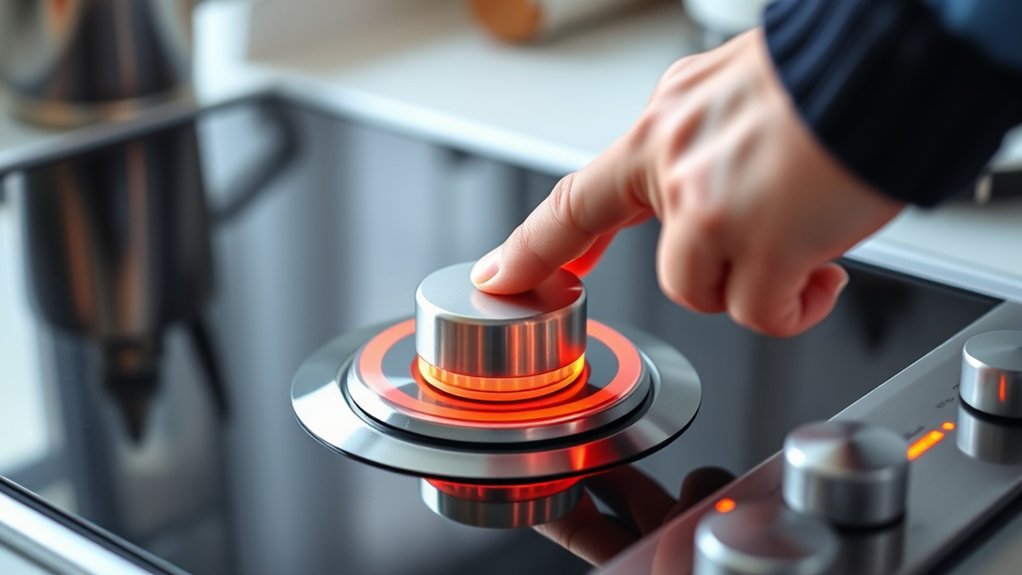
Electric stoves work by turning electrical energy into heat through heating elements. When you switch on the stove, electricity flows to these elements, which are usually made of metal coils or flat ceramic surfaces.
As current passes through, the resistance in the material causes it to heat up quickly. This heat then radiates outward, warming your pots and pans.
You can control the temperature precisely by adjusting the dial or touch controls, which regulate how much electrical current flows to the elements.
Because of this direct conversion, electric stoves heat evenly and respond quickly to adjustments.
Without any open flames or gas, they are safer and more efficient for cooking, making them popular in modern kitchens.
Setting Up Your Electric Stove Safely
Before plugging in your electric stove, make sure the outlet matches the stove’s power needs and is properly grounded. This helps prevent electrical hazards and keeps everything safe.
Check that the outlet is in good shape, without any damage or corrosion. Keep the area dry and free of clutter to avoid accidents.
Ensure the outlet is undamaged, dry, and clutter-free for safe, reliable stove operation.
Avoid using extension cords, as they can cause overheating or fires. Make sure your stove is on a stable, level surface to prevent tipping or uneven heating.
Inspect the power cord for any damage before plugging it in. Once you connect it, turn on the stove and test it to ensure everything works properly.
Following these safety tips helps protect you and extends the life of your appliance.
How to Use the Controls on Your Electric Stove
The controls on your electric stove are designed to give you precise authority over cooking temperatures and settings. Typically, you’ll find knobs or digital buttons that adjust heat levels.
If your stove has knobs, turn them clockwise to increase heat and counterclockwise to lower it. Digital models usually involve pressing buttons or using touchscreens to select specific temperatures or power levels.
Always familiarize yourself with the control panel before cooking. Start with lower settings to prevent burning or overcooking, then adjust as needed.
Some stoves have indicator lights that show when burners are hot, so wait for them to turn off before touching. Using the controls correctly guarantees safe, efficient cooking and helps you achieve the best results in your recipes.
Adjusting Temperature Settings for Different Recipes
Knowing the right temperature range helps you cook your recipes perfectly. You need to match each dish with the appropriate setting on your stove.
Once you understand these connections, adjusting heat becomes quick and easy.
Understanding Temperature Ranges
Understanding temperature ranges is key to cooking with an electric stove because different recipes need precise heat control. Knowing how to adjust your stove’s settings ensures your dishes turn out perfect.
Most electric stoves have low, medium, and high settings, but understanding what each means helps you cook better. It’s all about fine-tuning your heat for the best results.
For example, low heat (around 200°F) is great for simmering sauces or melting chocolate slowly. Medium (around 350°F) works well for sautéing vegetables or cooking eggs.
High heat (around 500°F) is used for boiling water quickly or searing meats. Getting familiar with these ranges helps you control the heat more accurately.
This way, you can prevent burning or undercooking your food and make sure everything turns out just right.
Matching Recipes to Settings
Matching recipes to the right stove settings is key to getting great results. Different dishes need different heat levels, so knowing how to adjust your stove is important.
For simmering soups or sauces, use low heat to avoid burning or over-reduction. When boiling water or cooking pasta, turn the burner to high.
For sautéing vegetables or searing meat, medium-high heat helps cook quickly and evenly.
Use medium or medium-low for gentle simmering or delicate dishes like custards. Always start with the recommended setting from your recipe, then tweak as needed.
Keep an eye on your food and make small adjustments to prevent overcooking or undercooking.
Matching recipes to stove settings ensures tasty, perfectly cooked meals every time.
Choosing the Right Cookware for Your Electric Stove
Choosing the right cookware is essential for getting the best results from your electric stove. The cookware should have a flat, smooth bottom to guarantee even heat transfer and prevent hot spots.
You’ll want to select pots and pans made of materials that conduct heat well, like cast iron, stainless steel, or aluminum.
Here are three key considerations:
- Flat Bottom: Guarantees full contact with the heating element for consistent cooking.
- Material: Choose cookware that heats evenly and responds quickly to temperature changes.
- Size: Match the cookware size to the burner to avoid wasting energy and prevent overheating or uneven cooking.
Using the right cookware helps you cook more efficiently and prevents damage to your stove.
Tips for Boiling, Sautéing, and Simmering on an Electric Stove
To get the best results, you need to master controlling your stove’s heat levels for boiling, sautéing, and simmering. Understanding how to manage boiling points helps prevent overflows or undercooked dishes.
Perfect sauté techniques guarantee even browning. With these tips, you’ll cook more efficiently and achieve better flavors in every meal.
Controlling Heat Levels
Controlling heat levels on an electric stove is key to cooking everything perfectly. It helps you avoid burning or undercooking your food.
Here are some tips to help you get the hang of it:
Adjust the burner’s temperature dial to find the right heat setting for what you’re making, like high for boiling or low for simmering.
Use the stove’s indicator lights to make sure the burner has reached the right temperature before you start cooking.
Keep an eye on your pot or pan; if it’s boiling too vigorously or simmering too slow, tweak the heat as needed.
Managing Boiling Points
Managing boiling points on an electric stove means paying close attention to how your heat settings affect the movement of liquids in your cookware. When boiling water or other liquids, start with high heat to bring it to a rapid boil, then lower the heat to keep a gentle simmer.
For sautéing, use medium to medium-high heat to cook ingredients quickly without overboiling. Keep an eye on the bubbles—vigorous bubbling means a rolling boil, while small bubbles indicate a gentle simmer.
Adjust the temperature as needed to avoid overflows or burning. Remember, electric stoves take a little time to respond to changes in heat, so give your burner a few moments after adjusting. Proper management helps you control your cooking process with precision.
Perfect Sauté Techniques
Mastering perfect sauté techniques on an electric stove means knowing how to control the heat at different stages of cooking. Start with medium-high heat to get your pan hot quickly. Once it’s hot, add oil and wait until it shimmers before tossing in your ingredients.
Stir frequently to prevent sticking and to ensure even cooking. Adjust the heat as needed: turn it down to medium or medium-low for gentle cooking or simmering. Preheat your pan thoroughly before adding ingredients to get the best results.
Use gentle, consistent stirring to avoid burning or uneven browning. Change the temperature based on how your food responds—use higher heat for searing and lower heat for delicate sautéing.
Following these simple steps makes your sautéing precise and delicious every time.
Common Beginner Mistakes and How to Avoid Them
When you’re new to using an electric stove, it’s easy to make mistakes that can affect your cooking results or even cause safety issues. One common mistake is setting the burner too high, which can burn food or damage cookware. Always start with a medium or low setting and adjust as needed.
Another mistake is overcrowding the pan, which prevents proper heat distribution and can lead to uneven cooking. Use the right-sized pots and pans for each burner to guarantee efficient heat transfer.
Forget to turn off burners after cooking? That can be risky, so develop a habit of double-checking. Finally, neglecting to use oven mitts or pot holders can cause burns.
Stay attentive, adjust heat gradually, and prioritize safety to make the most of your electric stove.
Cleaning and Maintaining Your Electric Stove for Longevity
After you finish cooking, taking the time to clean and maintain your electric stove can really help it last longer and work smoothly. Regular care prevents buildup and keeps it looking good.
First, wipe down the surface with a damp cloth after each use to get rid of spills and crumbs. It’s a quick step that makes a big difference.
Wipe the surface with a damp cloth after each use to keep your stove clean and functioning well.
Next, use a gentle scraper to remove any stubborn, stuck-on food without scratching the surface. Be careful to avoid damage.
Finally, periodically check the coils and connections for damage or corrosion. Replace any parts if needed to keep everything running properly.
Troubleshooting Common Electric Stove Issues
When your electric stove isn’t working properly, you need to identify the problem quickly. Common issues include power failures, heating problems, and display errors.
Understanding how to troubleshoot these can save you time and help keep your stove functioning smoothly.
Identifying Power Problems
Power issues are some of the most common problems you might face with an electric stove, and catching them early can save you a lot of time and hassle.
Start by checking if the stove is getting power—inspect the outlet and cord for any damage.
Next, see if the circuit breaker has tripped. If it has, reset it and check if the stove turns on.
Finally, look behind the control panel or at the connection point for any loose or disconnected wiring.
To visualize:
- Plug in another device to make sure the outlet works.
- Reset the circuit breaker if the stove isn’t getting power.
- Check inside for loose connections or damage.
Finding these issues early helps you decide whether you can fix it yourself or need professional help.
Fixing Heating Malfunctions
If your electric stove isn’t heating properly, it’s important to identify the specific issue quickly. Common problems include faulty burners, loose connections, or broken switches. To help troubleshoot, here’s a quick guide:
| Issue | Possible Cause | Solution |
|---|---|---|
| Burner not heating | Burnt-out element | Replace the element |
| Uneven heating | Loose wiring or connection | Check and secure connections |
| Stove not turning on | Faulty switch or control panel | Replace switch or panel |
| Slow heating or none | Broken thermostat | Replace the thermostat |
Start by inspecting these components. Safety first—unplug the stove before working on it.
Handling Display Errors
Display errors on your electric stove can be frustrating, but many issues are easy to troubleshoot. First, check the user manual to understand the specific error code.
Sometimes, a simple reset can clear the display. Next, make sure the stove is properly plugged in and that the circuit breaker hasn’t tripped.
If power problems continue, unplug the stove, wait a few minutes, then plug it back in. Also, inspect the control panel for dirt or moisture, which can cause false errors.
Cleaning with a dry cloth and avoiding liquids can prevent further issues. Following these steps often helps you fix display errors quickly and get your stove working smoothly again.
How to Improve Your Cooking Skills With Practice
Practicing regularly is the key to becoming more confident and skilled in the kitchen. As you experiment with different recipes and techniques, you’ll learn how your stove responds and develop your timing.
Keep notes on what works best, adjusting heat levels or ingredient amounts. Challenge yourself with new dishes to expand your skills.
Here’s a simple way to organize your practice:
| Technique | Recipe Type | Goal |
|---|---|---|
| Sautéing | Vegetables | Master high heat control |
| Simmering | Soups, stews | Improve temperature management |
| Frying | Eggs, meats | Balance oil and heat levels |
| Baking on stove | Skillet bread | Learn multitasking and timing |
Consistent practice helps you become intuitive, making cooking easier and more enjoyable.
Safety Tips for Using Your Electric Stove
As you get more comfortable with your electric stove through practice, it’s important to keep safety in mind to avoid accidents in the kitchen.
Always keep flammable items like dish towels and paper away from the burners to prevent fires.
Never leave your food unattended while cooking. If you need to step away, be sure to turn off the stove.
Handle hot cookware carefully by using oven mitts to avoid burns.
Regularly clean up spills and crumbs from the stove surface to reduce smoke and fire risks.
Make sure the area around your stove is well-ventilated to prevent buildup of smoke or fumes.
Frequently Asked Questions
Can I Use My Regular Pots and Pans on an Electric Stove?
Yes, you can use your regular pots and pans on an electric stove. Just make sure they have flat bottoms for better contact and even heating.
Avoid warped or uneven cookware, as it can cause hot spots or damage the stove. Stick to cookware made of materials like cast iron, stainless steel, or aluminum.
Using the right pots and pans helps you cook efficiently and prevents unnecessary wear on your electric stove.
How Do I Prevent My Electric Stove From Scratching or Damaging?
To prevent scratching your electric stove, 85% of users find that using proper cookware makes a big difference. Always use flat-bottomed pots and pans, and avoid dragging them across the surface.
Clean spills immediately to prevent residue buildup. Use soft sponges instead of abrasive scrubbers, and avoid placing heavy or rough objects directly on the stove.
Following these tips helps keep your stove looking new and functioning well longer.
What Should I Do if My Electric Stove’s Burner Doesn’T Heat Up?
If your electric stove’s burner doesn’t heat up, start by making sure it’s properly plugged in and the switch is turned on.
Check if the burner is securely connected and free from dust or debris. Sometimes, a little cleaning does the trick.
If it still doesn’t work, look for any damage on the burner or try testing it on another outlet to rule out electrical issues.
If problems continue, you might need to replace the burner or get a professional to take a look.
Is It Safe to Leave the Electric Stove Unattended While Cooking?
Leaving your electric stove unattended while cooking isn’t usually safe, especially if you’re simmering or frying. Modern models have safety features, but accidents can still happen.
If you need to step away, make sure to turn off the burner first and stay nearby. Never leave flammable materials close to the stove.
Staying vigilant is key to preventing fires or other mishaps. It’s best to stay in the kitchen or check on your food regularly.
How Do I Know When My Electric Stove Is Turned off Completely?
You can tell your electric stove is completely off by checking the control knobs or touch controls. Make sure they’re in the “off” position, which is usually marked clearly.
For models with indicator lights, look to see if any lights are still on. If they’re off, the stove is probably off.
Always do a quick visual check of the stovetop. Make sure no burners are glowing or feel hot to the touch. This helps prevent accidents and saves energy.
Conclusion
Now that you’re equipped with the essentials, your electric stove becomes more than just a kitchen appliance. It transforms into your culinary partner. Like a trusted compass guiding your cooking adventures, understanding how it works guarantees safety and success.
Welcome each meal as a chance to learn and grow. Remember, every great chef started with simple steps. So, turn on that stove and let your confidence simmer to perfection!
Your delicious journey begins now with your new understanding of how to use an electric stove for beginners.