How to Choose Celtic Salt vs Sea Salt
Choosing the right salt can be confusing, especially with so many options out there. Many people struggle to find the perfect one to elevate their dishes while staying healthy. If you’re torn between Celtic salt and sea salt, you’re not alone.
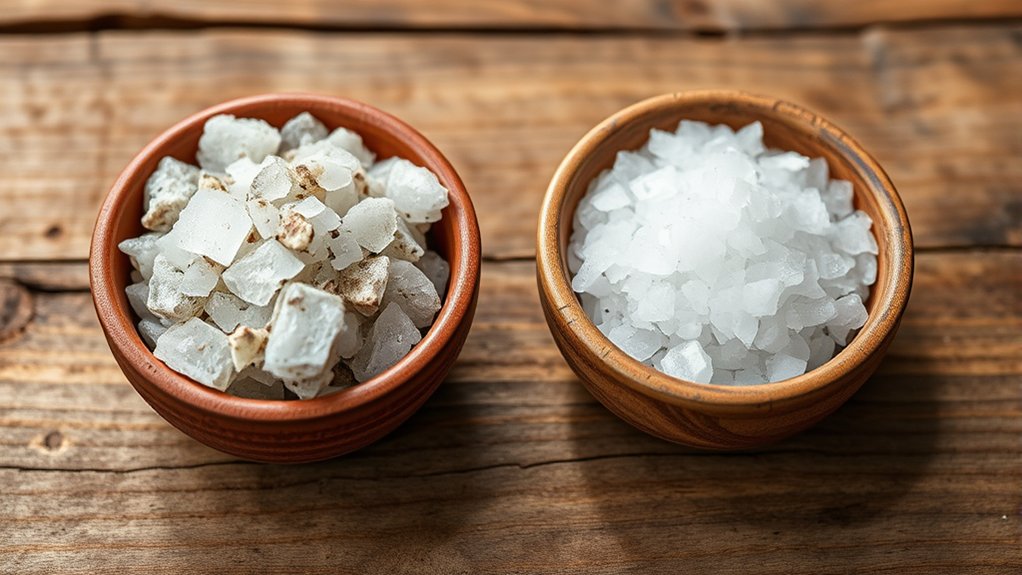
To choose between Celtic and sea salt, consider their sources, textures, and mineral content. Celtic salt, harvested from French coastal ponds, retains more minerals and has a moist, coarse texture, making it great for seasoning meats and vegetables.
Sea salt, produced globally, is usually dry and flaky, ideal for finishing dishes.
Think about their flavors, your cooking style, and health goals. For a closer look at each option, investigate further details.
Key Takeaways
- Consider the source. Celtic salt is traditionally harvested from France, while sea salt is produced around the world through evaporation.
- Think about texture and flavor. Celtic salt is moist and briny, making it great for seasoning. Sea salt is flaky and delicate, perfect as a finishing touch.
- Check how the salt is processed. Less refined salts, like Celtic and sea salts, keep more minerals. They usually have a higher mineral content than processed table salt.
- Look into health benefits. Celtic salt offers a wider range of trace minerals that can support hydration and muscle function.
- Match the salt to your cooking style. Use Celtic salt for cooking and seasoning. Save sea salt for garnishing dishes to add a final touch.
Where Do Celtic Salt and Sea Salt Come From?

Celtic salt and sea salt both come from the ocean, but they have different sources and ways of being made. Celtic salt is harvested from coastal areas, mainly in France, where seawater is collected and slowly evaporates in clay ponds.
This natural process keeps most of the minerals intact and gives the salt a moist, greyish appearance. Sea salt is produced all around the world by evaporating seawater in large, open salt pans.
It’s usually dried quickly and often refined, which can remove some of the minerals. The main difference is that Celtic salt’s traditional, slow evaporation helps preserve its mineral content, while sea salt’s process can vary more and is often more automated.
Knowing where these salts come from helps you understand their unique qualities and decide which one might suit your cooking style better.
What Are the Texture and Flavor Differences?
You’ll notice that Celtic salt has a moist, coarse texture, while sea salt can range from flaky to fine grains. These texture differences affect how each salt feels on your tongue and how they dissolve in food.
When it comes to flavor, Celtic salt tends to have a mineral-rich, slightly briny taste. Sea salt, on the other hand, usually offers a cleaner, more delicate flavor.
Texture Variations
When comparing the textures of Celtic salt and sea salt, you’ll notice distinct differences that can affect how they feel and dissolve in your dishes. Celtic salt usually has a moist, coarse, and slightly sticky texture because of its mineral content and how it’s processed.
It often comes in large crystals that are easy to crush or sprinkle as a finishing salt. Sea salt, on the other hand, can range from fine to coarse grains, and is typically dry and flaky, making it versatile for cooking and finishing.
Fine sea salt dissolves quickly, blending seamlessly into recipes, while coarse sea salt offers a crunch and burst of flavor when used as a finishing touch. These texture variations let you pick based on your preferred feel, how you want to use it, and how you want your dish to look.
Flavor Profiles
Though both salts come from natural sources, they each have unique flavor profiles that can change how your dishes taste. Celtic salt has a mild, briny flavor with subtle mineral notes, making it great for finishing dishes without overpowering them.
Sea salt varies a lot depending on where it’s from, but it usually has a more noticeable mineral flavor and a slightly stronger saltiness. Celtic salt’s gentle taste helps bring out subtle flavors, while sea salt’s bolder flavor adds richness and complexity to your cooking.
The mineral content in each salt also influences their flavors. Celtic salt tends to have a cleaner, more delicate saltiness. Choosing between them depends on whether you want a nuanced or a more robust salt flavor in your dishes.
How Does Processing Affect Salt’s Nutrition and Mineral Content?
Processing greatly impacts the nutritional profile of salt, often stripping away beneficial minerals and altering its natural composition.
Refined salts go through extensive processing, which removes most trace minerals, leaving mainly sodium and chloride. This can reduce the health benefits you might get from natural salts.
Refined salts lose trace minerals, mainly containing sodium and chloride, reducing their potential health benefits.
For example, minimally processed salts like Celtic or sea salt retain minerals such as magnesium, calcium, and potassium.
On the other hand, heavily processed table salts often contain additives like anti-caking agents and lack these nutrients.
Salt’s mineral content depends on how it’s processed—some retain more, while others lose key nutrients.
Refined salts usually have anti-caking agents added, which aren’t present in less processed salts.
During refining, trace minerals are removed, reducing the overall nutritional value.
Less processed salts, like sea salt, preserve their natural mineral content, making them potentially more beneficial.
Which Salt Offers More Health Benefits?
You might wonder which salt offers more health benefits, especially when thinking about mineral content, purity, and contaminants.
Celtic salt often has a wider range of trace minerals, which can be good for your health.
Sea salt can vary in purity depending on how it’s processed.
Knowing these differences can help you choose the best option to support your health.
Mineral Content Differences
When comparing Celtic salt and sea salt, their mineral content plays a big role in deciding which one offers more health benefits. Celtic salt generally has a wider range of trace minerals, including magnesium, calcium, and potassium, in higher amounts. These minerals help with hydration, muscle function, and overall mineral balance.
Sea salt, on the other hand, is still rich in minerals but often has a slightly lower variety and concentration. This is mainly due to processing and evaporation methods that can remove some minerals.
Celtic salt provides more magnesium, which supports relaxation and muscle health. Sea salt mainly offers essential sodium and chloride, which are important for fluid regulation.
In addition, Celtic salt contains trace minerals like zinc and iron that boost immune function. Depending on where it’s sourced and how it’s processed, sea salt may have fewer impurities, making it a cleaner option for some.
Purity and Contaminants
While mineral content varies between Celtic salt and sea salt, their purity and potential contaminants are also important considerations for health. Celtic salt, harvested through traditional methods, tends to have fewer impurities because it’s minimally processed. Its natural evaporation process helps retain beneficial minerals while reducing exposure to pollutants.
Sea salt, depending on where it’s sourced, may contain trace contaminants like heavy metals or microplastics, especially if harvested from polluted waters. Choosing a reputable brand that tests for contaminants can help guarantee safety.
If purity is your main concern, Celtic salt often offers a cleaner profile due to its traditional collection methods. However, both salts can be safe options when sourced responsibly.
Always look for high-quality, tested products to maximize health benefits and minimize contaminant risks.
How Should You Use Celtic Salt and Sea Salt in Cooking?
Celtic salt and sea salt can both elevate your dishes when used thoughtfully during cooking. To get the most flavor, sprinkle either salt towards the end of cooking or just before serving. This helps preserve their mineral content and delicate flavors.
Use Celtic or sea salt at the end of cooking to preserve flavor and minerals.
Use coarse Celtic salt for seasoning meats or roasting vegetables, allowing it to dissolve slowly and add a nice texture. Sea salt works well as a finishing touch on salads or grilled dishes for a satisfying crunch.
Remember, a little salt goes a long way, so taste as you go. Here are some tips:
- Add Celtic salt to slow-cooked stews for added depth
- Use sea salt as a finishing touch on salads or seafood
- Sprinkle coarse salt on roasted vegetables before serving
- Season meats with Celtic salt before grilling or roasting
What Factors Should You Consider When Buying Salt?
Are you aware of the key factors to evaluate when buying salt? First, consider the purity and mineral content. Look for unrefined or minimally processed salts like Celtic or sea salt, which keep natural minerals that can benefit your health.
Next, check the texture—whether you want coarse or fine salt—depending on how you plan to use it. Quality salt should be free of additives and anti-caking agents, so be sure to read the label carefully.
Also, think about the source. Salts from reputable regions often have better flavor and fewer contaminants. Finally, consider your flavor preference—some salts have unique mineral tastes that can really elevate different dishes.
How Do Cost and Availability Compare?
When comparing Celtic and sea salts, cost and availability are important factors to consider. Celtic salt tends to be pricier because of how it’s harvested and its mineral content, which makes it more of a premium choice.
Sea salt is generally more available and usually more affordable, making it a popular option for everyday use. You’ll find sea salt in most grocery stores, which makes it easy to pick up.
Celtic salt is often sold in specialty stores or online, which can limit how easily you can access it. Buying in bulk can help lower the cost of sea salt, while Celtic salt might require purchasing smaller amounts.
Seasonal or regional factors can also influence the availability of either salt type, so it’s worth considering where and when you’re shopping.
Which Salt Fits Your Lifestyle and Dietary Goals?
Considering your lifestyle and dietary goals can help determine which salt is the best fit for you. If you’re into minimal processing, Celtic salt’s natural minerals and unrefined nature might appeal to you. It’s often preferred by those who want whole, less processed foods.
On the other hand, if you want a versatile, easy-to-find option, sea salt’s fine texture and widespread use can suit many diets. Just keep an eye on sodium content, as some salts are more concentrated than others.
For holistic or mineral-rich diets, Celtic salt offers extra trace minerals. Ultimately, pick a salt that matches your health priorities, flavor preferences, and how you plan to use it daily.
How Can You Experiment to Find Your Favorite Salt?
Wondering how to find the salt that best suits your taste and needs? The easiest way is to experiment with different types directly.
Start by trying small amounts of Celtic salt and sea salt in your favorite recipes. Pay attention to the flavors, textures, and how they enhance your dishes. Keep track of what you like best.
To explore further, try using each salt in different recipes like salads or roasted vegetables. Adjust the amount to discover your preferred level of saltiness.
Compare the textures—fine versus coarse grains—and notice how each salt brings out different flavors. This hands-on approach helps you find the salt that matches your palate and cooking style, making your meals more personalized.
Frequently Asked Questions
Are There Any Environmental Impacts Associated With Harvesting Celtic and Sea Salts?
Yes, harvesting Celtic and sea salts can impact the environment. When you harvest Celtic salt, traditional methods involve minimal machinery, but large-scale extraction may disturb local ecosystems and increase salinity in nearby areas.
Sea salt production can also harm marine life if not managed sustainably, especially through pollution or disruption of marine habitats. To reduce your impact, look for producers dedicated to eco-friendly practices and sustainable harvesting methods.
Can Certain Health Conditions Influence Which Salt Is Better for Me?
If you have high blood pressure or kidney issues, you should steer clear of salt, period. Celtic salt’s mineral-rich profile might tempt you with promises of health benefits, but it still spikes your sodium levels.
Sea salt? It’s just salt with a fancy name. Your best bet? Consult your doctor before sprinkling any salt.
After all, your health isn’t a game of “which salt looks cooler.”
How Long Do Celtic Salt and Sea Salt Typically Last Before Losing Quality?
Celtic salt and sea salt usually last forever if you store them properly in a cool, dry place in an airtight container. Since they’re natural minerals, they don’t spoil like perishable foods.
Over time, moisture or dirt can change their texture or purity a bit. To keep them fresh, just make sure they stay sealed and away from humidity.
Generally, they stay good for several years, making them a long-lasting addition to your kitchen.
Are There Any Cultural or Traditional Uses Unique to Celtic or Sea Salt?
Imagine sprinkling Celtic salt, its moist, mineral-rich crystals evoking ancient healing rituals or adding sea salt, reminiscent of ocean breezes and sunlit beaches, to your meals.
Culturally, Celtic salt is used in traditional healing practices and rituals, symbolizing purity and protection.
Sea salt, on the other hand, holds significance in coastal communities for purification and religious ceremonies.
Both salts carry deep-rooted cultural and spiritual meanings, enriching your culinary and ritual experiences.
What Certifications or Labels Should I Look for When Purchasing Quality Salt?
Look for certifications like Kosher, Organic, or Non-GMO to guarantee quality when buying salt.
Check for labels indicating the salt’s origin and processing methods, such as “unrefined” or “hand-harvested.” These markers suggest minimal processing and better mineral content.
Avoid salts with artificial additives or anti-caking agents. By choosing certified and clearly labeled salts, you’re ensuring you’re getting a pure, high-quality product that meets your health and culinary standards.
Conclusion
So, here’s the twist—you might’ve started thinking one salt was better, only to realize it’s all about your taste, health goals, and budget. Ironically, choosing between Celtic and sea salt isn’t about finding the “best,” but the one that fits your lifestyle best.
So go ahead, experiment and enjoy the salty journey. After all, in the end, it’s your palate and health that truly matter. Happy salting!