How Many Calories Are in 1/2 Cup of Ground Beef?
Many people struggle with keeping track of calories, especially when it comes to everyday foods like ground beef. If you’re trying to eat healthier or manage your weight, understanding portion sizes and calorie content can feel overwhelming. You’re not alone in this — it’s a common challenge.
A half-cup of cooked ground beef contains about 150 calories, but this can vary based on fat content and cooking methods. Leaner beef, like 90% lean, has around 120 calories per half cup, while fattier versions can reach 200 calories or more.
Draining excess fat helps reduce calories.
If you want to understand how to choose healthier options and accurately measure servings, keep exploring for helpful tips.
Key Takeaways
- Half a cup of cooked ground beef usually has around 150 calories.
- If you’re using lean ground beef, like 90% lean, it’s closer to 120 calories per half cup.
- Fattier ground beef, such as 80% lean, can be around 200 calories for the same amount.
- How you cook it and the fat content really make a difference in the calorie count.
- Draining off excess fat while cooking can help cut down on the calories.
How Many Calories Are in Half a Cup of Ground Beef?
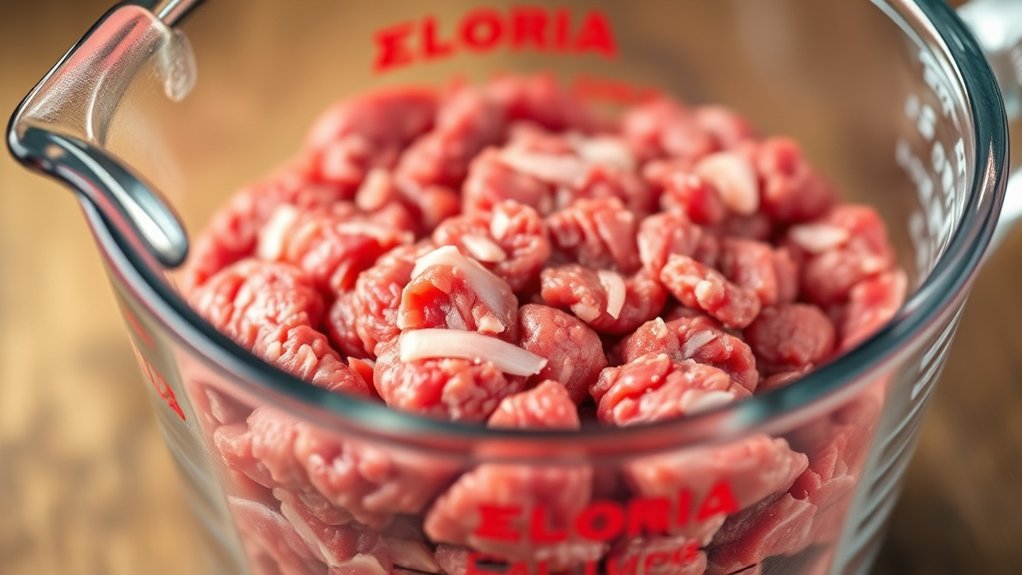
Curious about the calorie content of half a cup of ground beef? Typically, a half-cup serving of cooked ground beef has around 150 calories. This can vary based on the fat content.
For example, leaner ground beef like 90% lean has fewer calories—about 120—while fattier options like 80% lean can have closer to 200 calories. Keep in mind that cooking methods also affect calorie counts; draining excess fat helps reduce overall calories.
If you’re tracking your intake, knowing these differences can help you make better choices. Remember, the exact calorie count depends on the meat’s fat content and how it’s prepared. Always check labels or measure carefully for the most accurate info.
Measuring Half a Cup of Ground Beef: A Simple Guide
To measure half a cup of ground beef accurately, use standard measuring cups, packing the meat lightly without pressing it down.
Keep in mind that the fat content can affect the weight, so adjust your measurements if you’re tracking calories precisely.
Following these simple steps guarantees your portion size is consistent and reliable.
Accurate Measurement Techniques
Measuring half a cup of ground beef accurately is key for precise calorie counting and keeping your recipes consistent. To do this, start by placing a clean, dry measuring cup on a flat surface.
Use a spoon to gently scoop the ground beef, avoiding packing it down. Fill the cup slightly above the rim, then level off the excess with the back of a butter knife or a straight-edged utensil. Make sure the surface is even with the top of the cup.
If you’re measuring cooked beef, let it cool slightly first to prevent melting or spreading. For raw beef, handle it with clean hands or utensils to stay accurate and hygienic.
Following these steps helps ensure your measurements are consistent and your calorie calculations are spot on.
Using Standard Measuring Cups
Using standard measuring cups makes it simple to measure half a cup of ground beef accurately. To do this effectively, follow these steps:
- Lightly pack the ground beef into the measuring cup, but don’t press it down too tightly.
- Use a flat edge, like the back of a knife, to level off the extra beef for an even measurement.
- Transfer the beef to your cooking dish, making sure you don’t lose any during the transfer.
This method guarantees you get a precise amount, which is important for accurate calorie counts and recipe consistency. Remember, a half-cup of ground beef usually weighs around 4 ounces. Proper measurement helps you control portion sizes and nutritional intake easily, making your meal prep more effective.
Adjusting for Meat Fat Content
Adjusting for the fat content in ground beef is important because it impacts both the calorie count and the nutritional profile of your meal. Higher fat ground beef has more calories per serving, so knowing the fat percentage helps you estimate calories more accurately.
For example, 80% lean beef contains 20% fat, while 90% lean has only 10% fat. When measuring half a cup, consider whether you’re using lean or regular beef, as the calorie difference can be significant.
If you want a leaner option, go for 90% or higher. This adjustment ensures your calorie count reflects the actual fat content, giving you a more precise estimate of your meal’s nutritional value.
What Factors Affect the Calories in Ground Beef?
Several factors influence the calorie content in ground beef, and understanding them can help you make healthier choices. First, the fat percentage notably impacts calories; higher fat means more calories per serving.
Second, the cooking method affects calorie count. Greasy frying adds calories, while draining excess fat reduces it.
Third, the cut of beef used can vary in fat and calorie density. Leaner cuts contain fewer calories.
Recognizing these factors helps you select options that fit your dietary goals. For example, choosing leaner ground beef or draining excess fat after cooking can reduce calorie intake.
Being mindful of these elements allows you to enjoy ground beef while maintaining better control over your overall calorie consumption.
Calorie Content of Ground Beef by Fat Percentage
The fat percentage in ground beef directly determines its calorie content, making it a key factor when choosing the right type for your diet. Leaner options like 90% or 95% lean have fewer calories—about 150-180 calories per half-cup—because they contain less fat.
On the other hand, higher-fat varieties such as 70% or 80% lean pack more calories, typically around 220-250 per half-cup. The extra fat adds both flavor and calories, but if you’re counting calories or trying to cut back on fat, going for leaner ground beef is a smart choice.
Keep in mind that the calorie difference can really impact your overall diet, so choosing the right fat percentage helps you meet your nutritional and calorie goals effectively.
How Cooking Changes Ground Beef Calories
Cooking ground beef changes its calorie content mainly because of moisture loss. When you cook beef, much of the water evaporates, which makes the remaining meat more calorie-dense. So, cooked ground beef has more calories per ounce than raw.
Cooking reduces the weight of the beef, but the calorie count stays pretty much the same. This means that the cooked version has more calories per ounce.
If you drain excess fat during cooking, you lower the calorie content. But if you leave the fat, the calories stay higher.
The cooking method also matters. Grilling or broiling causes more moisture loss than boiling, making the beef even more calorie-dense.
Knowing these factors helps you track your calorie intake more accurately.
Raw vs. Cooked Ground Beef: What’s the Difference in Calories?
When you cook ground beef, some calories can decrease because of water and fat loss during the process. The amount of fat also affects how many calories are retained or lost—leaner options tend to lose fewer calories.
Understanding these differences helps you better estimate your meal’s calorie count, whether you’re eating it raw or cooked.
Calorie Loss During Cooking
As ground beef cooks, it loses water and fat, which reduces its weight and calories per serving. So, cooked beef will have fewer calories per volume than raw.
The amount of calorie loss depends on how you cook it and how long you cook it for. Different methods can make a big difference.
Here are three key points to keep in mind:
- Fat Drip: When fat melts and drips away, it lowers the calorie content.
- Water Loss: Water evaporation reduces weight without changing calories directly but makes calories more concentrated.
- Cooking Method: Grilling or draining fat causes more calorie loss than boiling or steaming.
Knowing these factors helps you estimate the real calorie content of cooked ground beef more accurately.
Impact of Fat Content
The fat content in ground beef really impacts its calorie count, whether it’s raw or cooked. Higher fat means more calories either way.
When you cook ground beef, some fat drips away, which lowers the overall calories, especially in leaner options. But if you pick fattier ground beef, you’ll get more calories no matter how you cook it.
Cooking can help reduce calorie density a bit because some fat escapes. Still, if you don’t drain the excess fat, cooked ground beef keeps most of its original fat content.
Choosing leaner ground beef and draining it well can help manage calorie intake. Fattier options naturally contain more calories, whether raw or cooked.
Including Ground Beef Calories in Your Daily Diet
Including ground beef in your daily diet can be a nutritious choice, as long as you keep an eye on its calorie content. Knowing how to balance your meals helps you meet your health goals without overdoing it.
Here are three ways to include ground beef thoughtfully:
- Pick leaner options like 90% lean to cut down on calories without losing flavor.
- Watch your portion sizes—stick to about 3-4 ounces per meal to stay on track.
- Mix ground beef with vegetables to boost nutrients and fiber, making your meals more filling and balanced.
How to Choose Leaner Ground Beef Options
Choosing the right ground beef can make a big difference in managing your calorie intake. Look for labels that say “lean” or “extra lean”—these usually have less fat and fewer calories.
Check the percentage on the package, aiming for 90% lean or higher. When shopping, read the nutrition facts to compare fat and calorie levels between brands.
You can also ask your butcher for leaner cuts or ground beef made from leaner parts. Remember, trimming visible fat before cooking can help lower fat and calorie content.
Common Mistakes When Counting Ground Beef Calories
Many people overlook the difference between lean and fatty ground beef, which can really change the calorie count.
Also, how you cook the meat—whether you’re grilling, frying, or draining—can affect its calorie content without you realizing.
Paying attention to these factors helps ensure you’re counting calories accurately.
Ignoring Lean vs. Fat Content
Have you ever overlooked the difference that lean versus fat content makes when counting ground beef calories? This mistake can lead to inaccurate calorie counts and unintentionally eating more than you plan.
Knowing whether your ground beef is 90% lean or 80% fat impacts the calorie content a lot. Here are three points to keep in mind:
- Higher fat content means more calories per serving. Fattier ground beef can add hundreds of extra calories without you realizing it.
- Lean ground beef is lower in calories but may be less flavorful. Adjust your portion sizes accordingly.
- Always check the label or ask for details. Doing so guarantees your calorie count reflects the true nutritional content and helps you stay on track with your goals.
Not Considering Cooking Methods
One common mistake when counting ground beef calories is not considering how cooking methods change the final calorie content. Different techniques like frying, grilling, or broiling can affect the fat and moisture levels, which impacts calorie counts.
For example, frying in oil adds calories, while draining excess fat reduces them. Grilling might cause some fat to drip away, lowering calories, but it can also concentrate flavors and nutrients differently.
If you don’t account for these changes, your calorie estimate can be off. Many people forget to adjust for cooking losses or gains, leading to overestimations or underestimations.
To get an accurate count, track how you cook your ground beef. Consider draining excess fat or choosing cooking methods that preserve or reduce calories.
How Ground Beef Calories Fit Into a Balanced Meal
Balancing ground beef calories within a meal isn’t just about the meat itself; it’s about the overall plate. Think about how all the components work together for a nutritious, satisfying dish.
Balancing ground beef calories involves the whole plate—vegetables, grains, and healthy fats for a nutritious, satisfying meal.
Add plenty of vegetables to boost fiber and nutrients without piling on calories. They make your meal colorful and flavorful too.
Pick whole grains like brown rice or whole-wheat pasta for sustained energy. They help keep you full longer and add a nice texture.
Don’t forget healthy fats, such as avocado or olive oil. They enhance flavor and support heart health, making your meal both tasty and nourishing.
FAQs: Ground Beef Calories and Nutrition
Curious about the nutritional value of ground beef? It’s a good idea to understand its calorie content and nutrients so you can make healthier choices.
A typical 3-ounce serving of cooked lean ground beef (90% lean) has about 170 calories, while higher-fat versions can have over 250 calories. The calorie count depends on the fat content, so check labels or ask your butcher.
Ground beef is a great source of protein, iron, and B vitamins, but it also contains more saturated fat. If you’re counting calories or watching your fat intake, lean or extra-lean options are your best bet.
Frequently Asked Questions
How Does the Type of Ground Beef (Beef, Turkey, Plant-Based) Affect Calorie Content?
The type of ground beef really influences its calorie content. Beef usually has more calories because of its fat, especially in fattier cuts.
Turkey is generally leaner, so it tends to have fewer calories. Plant-based options vary, but they’re often lower in calories and fat compared to animal meats.
Your choice impacts your calorie intake, so think about your dietary goals when choosing between beef, turkey, or plant-based ground options.
Are There Specific Brands With Lower Calorie Ground Beef Options?
Yes, some brands offer lower-calorie ground beef options. Look for labels like “lean” or “extra lean,” which usually have less fat and fewer calories.
Brands such as Laura’s Lean, Nature’s Rancher, and Applegate often have healthier choices. Always check the nutrition facts to compare calorie counts per serving.
Choosing these options lets you enjoy ground beef while better managing your calorie intake.
How Does Adding Ingredients During Cooking Influence Total Calories?
Adding ingredients during cooking can really change the dish’s total calorie count. For example, stirring in oils or sauces can add hundreds of calories, even if you start with a lean meat.
A surprising fact: a tablespoon of oil adds about 120 calories. So, if you add ingredients like cheese, butter, or sugar, you’ll quickly boost the calories.
Always measure these additions so you can keep track of your meal’s overall calorie content.
Does the Size of the Ground Beef Piece Impact Calorie Calculation?
Yes, the size of the ground beef piece affects calorie calculation because larger pieces tend to lose less fat during cooking, keeping more calories. Smaller pieces cook faster and may lose more fat and juices, which lowers the calorie content.
When measuring, focus on the cooked weight or volume instead of the raw size to get an accurate calorie count. Cooking can change fat loss and portion size, so keep that in mind for precise tracking.
Can Ground Beef Calorie Counts Vary Based on Regional or Store Sourcing?
Yes, ground beef calorie counts can vary depending on where it’s sourced from. Different regions might have different cattle breeds, feeding practices, or processing methods that influence fat content and calories.
Stores might also get their beef from various suppliers with different standards. So, the calorie count can change based on where you buy it.
Always check the packaging or ask your butcher for specific nutritional info to get the most accurate calorie count for the ground beef you’re purchasing.
Conclusion
Knowing that half a cup of ground beef contains roughly 150-250 calories, depending on fat content, helps you make smarter choices.
Notably, leaner options can cut calorie intake by up to 50%, supporting your health goals.
Remember, cooking methods matter too. Grilling or baking reduces fat and calories compared to frying.
By understanding these details, you can enjoy ground beef in balanced meals without overdoing it.
This way, you keep your nutrition on track and your taste buds satisfied, especially with how many calories are in 1/2 cup of ground beef.