Can You Put a Roasting Pan on the Stove?
Many home cooks find themselves wondering if they can use their roasting pan on the stove. It’s a common question, especially when trying to maximize the use of a single pan for multiple cooking steps.
You can put a roasting pan on the stove if it’s made from stove-safe materials like cast iron, stainless steel, aluminum, or copper. Be sure the pan has sturdy, heat-resistant handles and a flat bottom for even heat distribution.
Avoid non-stick or delicate materials that might warp or release fumes. Always check the manufacturer’s instructions to verify compatibility.
Keep in mind, proper techniques increase safety and better results—stick around to learn how to do it right.
Key Takeaways
- Use roasting pans made of stove-friendly materials like cast iron, stainless steel, aluminum, or copper.
- Make sure the pan has sturdy, heat-resistant handles and a flat, stable bottom. This helps keep it safe and steady on the stove.
- Avoid non-stick coatings, and always check the manufacturer’s instructions. This helps prevent damage or hazardous fumes.
- Use low to medium heat and consider a heat diffuser. These tips help with even cooking and prevent the pan from warping.
- Remember to clean and dry the pan thoroughly after use. This keeps it in good condition and safe to use again.
Are Roasting Pans Safe to Use on the Stove?
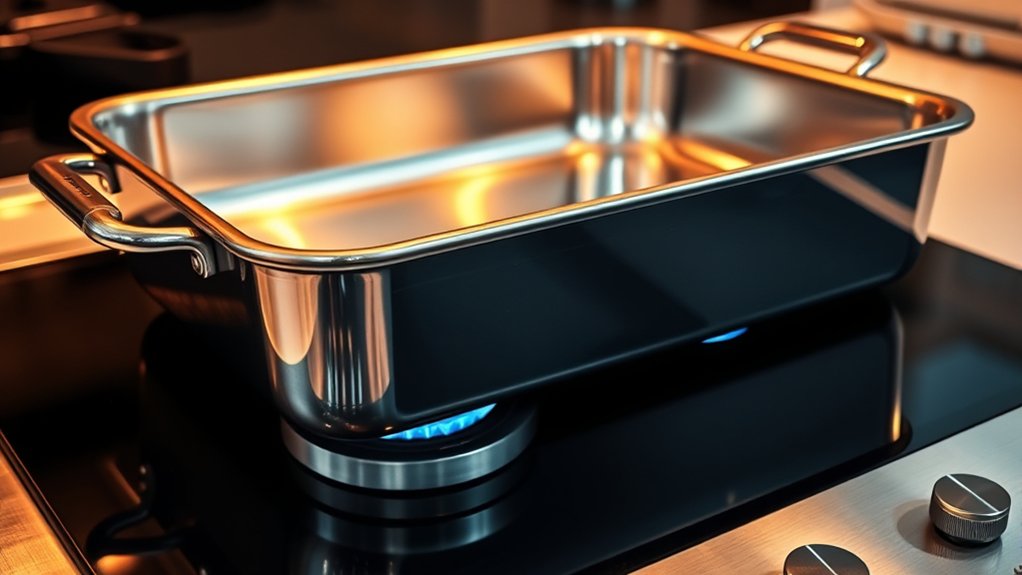
Many people wonder if roasting pans are safe to use on the stove, and the answer depends on the material. You need to know what your pan is made of before trying to use it on the stove.
Some materials, like cast iron or certain metals, can handle direct heat and are safe for stovetop cooking. Others, such as glass or some non-stick coatings, aren’t designed for direct heat and might crack or release harmful fumes.
Always check the manufacturer’s instructions to see if your roasting pan is safe for stovetop use. If you’re unsure, it’s best not to place it directly on the burner to avoid damage or safety issues.
Always refer to the manufacturer’s instructions before using your roasting pan on the stovetop.
Using your pan properly helps ensure your cooking stays safe and effective.
What Materials Make a Roasting Pan Stove-Friendly?
To make sure your roasting pan is stove-friendly, pay attention to the materials it’s made from. Not all materials can handle direct heat, so choosing the right one is key.
The best stove-safe roasting pans are made from metals that conduct heat evenly and resist warping. Materials like cast iron, aluminum, copper, stainless steel, and carbon steel are great options.
Cast iron is durable and retains heat really well, cooking evenly every time. Aluminum is lightweight, heats up quickly, and distributes heat evenly. Copper offers superior heat conduction and is very responsive to temperature changes.
Stainless steel is resistant to rust and very durable. Many stainless steel pans have an aluminum core to improve heat distribution. Carbon steel is strong, heats evenly, and develops a natural non-stick surface over time.
Choosing a pan made from these materials ensures it can handle direct heat without getting damaged.
Why Some Roasting Pans Can’t Handle Stove Heat
Some roasting pans aren’t built to handle stove heat because their materials can’t tolerate high temperatures. You might also notice uneven heat distribution, which can cause hot spots or warping.
Knowing these limitations helps you avoid damaging your pan or ruining your meal.
Material Limitations
The material of a roasting pan plays an essential role in determining whether it can withstand the intense heat of a stove. Some materials, like aluminum or lightweight non-stick coatings, aren’t built for direct stove use because they can warp, melt, or degrade when exposed to high temperatures.
Aluminum pans are great for roasting in the oven but often lack the durability needed for stovetop heat. Non-stick coatings, especially older or cheaper versions, can release harmful fumes or break down under direct flame.
Cast iron, on the other hand, handles stove heat well but requires proper seasoning and care. Knowing the material helps you avoid damage, safety hazards, and potential contamination. Always check your pan’s specifications before attempting to use it on the stove.
Heat Distribution Issues
Even if a roasting pan is made from a sturdy material, uneven heat distribution can cause problems when you try to use it on the stove. Many roasting pans are designed for oven use, where heat surrounds them evenly.
On the stove, heat comes from a direct flame or coil, which can cause hot spots. If your pan has a thick base or uneven construction, some areas may heat faster than others.
This can lead to burning food in one spot while leaving other parts undercooked. Non-uniform heat also affects cooking times and can damage the pan over time.
For stovetop use, choose cookware specifically designed to handle direct heat, like skillets or pots with flat, even bases.
Is Your Roasting Pan Suitable for Stove Use?
Check if your roasting pan’s material works with stovetop heat, since some metals transfer heat better than others.
Make sure the handles are sturdy enough to handle stove use without warping or breaking.
Also, think about how evenly the pan spreads heat to cook your food thoroughly without hot spots.
Material Compatibility
Before placing a roasting pan on the stove, it’s important to check if its material can handle direct heat. Not all pans are made for stovetop use; some might warp, crack, or even release harmful toxins.
Look at your pan’s material to make sure it’s compatible. Here’s a quick guide to help you out:
| Material | Heat Resistance | Suitable for Stove Use |
|---|---|---|
| Aluminum | High | Yes |
| Cast Iron | Very High | Yes |
| Non-stick Coated | Moderate | Usually no, check manufacturer |
| Glass | Low | No |
| Copper | High | Yes |
Knowing what your pan is made of helps prevent damage and keeps your cooking safe. Always double-check before using a roasting pan on the stove.
Handle Durability
Since the handle often bears the weight and stress during stovetop use, its durability is essential to confirm safety and prevent accidents, especially when placing a roasting pan directly on the heat. Check if the handle is made from sturdy, heat-resistant materials like cast iron, stainless steel, or reinforced silicone.
Weak or poorly attached handles can loosen or break under stress, risking spills or burns. Consider how the handle is attached—riveted or welded handles tend to be more secure than those attached with cheap screws. Also, verify if the handle stays cool enough to grip safely.
If the handle feels flimsy, wobbly, or heats up excessively, it’s a sign that your roasting pan isn’t built for stovetop use and could compromise your safety.
Heat Distribution
A roasting pan’s ability to distribute heat evenly across its surface is essential when using it on the stove. If heat isn’t distributed well, you risk uneven cooking or burning your food.
To see if your roasting pan is suitable for stove use, consider these factors:
- Material – Look for heavy-duty materials like cast iron or aluminum, which conduct heat evenly.
- Flatness – Make sure the bottom is flat so it sits stably on the burner, preventing hot spots.
- Size – Match the pan size to your stove burner to avoid uneven heating and potential warping.
Choosing a pan with these qualities helps you get consistent results and protects both your cookware and stovetop. Proper heat distribution really makes a difference in stove-top cooking.
How to Use a Roasting Pan on the Stove Safely
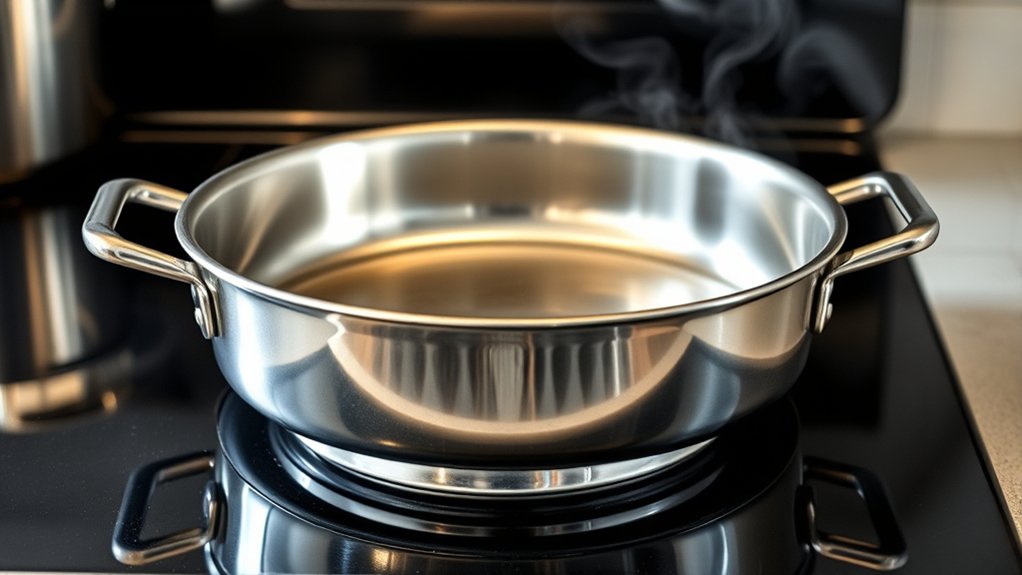
Using a roasting pan on the stove can be safe if you follow proper precautions. First, check that the pan has sturdy handles that won’t melt or crack when heated.
Always look at the manufacturer’s instructions to make sure the pan is stove-compatible. Use low to medium heat to avoid warping or damage.
If needed, place a heat diffuser or burner cover to distribute heat evenly across the pan. Never leave the pan unattended while it’s on the stove.
Here’s a quick safety guide:
| Step | Tip |
|---|---|
| 1 | Confirm stove compatibility |
| 2 | Use appropriate heat levels |
| 3 | Keep handles dry and secure |
| 4 | Use protective gear when handling |
| 5 | Never leave unattended |
Alternative Ways to Cook With a Roasting Pan on the Stove
There are several alternative ways to cook with a roasting pan on the stove beyond traditional oven roasting. You can use it as a makeshift skillet or sauté pan for various dishes.
For example, you can try braising by filling the pan with broth, vegetables, and meat, then covering and simmering to develop deep flavors. It’s a great way to make hearty, tender dishes.
You can also use it for frying or searing. Its large surface area makes it perfect for quickly browning meats or vegetables, giving them a nice crust.
Another option is simmering, where you prepare stews or sauces in the pan. Its depth helps blend flavors over low heat, making for rich, flavorful dishes.
These methods help you get the most out of your roasting pan, turning it into a versatile cooking tool. Just keep an eye on the heat to avoid warping or damage.
Common Mistakes to Avoid When Using a Roasting Pan on the Stove
While the versatility of a roasting pan makes it great for stovetop cooking, it’s easy to make mistakes that can damage the pan or spoil your dish. One common error is overheating the pan, which can warp or discolor the material. Always use medium or low heat to protect the pan’s structure.
Another mistake is neglecting to add enough liquid, causing food to stick or burn. Make sure to add enough broth, water, or oil to prevent sticking and help everything cook evenly.
Also, avoid using metal utensils that can scratch or damage the surface. Instead, opt for wooden or silicone tools. Finally, don’t forget to follow the cleaning instructions—harsh abrasives or not drying the pan thoroughly can lead to rust or deterioration over time.
Frequently Asked Questions
Can a Roasting Pan Be Used on Induction Cooktops?
Yes, you can use a roasting pan on induction cooktops if it has a magnetic base.
Induction stoves work by creating a magnetic field, so non-magnetic pans won’t heat.
Check if your roasting pan is made of stainless steel or cast iron, which are compatible.
If a magnet sticks to the bottom, it’ll work on your induction cooktop.
Always verify your pan’s bottom is flat for even heating.
What Cleaning Techniques Are Best After Stove-Top Use?
After stove-top use, you should clean your roasting pan promptly to prevent stubborn stains. Use warm, soapy water and a soft sponge to scrub away residue.
For stubborn spots, a mixture of baking soda and water works well. Just apply it to the area and let it sit for a few minutes before scrubbing gently.
Avoid abrasive cleaners that could damage the surface. Regular cleaning keeps your pan in good condition, making sure it’s ready for next time and looks great.
Are There Specific Brands Recommended for Stove-Safe Roasting Pans?
Yes, some brands are known for making stove-safe roasting pans. Look for options from All-Clad, Cuisinart, or Lodge, as they offer durable pans designed to withstand direct heat.
These brands typically feature heavy-duty materials like stainless steel or cast iron, which ensure safety and longevity.
Always check product specifications to confirm they’re stove-safe before use, and follow the manufacturer’s instructions for the best results.
How Does Stove Use Affect the Longevity of a Roasting Pan?
Using a roasting pan on the stove can shorten its lifespan if you’re not careful, just like a vintage typewriter might falter with heavy use.
You might notice wear and tear, especially on non-stick coatings or delicate materials.
To keep it in good shape, avoid high heat, use gentle utensils, and clean it properly.
This way, your roasting pan stays reliable for many more cookouts and culinary adventures.
Can You Use a Roasting Pan on a Gas Stove Safely?
Yes, you can use a roasting pan on a gas stove safely if it’s made of heat-resistant materials like cast iron or heavy-duty stainless steel. Just make sure the pan has a flat bottom for stable contact and avoid using non-stick coatings directly on the flame.
Always keep an eye on the heat to prevent warping or damage. Use proper tools to handle the hot pan safely.
Conclusion
So, before you try putting your roasting pan on the stove, make sure it’s made from stove-safe materials and designed for such use. If it’s not, you might be asking for trouble or risking a kitchen fire.
When in doubt, play it safe and look into alternative cooking methods. It’s always better to be cautious than deal with potential accidents.
Remember, don’t bite off more than you can chew. Know your equipment, and keep your culinary adventures smooth sailing—especially when it comes to putting a roasting pan on the stove.