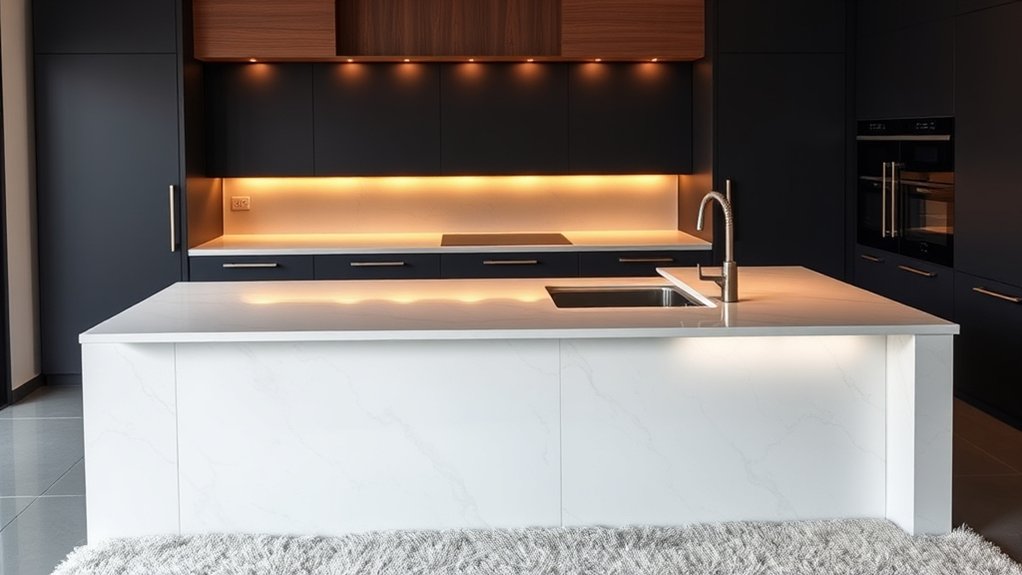
7 Factors That Determine How Much a Kitchen Island Costs
Thinking about upgrading your kitchen with an island but feeling overwhelmed by the costs? You’re not alone—many people struggle with figuring out what impacts the price and how to stay within budget.
Understanding the key factors can make the process much easier. Your kitchen island cost depends on its size and layout, with larger or complex designs demanding more materials and skilled labor.
Material choices, like wood, quartz, or laminate, greatly influence the price and durability. Custom features, built-in appliances, and extra storage or seating also add to expenses.
Installation costs vary based on project complexity and existing setup. To manage your budget, consider simpler designs and essential features—continue exploring to uncover more ways to save and customize effectively.
Key Takeaways
- The size and complexity of the island play a big role in how much it costs. Larger or more intricate designs need more materials and labor, which can add up quickly.
- Material choices are also a major factor. Quartz, granite, and laminate each come with their own price tags, so your selection can really influence the final bill.
- Custom features like built-in appliances and extra storage options can bump up the cost even more. These additions often require special installation and materials.
- The difficulty of installation and regional labor rates also matter. Some areas have higher labor costs, and more complicated installs take longer and cost more.
- Keeping the design simple and planning carefully can help you stay within your budget. Being strategic with your choices makes a big difference in the overall expense.
How Size and Layout Influence Your Kitchen Island Cost

The size and layout of your kitchen island directly impact its overall cost because larger and more complex designs need more materials and labor. A bigger island gives you extra workspace and storage but also raises expenses for countertops, cabinetry, and installation.
Larger, complex kitchen islands increase costs due to additional materials and labor requirements.
Similarly, a multi-tiered or uniquely shaped layout requires precise craftsmanship, which increases labor costs. If you choose an island with built-in appliances or seating, be prepared for higher prices due to additional materials and installation challenges.
A simple rectangular island tends to be more affordable, while intricate designs with curves or extensions will add to the cost. Keep in mind that the more detailed and expansive your layout, the more you’ll pay.
Planning a balanced size that fits your needs without too much complexity is key to controlling expenses.
Material Choices That Affect Kitchen Island Prices and Durability
Choosing the right materials for your kitchen island really affects both its price and how long it lasts. Solid wood gives you durability and a timeless look but tends to be on the pricier side.
Quartz and granite are popular because they’re resistant to scratches and heat, but they can also increase the cost. Laminate is budget-friendly and easy to clean, though it may not last as long over time.
Metal accents like stainless steel add a modern vibe and are very durable, but they can be more expensive. Reclaimed wood offers rustic charm and is often cheaper, plus it’s eco-friendly, but it might need more upkeep.
Your choice depends on your budget, style, and how much wear and tear your island will face. Picking the right material helps balance looks, durability, and affordability.
How Custom Features and Built-In Appliances Impact Your Budget
Adding custom features or built-in appliances can really increase your kitchen island costs because each option needs extra materials and labor.
The more complex the design, the higher the price you’ll pay for installation and finishing.
Keep in mind that built-in appliances often come with premium prices, which can impact your overall budget.
Customization Complexity and Cost
Custom features and built-in appliances can really bump up your kitchen island’s cost, especially if you go for tailored designs or high-end equipment. The more complex the customization, the higher the labor and material costs.
Intricate detailing, unique shapes, and special finishes need skilled craftsmanship, which adds to the price. Including custom storage or specialized surfaces can also drive up the overall cost.
If you decide to add built-in features like sinks or cooktops, the installation gets more involved. It might require structural changes and extra materials, making the project more expensive.
These customizations need careful planning and expert labor, which means higher fees. Ultimately, the more personalized and intricate your design, the more you’ll pay.
Balancing your desires with your budget is key to creating your ideal kitchen island without overspending.
Built-In Appliance Expenses
Incorporating built-in appliances into your kitchen island can really impact your overall budget. High-end features like wine coolers, microwaves, or integrated ovens can add up, especially if you go for custom cabinetry to fit them.
The more appliances you include, the higher your costs will be for installation, wiring, and specialized cabinetry. Built-in appliances usually need precise measurements and professional setup, which adds to labor expenses.
If you choose premium brands or smart appliances, expect to spend even more. While these features can make your kitchen more functional and streamlined, they also increase your overall costs.
Think carefully about which built-in appliances are essential for your needs and which are just luxury add-ons. Your choices will directly affect your total costs and the long-term value of your kitchen island.
Labor and Installation Costs: What You Need to Know
Installation complexity can really impact your costs, especially if your kitchen layout needs extra work or custom modifications.
This can add to the overall price and make the process more involved.
Labor rates vary depending on where you are and the professionals you hire.
These differences can significantly affect your total budget.
Being aware of these factors helps you plan better and avoid surprises during installation.
It’s always good to have a clear idea of what to expect so the process goes smoothly.
Installation Complexity Factors
The complexity of installing a kitchen island can really affect both the labor involved and the overall costs. Things like existing cabinetry, electrical wiring, plumbing, and floor conditions can make the installation more complicated, which means more time and higher expenses.
For example, if you need to reroute plumbing or electrical outlets, you should expect costs to go up. Uneven floors or the need for structural changes also add to the complexity.
Here’s a quick overview:
| Complexity Factor | Impact |
|---|---|
| Electrical/Plumbing Needs | Increases labor and materials costs |
| Structural Modifications | Adds time and expense |
| Floor Condition | Might require leveling or reinforcement |
Knowing these factors helps you plan for extra costs and avoid surprises during installation.
Labor Rates Variability
Labor rates for installing a kitchen island can vary a lot depending on where you live and who you hire. In high-demand areas, rates tend to be higher, while less populated regions might be cheaper.
Several factors influence the cost, like the complexity of the installation, especially if plumbing or electrical work is involved. The experience level of the contractor also makes a difference, affecting their hourly rates.
Availability of skilled labor in your area can impact prices too. Plus, if you want the job done quickly, that might cost more due to faster turnaround times.
Imagine a skilled carpenter carefully aligning the island or an electrician running wires behind the walls. These tasks require special skills and time, which directly affects your total labor costs.
Understanding these factors helps you get a clearer idea of what to expect and choose the right professionals for your project.
Adding Storage, Seating, and Extra Features on Your Budget
Adding storage, seating, and extra features to your kitchen island can really boost its functionality without breaking the bank. You can choose simple options like open shelves or cabinets to maximize storage without spending too much.
Installing a breakfast bar or seating area adds convenience and social appeal. Often, you can do this at minimal extra cost if you use existing materials or repurpose what you already have.
Extra features like built-in outlets, wine racks, or small appliances can make your island more useful and stylish. Just keep in mind that these may slightly increase your overall costs.
Choosing affordable materials, such as laminate countertops or hardware, helps you stay within your budget. Focus on essential features that meet your needs and prioritize versatile options that add value without big investments.
Budget Tips for Style and Finishing Touches
After investing in storage, seating, and functional features, finishing touches can boost your kitchen island’s style without overspending. Focus on small, impactful updates to make a big difference.
Start by choosing a bold or contrasting paint color for the island’s base to make it stand out. Next, swap out hardware with modern pulls or knobs for an updated look.
Add visual interest with a decorative backsplash or countertop edging. Then, accessorize with a few carefully selected items like a colorful bowl, chic utensils, or a small potted plant.
These simple upgrades can enhance your island’s appearance while keeping costs low. With a little creativity, you’ll achieve a polished, stylish look without breaking the bank.
How Location and Project Complexity Change Your Kitchen Island Costs
Where you plan to install your kitchen island can greatly influence the overall costs, as different locations may require additional adjustments or modifications. If your island is positioned in a tight corner or near existing cabinets, you might need custom cuts or reinforcement, which can increase expenses.
A centrally located island usually involves simpler installation but might need more extensive electrical or plumbing work, especially if it includes features like sinks or cooktops. Project complexity also impacts costs; a straightforward design costs less than a customized, multi-level island with built-in appliances or storage.
The more intricate the project, the higher the labor and material costs. Planning your island’s location carefully can help you manage expenses and avoid unexpected surprises during installation.
Frequently Asked Questions
How Do Design Trends Influence Kitchen Island Costs?
Design trends greatly influence kitchen island costs because trendy styles often require premium materials, unique finishes, or custom features that boost expenses.
If you choose a modern, minimalist look with sleek surfaces, it might be more affordable. But going for elaborate designs, innovative shapes, or statement elements like built-in appliances can increase costs.
Staying current with trends might mean spending more upfront, but it helps keep your kitchen stylish and up-to-date.
What Are the Long-Term Maintenance Costs of Different Materials?
You’ll find that materials like wood may require regular sealing and polishing to prevent damage, which can add to long-term costs.
Quartz and granite tend to be more durable and need minimal maintenance, saving you money over time.
Laminate surfaces are affordable but can chip or scratch easily, leading to higher repair or replacement costs later on.
Choosing the right material is about balancing the initial investment with ongoing upkeep expenses.
Can DIY Installation Save Money on a Kitchen Island?
Yes, DIY installation can save you money on a kitchen island. By doing the work yourself, you cut out labor costs, which can be a big part of the total expense.
But you should consider your skill level and how complicated the project is. If you’re comfortable with tools and following instructions, you’ll probably save more money.
On the other hand, if you’re not confident, mistakes could lead to extra costs or even safety issues.
How Do Energy-Efficient Appliances Affect Overall Project Costs?
Energy-efficient appliances often cost more upfront because of their higher price tags.
But in the long run, they can save you money with lower energy bills and less maintenance. When planning your kitchen island, investing in energy-efficient appliances might increase your initial expenses.
However, this can lead to big savings over time and make your project more budget-friendly and eco-friendly.
What Financing Options Are Available for Custom Kitchen Islands?
You can finance your custom kitchen island through options like personal loans, home equity loans, or credit cards. Some retailers also offer in-house financing or installment plans, which can make payments easier to manage.
It’s a good idea to compare interest rates and terms before you decide. You might also want to look for special financing promotions or discounts.
Choosing the right option depends on your budget, credit score, and how quickly you want to pay off the island.
Conclusion
Understanding these seven factors helps you budget wisely for your kitchen island. Did you know that custom features and high-end materials can increase costs by up to 50%?
By carefully considering size, materials, and additional features, you can create a stunning island that fits your style and budget. Planning ahead guarantees you get the most value, making your kitchen both functional and beautiful without surprises.
If you’re focused on cost, keep these factors in mind. A well-planned kitchen island can be a beautiful centerpiece without breaking the bank. Happy designing!