Induction vs. Electric: 8 Key Differences
Choosing the right stove can be overwhelming, especially with so many options out there. Many people struggle with deciding which type best fits their cooking style and safety needs. If you’re feeling unsure, you’re not alone.
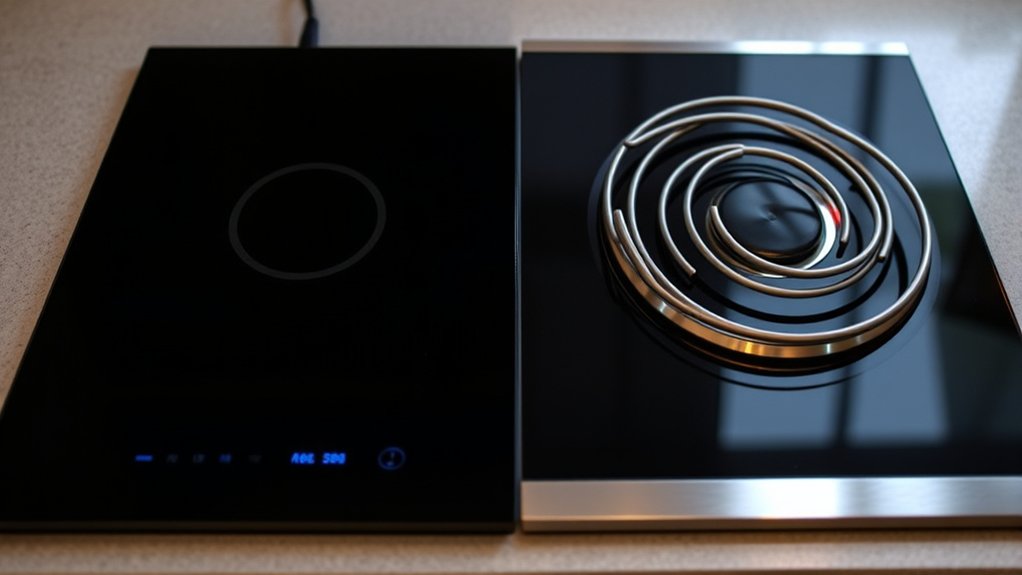
Induction stoves heat cookware directly using electromagnetic fields, offering instant, precise control and higher energy efficiency, but require compatible magnetic pots.
Electric stoves generate heat through resistance elements, which heat gradually, are more budget-friendly initially, and work with various cookware.
Induction surfaces stay cooler, reducing burn risks, and automatically shut off when cookware is removed.
Electric models are easier to maintain but can pose safety concerns.
To find out more on choosing the right stove for your needs, keep exploring the differences.
Key Takeaways
- Induction stoves heat cookware directly through electromagnetic fields. This means they can offer instant and precise temperature control. In contrast, electric stoves heat via resistance elements, which can take longer to respond.
- Induction models are generally more energy-efficient. They heat up faster and can help reduce long-term operating costs. That makes them a great choice if you’re looking to save on energy bills.
- With induction, you’ll need magnetic cookware like cast iron or stainless steel. Electric stoves, on the other hand, are compatible with a wider variety of materials, including glass and aluminum.
- The surface of induction stoves stays cool during cooking and turns off automatically when you remove the cookware. This feature makes them safer to use. Electric stoves tend to retain heat longer, which can be a safety concern.
- The initial cost of an induction stove is higher. But since they heat up quickly and save energy, they can pay for themselves over time. That makes them a smart investment in the long run.
How Do Induction and Electric Stoves Work Differently?
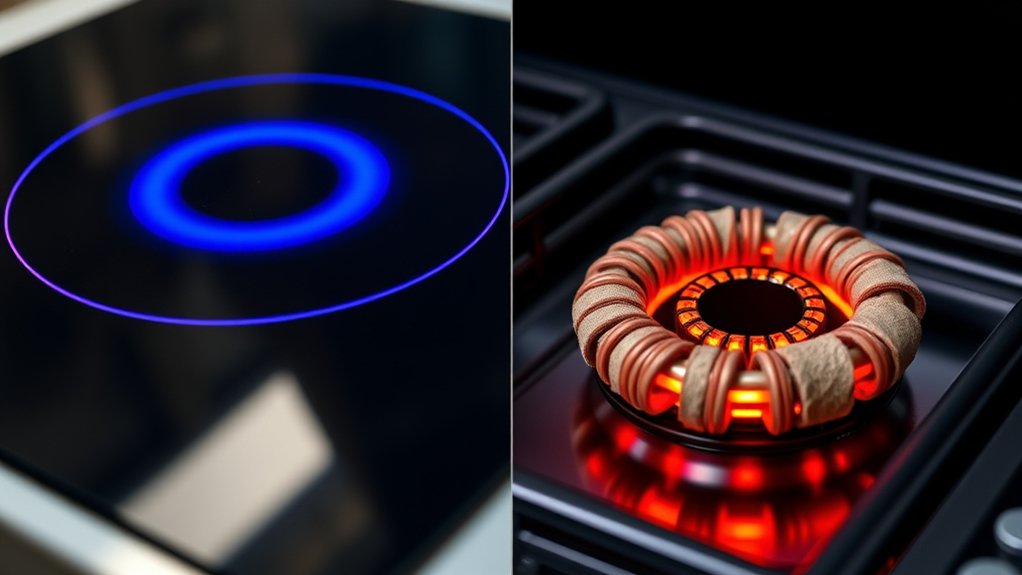
While both induction and electric stoves turn electricity into heat, they do it in very different ways. An electric stove has metal heating elements that resist electric current, generating heat through resistance.
Electric stoves generate heat through resistance in metal elements, while induction stoves heat cookware directly via electromagnetic fields.
When you turn it on, the element heats up gradually and transfers warmth to your cookware through conduction. In contrast, an induction stove uses electromagnetic fields to heat your pots and pans directly.
The coil beneath the surface creates an oscillating magnetic field, which induces electric currents in ferromagnetic cookware. These currents produce heat instantly within the cookware itself, not on the stove surface.
This direct heating makes induction stoves respond quickly and efficiently. That’s why they’re more precise and energy-efficient compared to traditional electric stoves.
Which Factors Affect the Performance of Induction and Electric Stoves?
Your stove’s performance depends on several key factors, including how consistently it delivers power. It’s also important to check if your cookware is compatible with the stove type.
Another crucial element is how evenly your stove distributes heat. These factors directly impact your cooking efficiency and results.
Understanding these points can help you choose the right stove for your needs and get better cooking outcomes.
Power Output Consistency
Several factors influence the power output consistency of induction and electric stoves, which affects how reliably they heat your cookware. These include power supply stability, stove design, and temperature control systems.
Fluctuations in electricity can cause uneven heating, especially with electric stoves. Good stove design ensures even heat distribution, which helps reduce hot spots.
Precise temperature controls are essential for maintaining consistent heat levels. Choosing stoves with digital controls can make a big difference for delicate dishes.
| Factor | Impact | Recommendation |
|---|---|---|
| Power Supply Stability | Causes uneven heating | Use surge protectors |
| Stove Design | Affects heat distribution | Choose models with advanced coils |
| Temperature Control | Guarantees consistent heat output | Opt for stoves with digital controls |
Cookware Compatibility
Cookware compatibility plays a key role in how well induction and electric stoves perform. Not all pots and pans work the same on these surfaces.
For induction stoves, your cookware needs to be magnetic. Ferrous metals like cast iron or stainless steel work great, but aluminum or glass won’t turn on the burner.
Electric stoves are more flexible. They work well with most materials, including glass, aluminum, and copper.
The bottom of your cookware should be flat for the best contact. This helps ensure even heating and efficient performance.
If your pots and pans don’t match what the stove needs, you might see poor heat transfer, uneven cooking, or the stove not turning on.
Choosing compatible cookware makes your cooking safer, more efficient, and results in better dishes on either type of stove.
Heat Distribution Efficiency
Heat distribution efficiency affects how evenly and quickly your stove cooks food, impacting your overall cooking experience. Induction stoves heat cookware directly with magnetic fields, giving you fast, precise heat transfer.
Electric stoves use heating elements, which can create uneven heat spots. Several factors influence how well a stove performs:
| Factor | Induction | Electric | Effect on Efficiency |
|---|---|---|---|
| Cookware Material | Ferromagnetic like iron or steel | Metal, glass, ceramic | Affects how quickly heat transfers |
| Surface Design | Flat, smooth surface | Coil or radiant elements | Impacts how heat is distributed |
| Power Settings | Precise and quick adjustments | Slower and less responsive | Changes how much control you have |
Choosing the right stove depends on how these factors match your cooking needs.
How Do Energy Efficiency and Operating Costs Compare?
Have you ever wondered which type of cookware offers better energy efficiency and lower operating costs? Induction stoves are usually more efficient because they heat cookware directly through electromagnetic energy, so less energy is lost.
Electric stoves, on the other hand, transfer heat via electric coils, which can be less efficient since much of the heat dissipates into the air. Over time, induction stoves tend to cost less to operate because they heat faster and use less energy overall.
While the initial investment for induction cooktops can be higher, the savings on energy bills in the long run make up for it. Electric stoves might be cheaper upfront but often lead to higher energy costs because of their lower efficiency.
What Cookware Is Compatible With Induction and Electric Stoves?
Choosing the right cookware is key to making the most of your stove, whether it’s induction or electric. For induction stoves, you’ll need magnetic cookware like cast iron or stainless steel with a magnetic base.
Electric stoves are more flexible—they work with almost any cookware, including aluminum, copper, glass, ceramic, and cast iron. To help you decide, here’s a quick guide:
| Compatibility | Suitable Cookware |
|---|---|
| Induction Stoves | Cast iron, magnetic stainless steel |
| Electric Stoves | Aluminum, copper, glass, ceramic, cast iron |
| Both Stoves | Cast iron, magnetic stainless steel |
How Do Safety Features of Induction and Electric Stoves Differ?
Induction and electric stoves have different safety features that can impact your kitchen safety. You’ll find that burn prevention mechanisms vary, with induction stoves cooling quickly once turned off, reducing burn risks.
Child safety features also differ, as some models include locks or auto shut-off functions to prevent accidents.
Burn Prevention Mechanisms
Safety features of induction and electric stoves differ mainly in how they prevent burns during use. Induction stoves heat cookware directly, so the cooktop stays cool, which lowers the risk of burns. Electric stoves, on the other hand, stay hot longer after you turn them off, increasing the chance of burns if touched.
To understand these differences better, look at this table:
| Feature | Induction Stove | Electric Stove |
|---|---|---|
| Surface Temperature | Remains cool during cooking | Retains heat after cooking |
| Touch Safety | Turns off when cookware is removed | Stays hot until cooled |
| Burn Risk | Low, because the surface stays cool | Higher, due to residual heat |
Using an induction stove makes cooking safer. Electric stoves need more caution both during and after use.
Child Safety Features
While both induction and electric stoves have safety features to protect children, they approach this differently. Induction stoves automatically turn off when no cookware is detected, which helps reduce burn risks if a child touches the surface.
They also stay relatively cool because heat is generated within the cookware itself, making accidental burns less likely. Electric stoves often have heat indicators or timers that alert you when the surface is hot, but the surfaces can remain dangerously hot even after cooking stops.
Many electric models include child lock functions to prevent accidental operation, but these can be less intuitive than induction’s automatic shutoff. Overall, induction stoves offer a safer environment for kids thanks to their quick response to cookware presence and cooler surfaces, making them a more child-friendly choice.
What Is the Cleaning and Maintenance Process for Both Types?
Maintaining both induction and electric cooktops involves regular cleaning and some specific care routines. You should wipe the surface after each use with a soft, damp cloth to prevent residue buildup.
For stubborn stains or spills, use a non-abrasive cleaner suitable for smooth surfaces. Avoid harsh chemicals or abrasive scrubbers that could scratch the glass or ceramic surface.
For electric cooktops, check the burner elements and connections periodically to verify they’re free of debris. For induction stoves, inspect the surface for cracks or damage, and keep the sensors clean for peak performance.
Always unplug or turn off the appliance before cleaning. Follow the manufacturer’s instructions for detailed maintenance.
Always disconnect the appliance before cleaning and follow the manufacturer’s maintenance guidelines.
Proper care guarantees longevity, safety, and efficient operation of your cooktop.
Which Kitchen Size and Lifestyle Suit Each Stove Type?
Choosing between an induction or electric cooktop really depends on your kitchen size and lifestyle. If space is tight, a compact electric model might be the better fit, especially if you prefer simple, straightforward cooking.
Induction cooktops usually need more clearance and ventilation, making them less ideal for small kitchens. They’re great for busy lifestyles that demand quick, efficient cooking with faster heat-up times and precise control.
If you cook often and want to save energy, induction is a smart choice. But if you cook less frequently or prefer a more traditional setup, electric stoves are usually more affordable and easier to install.
Your daily routines and available kitchen space will help you decide which stove type suits you best.
How Do You Choose the Best Stove for Your Budget and Long-Term Needs?
How do you select a stove that fits both your budget and long-term needs? First, figure out your upfront budget, then think about the total cost of ownership, including energy bills and maintenance.
Induction stoves tend to cost more at first but are more energy-efficient and easier to clean. Over time, this can save you money. Electric stoves usually have lower initial prices but might lead to higher energy costs and repairs down the line.
Consider how often you cook and what features matter most, like precise temperature control or quick heat-up times. If you plan to keep your stove for many years, investing in a higher-quality model might be worth it.
Balancing initial costs with ongoing expenses and your cooking habits will help you pick the best option for your long-term needs.
Frequently Asked Questions
Are Induction Stoves Suitable for All Types of Cooking?
Induction stoves are suitable for most types of cooking, but they work best with ferromagnetic cookware like cast iron or stainless steel. You might find they don’t perform well with non-magnetic materials such as aluminum or glass.
If you already own compatible cookware, induction is efficient and quick. However, if your pots and pans aren’t suitable, you may need to invest in new cookware to fully enjoy the benefits of induction cooking.
Can Electric Stoves Be Used With Induction-Compatible Cookware?
No, electric stoves can’t be used with induction-compatible cookware. Induction stoves need cookware made of magnetic materials like cast iron or some stainless steels to work properly.
If you try to use non-magnetic pots or pans, the stove won’t heat them. To check if your cookware is compatible, see if a magnet sticks to the bottom.
If it does, you can confidently use it on induction. If not, you’ll need different pots or pans that are induction-friendly.
Do Induction Stoves Emit Electromagnetic Radiation?
Yes, induction stoves do emit electromagnetic radiation, but don’t worry—it’s the same kind your microwave uses, just gentler and targeted at cooking.
You’re basically being zapped by tiny, invisible elves creating heat directly in your cookware. So, while you might feel like a sci-fi hero, rest assured, these electromagnetic waves are safe when used properly.
This makes your kitchen both high-tech and hazard-free.
What Are the Installation Requirements for Each Stove Type?
You need to guarantee proper installation for each stove type. For induction stoves, you’ll need a compatible, dedicated electrical circuit with a specific voltage and amperage, often 240V.
Electric stoves also require a dedicated circuit, but the requirements may vary depending on the model’s power needs. Always check the manufacturer’s instructions and local electrical codes.
Hiring a licensed electrician is the best way to ensure safe installation and optimal performance for both stove types.
How Do Repair and Maintenance Costs Compare Over Time?
You’ll find that induction stoves tend to have higher initial repair costs but lower maintenance over time because they have fewer moving parts.
Electric stoves usually cost less to repair upfront but may need repairs more often as components wear out.
Both types require regular cleaning, but induction’s smooth surface makes upkeep easier.
Conclusion
Choosing between induction and electric stoves depends on your cooking style, budget, and kitchen space. If you value quick heating and energy efficiency, induction might be your best bet.
Worried about incompatible cookware? Visualize using magnetic pots on induction, versus traditional electric burners.
Consider your safety preferences and maintenance routine too. By weighing these differences, you’ll find a stove that fits your lifestyle perfectly—making your cooking experience safer, faster, and more enjoyable.
When it comes to induction vs. electric, understanding these key differences helps you choose the right stove for your needs.