How to Smoke Beef Brisket in an Electric Smoker in 8 Easy Steps
Cooking a perfect beef brisket in an electric smoker can seem daunting, especially if you’re new to smoking or trying to get that tender, flavorful result. Many people struggle with maintaining consistent temperatures or knowing the right techniques to get their brisket just right.
But don’t worry—you’re not alone, and with a little guidance, you’ll be smoking like a pro in no time.
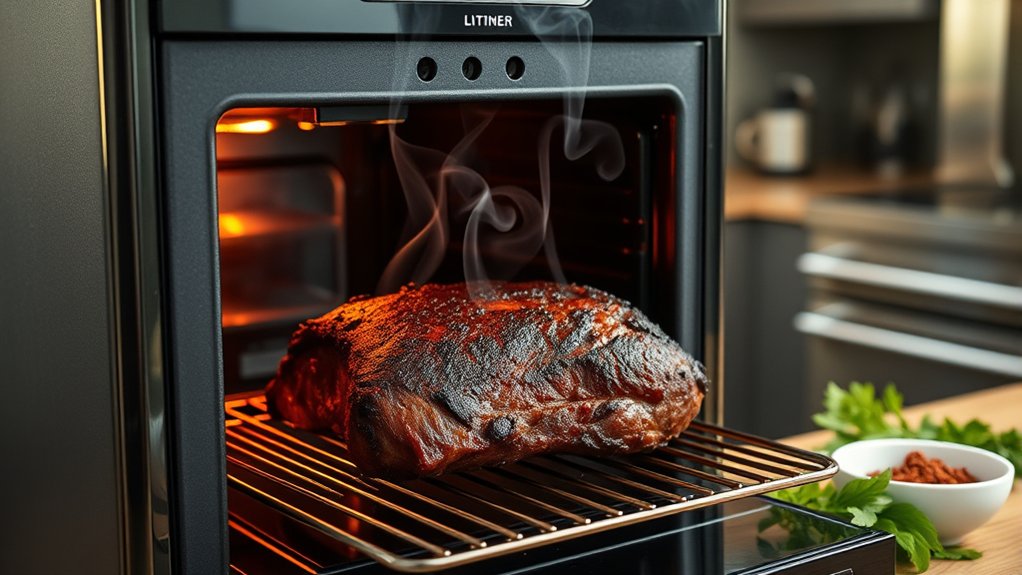
To smoke beef brisket in an electric smoker, start by cleaning and setting up your smoker with water and proper airflow. Choose a well-marbled brisket and apply a flavorful dry rub, letting it sit for at least an hour.
Maintain a steady temperature of 225-250°F, add wood chips regularly, and smoke until tender. After cooking, let it rest for at least 30 minutes before slicing against the grain.
If you want detailed tips and tricks, keep exploring these steps.
Key Takeaways
- Clean and prepare your electric smoker. Check the vents, water pan, and temperature controls to make sure everything’s working properly.
- Choose a well-marbled brisket. Trim off any excess fat and then apply a thorough dry rub to add flavor.
- Keep the smoker steady between 225°F and 250°F. Add wood chips regularly to keep that smoky flavor going.
- Keep an eye on the internal temperature of the brisket. Cook until it hits between 195°F and 205°F for that tender, melt-in-your-mouth feel.
- Once done, let the brisket rest for at least 30 minutes. Wrap it loosely in foil during this time.
- After resting, slice the brisket against the grain. Enjoy your perfectly smoked beef!
Prepare Your Electric Smoker for Perfect Brisket
To start preparing your electric smoker for perfect brisket, first verify it’s clean and working properly. Remove any leftover debris or old grease from previous cooks, and wipe down the interior with a damp cloth.
Check that the heating element is working correctly by turning on the smoker briefly, making sure it reaches your desired temperature. Inspect the water pan and fill it if needed, as it helps keep the meat moist during smoking.
Make sure the vents open and close smoothly to control airflow. Confirm that the digital controls or dials respond accurately. Properly preparing your smoker ensures consistent heat and avoids surprises during cooking.
Ensure vents operate smoothly and controls respond accurately for consistent heat and successful smoking.
This initial step sets the foundation for a successful brisket smoke, leading to tender, flavorful results.
Choose the Best Brisket for Electric Smoking
When choosing a brisket for electric smoking, focus on the quality of the meat. Look for well-marbled, fresh cuts that will give you the best flavor and tenderness.
Make sure the size and thickness of the brisket match your smoker’s capacity and your desired cooking time. This helps ensure even cooking and great results.
Picking the right brisket is key to getting tender, flavorful meat that everyone will love.
Quality of Meat
Choosing the right brisket is key to a successful smoke. Look for meat with good marbling—tiny streaks of fat spread throughout the muscle. This fat melts during cooking, keeping the meat moist and flavorful.
Avoid briskets that are too lean, as they can turn out dry and tough. Freshness matters, so pick meat that’s bright red with minimal discoloration. Check for a firm texture; it should feel solid but not hard.
A well-trimmed brisket with a uniform fat cap is ideal because it helps protect the meat during smoking. High-quality meat will give you tender, juicy results, making your effort worthwhile.
Size and Thickness
The size and thickness of your brisket directly impact how evenly it cooks and how long the smoking process takes. A larger, thicker cut needs more time to reach the right internal temperature, so plan ahead.
If your brisket is too thin, it might cook too quickly, which can lead to dryness or uneven doneness. Look for a brisket that’s uniformly thick to ensure consistent cooking.
Ideally, choose a cut that’s about 10 to 14 pounds for manageable smoking time and tender results. When selecting your brisket, also consider the shape—flat cuts cook faster than point cuts.
Apply a Delicious Dry Rub for Flavor and Bark
Applying a dry rub is essential for infusing your brisket with rich flavor and creating a delicious bark. You want to coat the entire surface evenly, pressing the rub into the meat so it sticks well. Use a mix of salt, sugar, spices, and herbs tailored to your taste.
Common ingredients include paprika, black pepper, garlic powder, onion powder, and cayenne for some heat. Let the rub sit on the brisket for at least an hour or, ideally, overnight. This helps develop deeper flavor.
This step not only improves the taste but also helps form a flavorful crust during smoking. Be generous but even with your application, making sure every inch of the meat is covered for a well-seasoned, mouthwatering brisket.
Set Up Your Electric Smoker for Consistent Cooking
To guarantee your brisket cooks evenly and reaches perfection, properly setting up your electric smoker is essential. Start by choosing a clean, level surface in a well-ventilated area.
Fill the water pan with water to keep moisture in during smoking. Preheat the smoker to your target temperature, usually around 225°F to 250°F, and let it stabilize before placing the meat inside.
Load the wood chips or pellets according to your smoker’s instructions, ensuring a steady smoke throughout the process. Adjust the vents if your smoker has them to control airflow and temperature.
Use a reliable meat thermometer to monitor the internal temperature. Proper setup guarantees consistent heat, the best smoke, and perfect results for your beef brisket.
Smoke Your Brisket Step-by-Step for Tender Results
To get tender, flavorful brisket, you need to prepare it properly and keep a close eye on your smoke and temperature.
Managing your smoke levels and maintaining a steady temperature throughout the process are key. Once it’s cooked, let the brisket rest to lock in the juices.
This step guarantees every bite is juicy and tender.
Preparing the Brisket
Before you start smoking, it’s important to prepare your brisket properly. Begin by trimming excess fat—about a quarter-inch is enough to keep the meat moist without causing flare-ups. Remove any silver skin or tough connective tissue, as these can block smoke penetration and make the meat less tender.
Next, season your brisket generously with a dry rub of your choice, making sure all sides are evenly coated. Let it sit at room temperature for about 30 minutes to help the seasoning soak in and promote even cooking.
Proper preparation ensures the brisket cooks uniformly and develops a rich, smoky flavor. Keep the meat chilled until you’re ready to place it in the smoker to avoid any bacterial growth. This careful prep sets the stage for tender, flavorful smoked brisket.
Managing Smoke and Temperature
Controlling both smoke and temperature is key to getting tender, flavorful brisket. You want steady heat to break down connective tissues and consistent smoke to infuse rich flavor.
Keep the smoker’s temperature steady between 225°F and 250°F. Add fresh smoke wood chips regularly for continuous smoke production.
Use a digital thermometer to keep an eye on the internal brisket temperature. Adjust the vents or the electric smoker’s controls to maintain steady heat.
Try not to open the lid too often, as it can cause temperature fluctuations. Staying vigilant helps your brisket cook evenly and develop a deep smoky crust.
Proper management prevents drying out or undercooking, helping you achieve that perfect, tender, flavorful result.
Resting for Juiciness
Once your brisket hits the desired internal temperature, usually around 195°F to 205°F, it’s time to take it off the smoker and let it rest. Resting helps the juices move around, so every bite stays moist and flavorful. Wrap the brisket loosely in aluminum foil or put it on a cooling rack, then give it at least 30 minutes to rest.
During this resting period, the meat’s internal temperature stabilizes, and the juices settle in. Use this table to see how different resting times affect the tenderness and juiciness:
| Resting Time | Effect on Juiciness | Resulting Texture |
|---|---|---|
| 30 minutes | Juices redistribute | Slightly firm, moist |
| 1 hour | Max juiciness | Tender and juicy |
| Over 1 hour | Juices may escape | Slightly dry |
Monitor and Maintain the Right Temperature During Smoking
Maintaining the right temperature during smoking is key for tender, flavorful brisket. Keep your smoker steady around 225°F to 250°F to ensure even cooking and good smoke absorption.
Use a reliable digital thermometer to monitor both the smoker’s internal temperature and the brisket’s. Adjust the vents or power settings as needed to prevent any temperature swings.
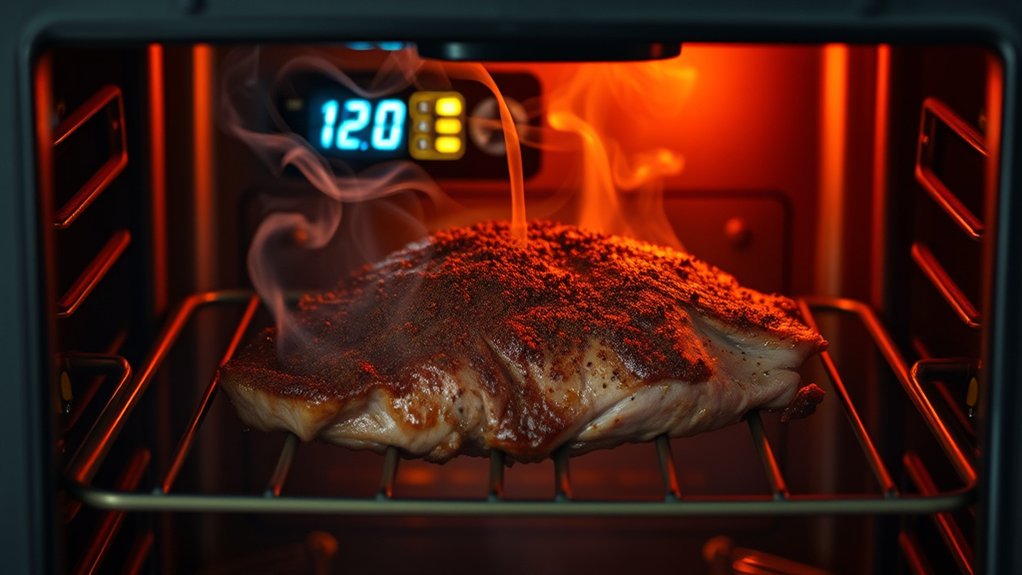
Keep the lid closed as much as possible to maintain consistent heat. Imagine the gentle hum of your electric smoker running smoothly, with a steady, warm glow from the heating element.
You might notice the faint aroma of smoke wafting out each time you open the lid. The digital display will show stable temperature readings, helping you stay on track.
Create a calm, controlled environment for your brisket to transform into perfection.
Rest and Slice Your Brisket for Maximum Juiciness
After your brisket finishes cooking, it’s crucial to let it rest before slicing. This helps lock in those flavorful juices so your meat stays moist and tender.
Wrap the brisket loosely in foil and let it sit for at least 30 minutes. During this time, the juices inside the meat redistribute, making each bite more delicious.
Resting also relaxes the meat, making it easier and more even to slice. When you’re ready, cut against the grain for the best tenderness.
Here’s a quick chart to show how resting time impacts the emotional experience:
| Resting Time | Emotional Effect |
|---|---|
| 30 minutes | Juicy, tender perfection |
| 45 minutes | Deep satisfaction |
| 1 hour | Unforgettable flavor |
Proper resting turns your brisket into a melt-in-your-mouth masterpiece.
Troubleshoot Common Brisket Smoking Issues
Smoking a brisket can sometimes lead to common issues like dryness, uneven cooking, or a tough bark, but most problems come from easy-to-fix causes.
Start by checking your temperature settings—using a reliable thermometer ensures consistent heat.
Keep the brisket moist by spritzing or wrapping it during cooking.
If the bark gets too tough, try reducing the cooking time or lowering the temperature a bit.
For uneven cooking, rotate the brisket or reposition it to promote even heat exposure.
Finally, make sure your smoker’s vents are open enough to regulate airflow and prevent temperature swings.
Visualize these adjustments:
- Monitoring your smoker’s temperature with precision
- Spritzing or wrapping to keep moisture in
- Rotating the brisket for even heat
- Adjusting the vents for proper airflow
- Using a reliable meat thermometer
Frequently Asked Questions
How Long Does It Typically Take to Smoke a Beef Brisket in an Electric Smoker?
It usually takes about 1 to 1.5 hours per pound to smoke a beef brisket in an electric smoker, so a 10-pound brisket might need around 10 to 15 hours.
You should keep an eye on the internal temperature, aiming for about 195-205°F for tender, flavorful results.
What Type of Wood Chips Are Best for Smoking Brisket?
Cherry, hickory, and oak wood chips work best for smoking brisket. Cherry adds a subtle sweetness and beautiful color. Hickory provides a strong, smoky flavor that pairs perfectly with beef. Oak offers a balanced, medium smokiness and is quite versatile.
You can also mix these woods to create a more complex flavor profile. Just soak the chips in water for about 30 minutes before adding them to your electric smoker. This helps ensure steady, even smoke.
Can I Add Liquids to My Electric Smoker for Extra Flavor?
Yes, you can add liquids to your electric smoker for extra flavor. Place a water pan inside to keep the meat moist and give a subtle flavor boost.
You can also add apple juice, broth, or beer to the pan for more aroma. Just be careful not to overfill, as too much liquid can mess with the temperature control.
Remember to check and replenish the liquid regularly to keep the moisture consistent and ensure the flavor stays just right throughout the smoking process.
How Do I Prevent the Brisket From Drying Out During Smoking?
Worried about your brisket drying out? You can prevent this by keeping the temperature steady and wrapping the meat in foil or butcher paper once it reaches the ideal internal temperature.
Baste it occasionally with a little beef broth or juice to help maintain moisture. Remember, why risk dryness when proper wrapping and monitoring can give you tender, juicy brisket every time?
Stay attentive, and you’ll get perfect results.
Is It Necessary to Trim Fat From the Brisket Before Smoking?
You don’t have to trim all the fat, but removing excess fat helps the smoke penetrate better and prevents the meat from being overly greasy. Keep a thin layer of fat for moisture and flavor.
Trim any thick, hard fat deposits that won’t render down during smoking. This balance guarantees your brisket stays juicy, tender, and flavorful without excess greasiness.
That way, your smoked brisket turns out perfect every time.
Conclusion
Smoking brisket in an electric smoker is straightforward and rewarding. With just a little patience, you’ll end up with tender, flavorful meat every time.
Did you know that properly smoked brisket can contain up to 50% more antioxidants than untreated beef? That means not only does your brisket taste amazing, but it also offers some health benefits.
Follow these easy steps, and you’ll master the art of electric smoking. Impress everyone at your next barbecue with perfectly smoked brisket!