7 Main Differences Between Rock Salt and Ice Melt
Many people struggle with choosing the right product to melt ice on their driveways and walkways. It’s confusing because there are options like rock salt and ice melt, each with their own pros and cons. You’re not alone in this, and finding the best solution can make winter safer and easier.
Rock salt mainly contains sodium chloride and works best above 20°F, making it less effective in severe cold. Ice melt includes compounds like calcium and magnesium chlorides, which work at lower temperatures and release heat during melting.
Safety risks include pet toxicity and skin irritation, while environmental impacts can harm soil and waterways.
Cost-wise, rock salt is cheaper upfront, but ice melt often lasts longer and needs fewer applications.
To find out more, investigate how each product’s use and safety considerations compare.
Key Takeaways
- Rock salt is mainly sodium chloride, while ice melt includes different compounds like calcium chloride and magnesium chloride. These ingredients make a big difference in how they work.
- Ice melt can stay effective at much lower temperatures, even down to -25°F. In comparison, rock salt works best above 20°F. So, if it’s really cold outside, ice melt is usually the better choice.
- Rock salt poses more safety risks for pets and can cause skin irritation. Specialized ice melt products are often safer to use around people and animals.
- Using too much of either can harm the environment. But ice melt often contains chemicals that have extra ecological impacts, so it’s important to use it wisely.
- Initially, rock salt is cheaper. But in the long run, ice melt tends to be more cost-effective because it melts ice more efficiently.
What Are Rock Salt and Ice Melt?
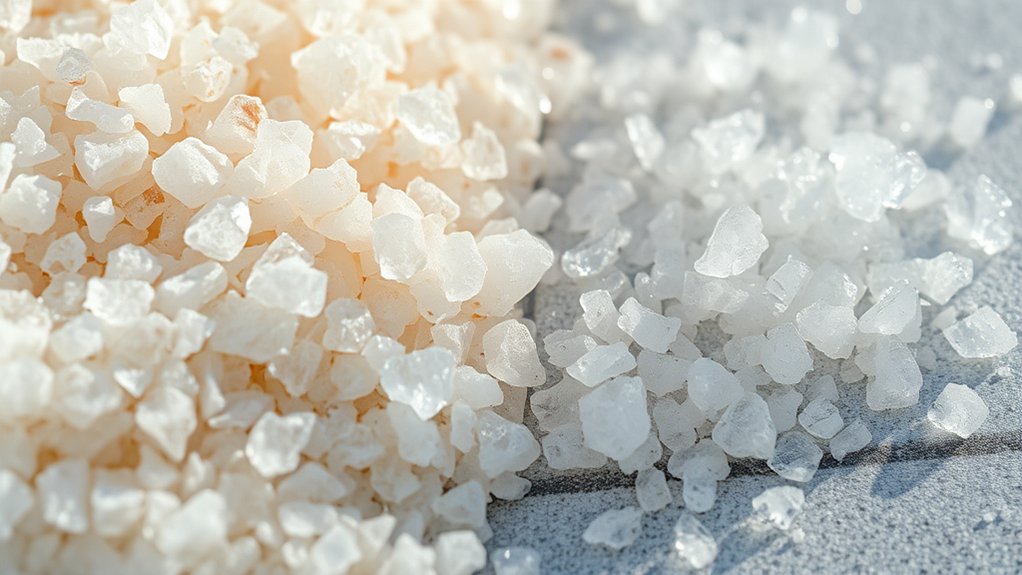
Rock salt and ice melt are common de-icing materials used to clear snow and ice from surfaces. Rock salt, or sodium chloride, is a natural mineral that’s been used for decades to melt ice. It works by lowering the freezing point of water, which helps prevent ice from forming or makes it melt faster.
Ice melt is a broader term that includes various chemical compounds designed to melt ice more efficiently. These products often contain salts like calcium chloride or magnesium chloride, which work faster and at lower temperatures than rock salt.
Both materials are applied to driveways, sidewalks, and roads to make winter travel safer. While they serve the same purpose, their chemical makeup and how well they work can be quite different.
How Do Rock Salt and Ice Melt Differ in Composition?
While both rock salt and ice melt are used to combat winter ice, their chemical compositions set them apart. Rock salt is mainly sodium chloride (NaCl), a natural mineral that dissolves in water to lower its freezing point.
Ice melt products often contain a mix of chemicals, including calcium chloride (CaCl₂), magnesium chloride (MgCl₂), or potassium chloride (KCl). These work differently at various temperatures.
Calcium chloride, for example, releases heat as it dissolves, making it more effective at colder temperatures. Ice melt products usually include anti-caking agents or binders to help with application and prevent clumping.
Understanding these differences helps you pick the right product for specific conditions and temperature ranges.
Which Works Better at Lower Temperatures: Rock Salt or Ice Melt?
Have you ever wondered which de-icer works better in really cold weather? When temperatures fall below 20°F (-6°C), rock salt isn’t as effective because it doesn’t lower the ice’s melting point enough.
Ice melt products, especially those with calcium chloride or magnesium chloride, perform better at lower temperatures. They can melt ice at temperatures as low as -25°F (-32°C).
These de-icers release heat during melting, making them more efficient in harsh cold. If you’re facing severe winter weather, ice melt options are usually your best choice.
De-icers that release heat melt ice more effectively in severe winter conditions.
Rock salt just can’t keep up at very low temperatures, so picking the right product depends on how cold it gets where you are.
What Are the Safety Risks of Using Rock Salt and Ice Melt?
Using rock salt or ice melt can pose safety risks, especially for your pets and the environment.
If ingested, these substances can be toxic to animals, and runoff can harm plants and wildlife. It’s important to think about these dangers before applying them to icy surfaces.
Toxicity Concerns for Pets
Pets are at risk when they come into contact with rock salt and ice melt, as these substances can cause serious health issues. When pets lick their paws or ingest ice-melt compounds, they risk poisoning and irritation.
Common symptoms include vomiting, diarrhea, drooling, and difficulty walking. To help you visualize, here’s a comparison:
| Risk Type | Possible Effects |
|---|---|
| Chemical Ingestion | Nausea, vomiting, organ damage |
| Skin Contact | Irritation, redness, burns |
| Paw Licking | Increased licking, swelling, pain |
| Inhalation | Respiratory distress, coughing |
| Eye Contact | Redness, tearing, discomfort |
Always supervise your pets and wash their paws after walks to reduce these dangers.
Environmental Impact Risks
While protecting pets from contact with rock salt and ice melt is important, it’s also good to think about their broader environmental impact. Both substances can pose risks to plants, water sources, and wildlife. Using too much can lead to soil degradation, which harms vegetation and disrupts ecosystems.
The runoff from melting ice can contaminate nearby lakes and streams, affecting aquatic life. Here are some key risks to keep in mind:
- Salt buildup can damage plant roots and soil health.
- Runoff increases salinity in water bodies, threatening fish and aquatic plants.
- Wildlife might ingest or come into contact with toxic residues, leading to health problems.
Reducing usage, choosing eco-friendly options, and applying these substances in moderation can help protect the environment.
What Is the Environmental Impact of Using Ice Melt and Salt?
Although ice melt and salt effectively improve safety during winter, they can also pose significant environmental risks. When used excessively, these substances seep into soil and waterways, harming plants, animals, and aquatic life.
Salt runoff increases soil salinity, which can damage vegetation and reduce soil fertility over time. Salt can also contaminate groundwater supplies, affecting drinking water quality.
Ice melt chemicals often contain additives like corrosion inhibitors and dyes, which may introduce toxic compounds into the environment. These substances can also corrode infrastructure, leading to increased maintenance and potential leaks of harmful materials.
How Do Costs Compare Between Rock Salt and Ice Melt?
When comparing costs, rock salt is usually cheaper upfront than specialized ice melt products. You’ll spend less initially, which makes it a good choice for large areas.
However, keep these points in mind:
Remember these factors to choose the most cost-effective ice melting solution for your needs.
- Cost per use: Rock salt costs less at first but might need more applications over time because it melts ice less efficiently.
- Quantity needed: You may have to buy more rock salt compared to ice melt, which can add to the overall cost.
- Long-term savings: Ice melt products cost more upfront but work better, so you might use less and save money in the long run.
Best Practices for Applying and Maintaining Ice Melt and Rock Salt
Applying and maintaining ice melt and rock salt effectively can really make a difference in how well they work and how long they last. To get the best results, spread the product evenly and apply it at the right time—before ice forms or during light snowfall.
Avoid overdoing it, as too much material wastes money and can harm surfaces. Keep an eye on conditions and reapply as needed, especially after storms. Make sure to choose the right type of product for your surface and the weather conditions.
| Application Tip | Best Time | Quantity to Use |
|---|---|---|
| Even distribution | Before ice forms | Follow manufacturer guidelines |
| Reapply after storms | During light snowfall | Avoid excessive use |
| Use appropriate product | For surface type | Adjust based on ice thickness |
| Regular checks | During winter | Maintain safety and efficiency |
Frequently Asked Questions
Can Rock Salt Damage Concrete or Asphalt Surfaces?
Yes, rock salt can damage concrete and asphalt surfaces. When it dissolves, it creates a brine that can seep into the pores of the material.
Over time, this can lead to expansion and cracking, especially if you use it often or during freeze-thaw cycles.
To protect your surfaces, consider using alternatives like calcium magnesium acetate or sand. Also, try not to over-apply salt to minimize potential damage.
Are There Health Risks Associated With Inhaling Ice Melt Fumes?
Yes, inhaling ice melt fumes can pose health risks. When heated or used in large quantities, certain ice melts release fumes that may irritate your respiratory system, causing coughing, throat irritation, or breathing issues.
If you’re handling ice melt, make sure you have good ventilation and wear protective gear like masks. Avoid inhaling fumes directly, especially if you have asthma or other respiratory conditions.
Always follow safety instructions on the product label to stay safe.
How Quickly Do Rock Salt and Ice Melt Start Working?
Rock salt and ice melt start working quickly, usually within minutes of applying. You’ll see the ice begin to break apart, the surface getting less slippery, and the temperature dropping in the treated areas.
Both materials act fast, but ice melt tends to work even faster than rock salt because it’s designed to lower the freezing point more efficiently. So, as soon as you spread them, you can expect quick results.
This means your walkways will be safer in no time.
Can Ice Melt Be Effective on Icy Roads?
Yes, ice melt can be effective on icy roads, especially if you choose a product designed for outdoor use. It works by lowering the freezing point of water, helping to melt ice quickly.
You should apply it evenly and early before snowfall or ice buildup. Keep in mind, some formulas are better suited for colder temperatures, so pick one that matches your climate conditions for the best results.
Are There Eco-Friendly Alternatives to Traditional Ice Melt?
Yes, there are eco-friendly alternatives to traditional ice melt. You can use products made from biodegradable materials like calcium magnesium acetate or potassium chloride, which are less harmful to plants and animals.
You might also consider sand and other natural abrasives to provide traction without chemical impacts. Homemade solutions like mixing salt with sand or using beet juice can melt ice effectively while reducing environmental damage.
Conclusion
Choosing between rock salt and ice melt isn’t just about cost or effectiveness. You also need to consider safety and environmental impacts.
Some believe ice melt is always better, but studies show it can harm plants and pets if misused.
Understanding their differences helps you make smarter choices for winter safety.
Think of it like a scientific experiment. Weighing the evidence ensures you pick the right solution, reducing risks and boosting performance.
When it comes to winter deicing, knowing the main differences between rock salt and ice melt is key.