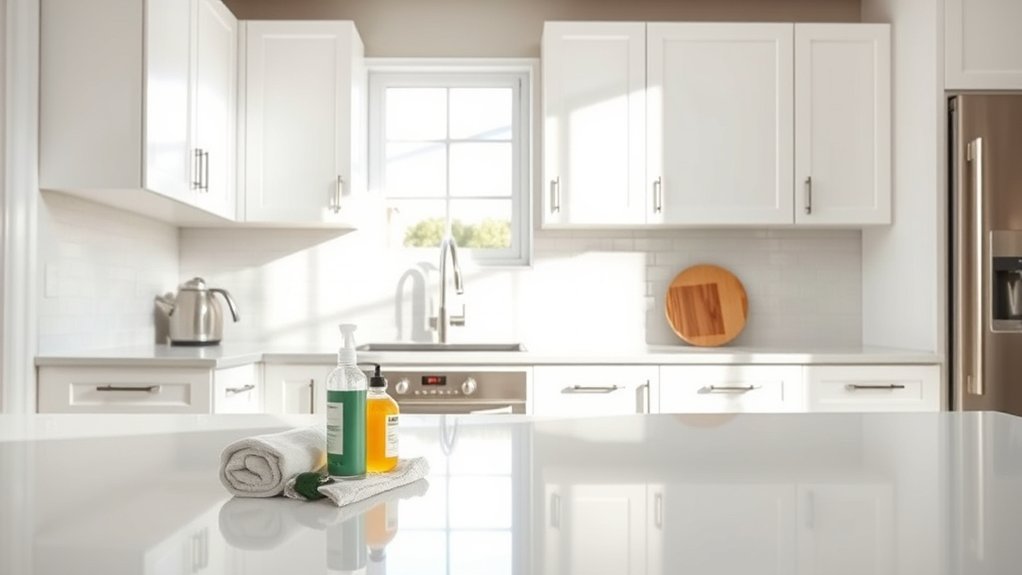
Clean Painted Kitchen Cabinets Safely in 7 Simple Steps
Many people struggle with keeping their painted kitchen cabinets looking fresh and clean without damaging the finish. You’re not alone—finding the right cleaning routine can be tricky, especially when you want to avoid harsh chemicals.
To clean painted kitchen cabinets safely, start by gathering gentle supplies like mild soap, microfiber cloths, and warm water. Carefully remove grease and dirt, avoiding harsh chemicals or abrasives.
Wipe and rinse the surfaces thoroughly, then dry them well. Inspect for any damage and touch up as needed.
Maintaining regular cleaning and quick repairs will keep your cabinets looking their best for years.
Keep going to uncover detailed steps to achieve a spotless, protected finish.
Key Takeaways
- Gather gentle cleaning supplies like mild dish soap, microfiber cloths, and warm water. This helps prevent damage to your painted cabinets.
- Before applying any cleaning solution all over, test it on hidden areas first. This way, you can avoid discoloration or peeling.
- Use soft cloths and steer clear of harsh chemicals or abrasive scrubbers. Gentle cleaning is key to keeping your cabinets looking great.
- Clean your cabinets regularly to prevent the buildup of grease, dirt, and grime. These can cause damage to the paint over time.
- After cleaning, take a moment to inspect for any damage. If needed, touch up with matching paint to keep your cabinets looking fresh.
Why Properly Cleaning Your Painted Kitchen Cabinets Matters
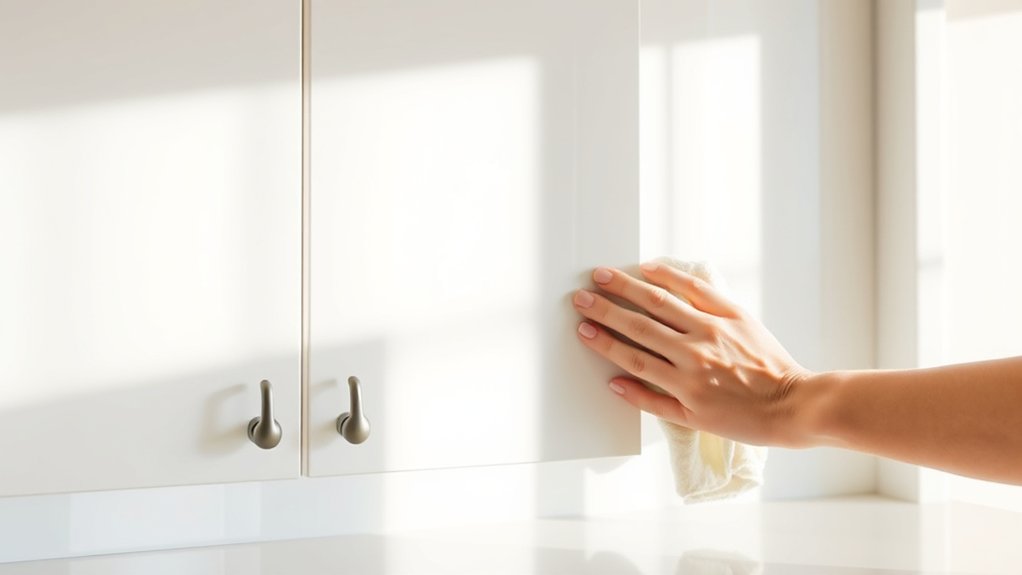
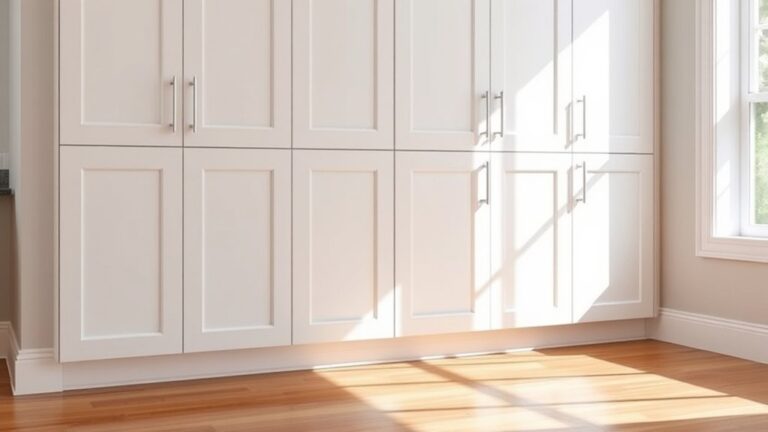
Clean painted kitchen cabinets aren’t just about making your kitchen look good; they’re also key to keeping things hygienic and lasting longer. When you clean them regularly, you get rid of grease, food splatters, and dirt that can build up over time.
That buildup can make the finish look dull and even cause the paint to peel or chip sooner than it should. Regular cleaning helps prevent mold, bacteria, and bad odors, keeping your kitchen a healthier space.
Regular cleaning prevents dull finishes, peeling paint, mold, and odors for a healthier, longer-lasting kitchen.
Plus, well-maintained cabinets stay looking nice longer and save you money on repairs or repainting. Proper cleaning techniques help protect the paint’s finish, keeping it vibrant and intact for years.
In the end, sticking to a regular cleaning routine is a simple way to keep your cabinets both beautiful and durable.
Gather Your Supplies and Prepare Your Kitchen
Before you start cleaning your painted kitchen cabinets, gather all the supplies you’ll need to make the process smooth and efficient. You’ll want a gentle cleaner, like a mild dish soap or a specialized cabinet cleaner, along with soft microfiber cloths to prevent scratching.
Have a bucket of warm water ready for rinsing, and consider using a sponge or soft-bristled brush for stubborn spots. Protect your countertops with drop cloths or old towels to catch drips.
Keep a few cotton swabs or small brushes handy for tight corners and edges. Make certain your workspace is well-ventilated by opening windows or turning on the exhaust fan.
Preparing your supplies beforehand guarantees a quick, organized cleaning session without interruptions.
Remove Dirt, Grease, and Stains Safely
Start by tackling dirt, grease, and stains gently to avoid damaging your painted cabinets. Use a soft cloth or sponge dipped in warm water with a little mild dish soap. Gently wipe the affected areas, avoiding excessive scrubbing.
Gently clean painted cabinets with a soft cloth and mild soap to prevent damage.
To ensure effective cleaning, keep these tips in mind:
- Test your cleaning solution on a small, hidden spot first.
- Use a microfiber cloth to reduce scratching.
- Avoid harsh chemicals or abrasive scrubbers.
- Rinse the cloth frequently to prevent spreading grime.
Choose Gentle Cleaning Solutions for Painted Cabinets
When cleaning painted cabinets, choose gentle cleaning agents to avoid causing any damage. Harsh chemicals can strip or discolor the paint, so it’s best to steer clear of them.
Always test your cleaning solution in a hidden spot first. That way, you can be sure it won’t harm the finish before applying it to the entire cabinet.
Use Mild Cleaning Agents
Choosing the right cleaning agents is essential to preserve the finish of your painted kitchen cabinets. Using mild cleaning agents helps prevent damage and keeps your cabinets looking fresh.
When selecting a cleaner, keep these tips in mind:
- Opt for a gentle dish soap mixed with water for routine cleaning.
- Use a vinegar solution diluted with water for tougher grime without harming paint.
- Avoid abrasive scrubbers that can scratch the surface.
- Test any new cleaner on a small, hidden area first to verify compatibility.
Stick to these mild solutions to maintain the integrity of your cabinets’ paint and finish. Harsh chemicals or abrasive tools can cause peeling or discoloration, so always choose gentle options for safe, effective cleaning.
Avoid Harsh Chemicals
Because harsh chemicals can damage the delicate paint finish on your cabinets, it’s essential to select cleaning solutions that are gentle and non-abrasive. Avoid products with strong solvents, bleach, ammonia, or abrasive scrubbers, as they can cause peeling, discoloration, or dullness.
Instead, opt for mild dish soap mixed with warm water or specialized gentle cleaners designed for painted surfaces. Always read labels carefully and choose formulas labeled safe for painted or finished wood.
Using harsh chemicals may seem effective at first, but they can weaken the paint over time and lead to costly repairs. Stick to soft cloths or sponges and avoid rough scrubbers to maintain your cabinets’ appearance and integrity.
Gentle, chemical-free cleaning preserves the beauty of your painted cabinets longer.
Test in Hidden Area
Have you tested your cleaning solution on a small, hidden spot before using it all over? This step is key to avoiding damage to your painted cabinets.
When you test, use a soft cloth or sponge to gently apply the solution. Wait at least 10 minutes to see if there’s any discoloration or damage.
If everything looks good, rinse the area well with clean water. Let it dry completely before moving on to clean the rest of the cabinets.
Wipe, Rinse, and Dry for a Spotless Finish
After you’ve applied your cleaning solution, it’s vital to wipe down the cabinets thoroughly. Use a clean, damp cloth to remove any residue, making sure to cover all surfaces. Rinse the cloth often to prevent spreading dirt or grime.
Once you’ve wiped everything down, go over the cabinets with a fresh, damp cloth to rinse away any remaining cleaner. This helps make sure no cleaning solution is left behind, which could interfere with the paint’s finish.
Rinse cabinets with a damp cloth to remove leftover cleaner for a flawless finish.
After rinsing, dry the cabinets with a soft, lint-free cloth to prevent water spots and streaks. Taking your time during this process ensures a pristine, smooth surface.
Proper wiping, rinsing, and drying are key to getting a spotless, professional-looking finish on your painted kitchen cabinets.
Inspect and Touch Up Your Cabinets
Inspect your cabinets carefully for chips or cracks that may have appeared.
If you find any damage, apply touch-up paint to keep your cabinets looking fresh and uniform.
This quick step helps maintain their beauty and protects the surface from further wear.
Check for Chips or Cracks
To keep your painted kitchen cabinets looking their best, it’s important to regularly check for chips or cracks in the paint. These imperfections can get worse over time and cause more damage.
Start by inspecting all surfaces carefully, especially areas that are prone to impact or moisture. When you spot chips or cracks:
- Note their size and location to see if they need quick attention.
- Gently clean the area to remove dirt or grease.
- Use a small brush or toothpick to check how deep the damage goes.
- Decide if you should do a quick touch-up or a more thorough repair later.
Fixing chips and cracks early on prevents them from spreading and helps your cabinets stay looking fresh. Regular inspections save you time and effort in the long run.
Apply Touch-Up Paint
When you notice chips or cracks in your painted cabinets, applying touch-up paint is a quick way to make them look new again. First, pick a color that matches and grab a fine brush or applicator.
Lightly dab the paint onto the damaged spot, blending carefully to match the surrounding surface. Be gentle to avoid uneven patches or excess paint. Afterward, wipe away any extra with a clean cloth and let it dry completely.
For the best results, check your work in different lighting to see how it looks. Use the table below to find the right tools and techniques for your touch-up job:
| Tool | Purpose |
|---|---|
| Fine brush | Precise application |
| Touch-up pen | Quick spot repairs |
| Small roller | Cover larger cracks |
| Sandpaper | Smoothing edges after drying |
| Clear sealer | Protects the repaired area |
Maintain Your Painted Cabinets for Long-Term Cleanliness
Regularly maintaining your painted kitchen cabinets is key to keeping them looking fresh and clean over time. To ensure they stay in great shape, follow these simple steps:
- Clean regularly with a soft cloth and mild soap to remove grease and dust.
- Wipe spills immediately to prevent stains and damage.
- Avoid abrasive cleaners that can scratch or dull the paint.
- Inspect and touch up chips or scratches quickly to prevent further damage.
Sticking to a routine prevents buildup and keeps the paint looking its best. Use gentle cleaning tools and steer clear of harsh chemicals. A weekly or biweekly schedule helps you stay on top of dirt and grime.
Proper upkeep not only keeps your cabinets looking beautiful but also makes them last longer. Stay attentive, and your painted cabinets will stay stunning for years to come.
Frequently Asked Questions
Can I Use a Power Washer on Painted Kitchen Cabinets?
Using a power washer on painted kitchen cabinets isn’t recommended because the high pressure can damage the paint or cause it to peel.
Instead, it’s better to use a gentle cleaning method. Mix a mild soap with water, then dip a soft cloth or sponge into the solution. Carefully wipe down the cabinets with it.
Afterward, rinse with a clean damp cloth and dry with a soft towel. This way, your cabinets stay looking fresh without risking any damage.
How Often Should I Clean Painted Cabinets to Maintain Their Appearance?
You should clean your painted cabinets once every one to two months to keep them looking fresh and free of grime. Regular dusting and wiping with a soft cloth help prevent buildup.
For deeper cleaning, use a mild, non-abrasive cleaner about once a month. Just be sure to avoid harsh chemicals or abrasive scrubbers to protect the paint.
Sticking to this routine helps maintain their appearance and extends their lifespan, so your cabinets stay beautiful longer.
Are There Any Cleaning Solutions I Should Avoid for Painted Surfaces?
You should avoid harsh chemicals like bleach, ammonia, or abrasive cleaners on painted surfaces because they can damage the paint finish. Instead, try using mild dish soap mixed with warm water or a gentle, pH-neutral cleaner.
Always test any new solution on a small, hidden area first to make sure it doesn’t cause any harm. Using the right cleaner helps protect the paint and keeps your cabinets looking fresh and beautiful longer.
What Are the Best Methods for Cleaning Intricate Cabinet Details?
Did you know that detailed cabinets can trap up to 60% more dust and grime? To clean those intricate details, use a soft-bristled toothbrush or a small, angled brush to reach into the crevices without damaging the paint.
Dampen a microfiber cloth with gentle, soapy water, then carefully wipe around the details. Remember to rinse your brush often, and try to avoid using too much moisture so your painted cabinets stay looking fresh and protected.
How Can I Prevent Future Stains on Painted Kitchen Cabinets?
To prevent future stains on your painted kitchen cabinets, regularly wipe them down with a soft, damp cloth to catch dust and spills early. Prompt cleaning helps keep stains from setting in and becoming harder to remove.
Use coasters and placemats to shield surfaces from liquids and food drips. This simple step can go a long way in protecting your paint job from accidental stains.
Avoid harsh chemicals that might damage the paint. Instead, opt for gentle cleaners that are safe for painted surfaces.
Consider applying a protective sealant or finish for an extra layer of defense. It helps guard against stains and makes cleaning easier.
Staying consistent with maintenance will keep your cabinets looking fresh and stain-free over time.
Conclusion
Now that you know how to clean your painted kitchen cabinets safely in just seven simple steps, you’ll keep them looking fresh and beautiful for years to come. Regular maintenance not only preserves their appearance but also extends their lifespan.
Are you ready to enjoy a spotless, gleaming kitchen every day? With a little effort and the right techniques, you’ll love the way your cabinets shine. So why wait to start caring for your space today?
By following these simple steps, you’ll ensure your painted cabinets stay in great shape. Keeping them clean and well-maintained is key to maintaining that fresh, new look for years to come.