7 Cost Breakdown Items: How Much Does Kitchen Renovation Cost?
Thinking about giving your kitchen a fresh new look? You’re not alone—many people struggle with figuring out just how much a renovation will cost. It’s a big project, and the expenses can seem overwhelming at first.
A kitchen renovation’s total cost varies from $10,000 for small updates to $50,000 or more for high-end remodels. Major expenses include cabinets ($2,000–$10,000), appliances ($800–$4,000+), flooring and countertops, and plumbing and electrical work ($1,000–$5,000).
Don’t forget permits and unexpected costs, which can add up quickly. To get a clearer picture tailored to your project, take a closer look at each of these aspects.
Key Takeaways
- Cabinet and storage costs can range from $2,000 to over $10,000. This depends a lot on the customization options and the materials you choose.
- When it comes to appliances, expect to spend between $800 and $4,000. The final price depends on the brand, size, and how energy-efficient they are.
- Flooring and countertops can really vary in price. You might go for budget-friendly vinyl or splurge on high-end marble. It all depends on your style and budget.
- Upgrading plumbing and electrical systems usually costs between $1,000 and $5,000. The total depends on how extensive the work is and how complex the upgrades are.
- Don’t forget to factor in professional services, permits, and unexpected expenses. It’s a good idea to set aside about 10-15% of your total renovation budget for these costs.
What Is the Typical Cost Range for a Kitchen Remodel?
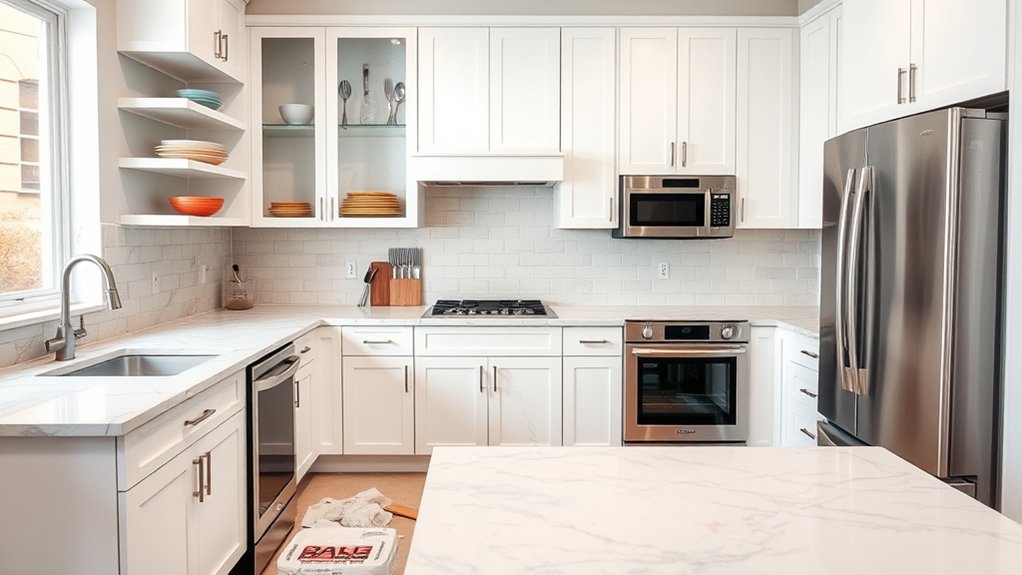
The typical cost range for a kitchen remodel varies widely depending on the scope and quality of materials you choose. Smaller updates like new paint, hardware, or appliances might cost around $10,000 to $20,000.
If you opt for a mid-range renovation, including new cabinets, countertops, and flooring, expect to spend between $20,000 and $50,000. For high-end remodels with custom cabinets, premium appliances, and luxury finishes, costs can rise to $50,000 or more.
Keep in mind that labor, permits, and unexpected expenses can also impact your total budget. Your choices directly influence the overall cost, so planning carefully helps you stay within your financial limits while achieving your desired look.
How Much Do Cabinets and Storage Usually Cost?
When choosing cabinets and storage, you’ll notice costs vary based on materials like wood, laminate, or metal. Custom cabinets offer tailored designs but come with a higher price tag.
Stock options are more budget-friendly. Exploring different storage solutions can help balance functionality and cost effectively.
Cabinet Material Options
Choosing the right cabinet material can significantly affect your renovation budget, as prices vary widely depending on the type you pick. For example, plywood offers durability at a moderate price, while solid wood gives a premium feel but costs more.
Particleboard and MDF are budget-friendly options but may not last as long. Think about your needs and budget carefully to make the best choice.
| Material | Typical Cost Range |
|---|---|
| Plywood | $100 – $200 per linear foot |
| Solid Wood | $200 – $500 per linear foot |
| MDF/Particleboard | $50 – $150 per linear foot |
Choosing the right material helps balance your style, durability, and budget constraints effectively.
Custom vs. Stock Cabinets
Deciding between custom and stock cabinets directly impacts your kitchen renovation budget, as prices can vary a lot. Custom cabinets are made to fit your space and style, usually costing between $500 and $1,200 per linear foot. Stock cabinets are pre-made and mass-produced, typically costing $100 to $300 per linear foot.
To see the difference more clearly:
- Custom cabinets give you personalized designs, quality craftsmanship, and a perfect fit but tend to be more expensive.
- Stock cabinets save you money upfront, are quicker to install, and have less customization.
- Semi-custom cabinets fall somewhere in between, offering some personalization at a moderate price.
Your choice depends on your budget, style, and timeline. Custom cabinets are pricier but flexible, while stock options are more budget-friendly but less adaptable.
Storage Solutions Cost
On average, the cost of cabinets and storage solutions in a kitchen renovation ranges from $2,000 to $10,000 or more, depending on the size and materials chosen. Basic stock cabinets are the most affordable option, typically costing around $100 to $200 per linear foot.
Custom cabinets, which offer tailored designs and premium materials, can easily push costs above $500 per linear foot. Mid-range options, like semi-custom cabinets, fall somewhere in between.
Besides cabinets, you might consider additional storage solutions like pantry organizers, pull-out shelves, or specialty drawers, which add to your overall expense. The choice of materials, finishes, and hardware also impacts your total cost.
Carefully balancing your needs and budget guarantees your storage solutions are both functional and cost-effective.
What Are the Expenses for Appliances and Major Equipment?
Appliances and major equipment can really impact your kitchen renovation budget since they often make up some of the biggest expenses. High-quality appliances not only improve how your kitchen works but also add to the overall cost.
Appliances significantly influence your kitchen renovation costs and long-term efficiency.
To give you a better idea, here are typical expenses:
- Refrigerator: Usually costs between $800 and $3,000 depending on size and features.
- Oven and Cooktop: Expect to spend from $1,000 to $4,000 for a good-quality set.
- Dishwasher: Typically ranges from $400 to $1,500 based on brand and capabilities.
These prices can vary depending on whether you pick standard, mid-range, or premium options. Keep in mind, investing in durable, energy-efficient appliances might cost more upfront but can save you money in the long run.
How Much Should You Budget for Flooring, Countertops, and Backsplash?
When planning your budget, consider the variety of flooring materials. Options range from budget-friendly vinyl to luxurious hardwoods.
Countertop costs can vary widely depending on whether you choose laminate, granite, or quartz. Pick what fits your style and budget.
Don’t forget to allocate funds for a backsplash that complements your design. There are options from simple tiles to intricate mosaics.
Flooring Material Options
Choosing the right materials for flooring, countertops, and backsplash can really impact your renovation budget. When picking flooring, consider options like:
- Luxury vinyl planks – affordable, durable, and easy to install.
- Ceramic tiles – versatile, water-resistant, and available in many styles.
- Hardwood – timeless, adds warmth, but can be pricier and require maintenance.
Each material varies in cost, durability, and style. For example, vinyl offers budget-friendly convenience, while hardwood provides elegance at a higher price. Your choice should balance looks, functionality, and your budget.
Keep in mind that installation costs and material quality will influence your overall expenses. Carefully weighing these options ensures your flooring complements your kitchen design without overspending.
Countertop Material Costs
Selecting the right countertop material can greatly impact your overall kitchen budget, just like flooring choices do. Costs vary widely depending on the material you choose.
For example, laminate countertops are budget-friendly, typically costing $10 to $40 per square foot. They’re perfect for cost-conscious renovations.
Quartz and granite are more durable and popular, with prices ranging from $50 to $100 per square foot. Marble offers a luxurious look but can be pricier, often exceeding $100 per square foot, plus higher maintenance costs.
Solid surface options like Corian fall somewhere in between. Keep in mind that installation costs can add a few hundred dollars, depending on the complexity.
Budget accordingly to balance your style preferences with your financial plan.
Backsplash Design Choices
Backsplash design can really influence your overall kitchen budget, with options from simple tiles to intricate mosaics. Your choice affects both style and cost.
For example, a basic ceramic backsplash might cost around $10-$30 per square foot, while high-end glass or stone options can reach $50-$100. Consider these design choices:
- Basic ceramic tiles for a budget-friendly look
- Subway tiles for a classic, versatile style
- Custom mosaics or natural stone for a luxurious finish
Your selection depends on your style preferences and budget. Keep in mind, complex designs or premium materials will increase costs.
Planning carefully ensures your backsplash enhances your kitchen without breaking the bank.
What Are the Costs for Plumbing, Electrical, and Professional Services?
Plumbing, electrical work, and professional services are key parts of any kitchen renovation, and their costs can vary a lot depending on what’s involved.
Plumbing costs usually range from $1,000 to $5,000, especially if you’re moving fixtures or upgrading pipes. Electrical work typically costs between $1,200 and $3,000, especially if you’re adding outlets, lighting, or upgrading the panel.
Hiring licensed pros ensures safety and that everything meets code, but their fees can add to your overall expenses. Expect to spend about 10-20% of your total renovation budget on these services.
Keep in mind that complex projects, like extensive rewiring or rerouting plumbing, will push costs higher. Good planning and clear communication with your contractors can help keep expenses in check while ensuring quality work.
How Do Lighting and Fixtures Affect Your Budget?
Lighting and fixtures can really impact your renovation budget, especially since they come in so many styles and qualities. The choices you make will affect both the look and the cost of your kitchen.
For example, basic LED recessed lights might cost around $50 each. They’re budget-friendly and energy-efficient options.
Designer pendant fixtures can range from $200 to over $1,000. They add style but can significantly increase your expenses.
High-end fixtures like vintage chandeliers can reach several thousand dollars. This can really boost your total renovation costs.
Balancing your style preferences with your budget is key. Simple fixtures save money, while statement pieces can make a space look stunning but come with a higher price tag.
Your selection directly impacts the overall cost of your renovation.
What About Permits and Other Hidden Costs?
Permits and other hidden costs can quickly add up if you’re not careful during your kitchen renovation. Many homeowners forget about permit fees, which vary depending on where you live and the scope of your project.
Not getting the right permits can lead to fines, delays, or even having to redo work. Plus, there are often extra costs like inspection fees, design consultations, or unexpected structural repairs that can catch you off guard.
It’s a good idea to research local regulations early on and set aside money for these extras. Contractors may include some costs in their estimates, but always ask for a detailed breakdown.
Plan to allocate about 10-15% of your renovation budget for permits, inspections, and surprises. Being prepared helps you avoid surprises and keeps your project financially on track.
Frequently Asked Questions
How Long Does a Typical Kitchen Renovation Take?
A typical kitchen renovation usually takes about 6 to 8 weeks, depending on the project’s complexity and scope.
You might experience delays if unforeseen issues or supply chain disruptions come up.
Planning well and working with experienced contractors can help you stay on schedule.
Keep in mind that simple updates like repainting or replacing countertops tend to be quicker.
Full remodels involving plumbing and electrical work usually take longer.
Are There Cost Differences Between DIY and Professional Remodeling?
Of course, professional remodeling costs more, but think of the DIY route as a lottery.
You might save money or end up with a kitchen that looks like a Pinterest fail.
Professionals have skills, tools, and experience, ensuring quality work — but it costs.
Your savings depend on your DIY prowess, time, and patience.
What Are Common Unexpected Expenses During Renovation?
During your renovation, unexpected expenses often pop up, like hidden plumbing or electrical issues, mold, or outdated wiring. You might also encounter surprise structural problems or need to upgrade permits.
These costs can add up quickly, so it’s wise to set aside at least 10-20% of your budget for unforeseen expenses. Staying flexible and working closely with your contractor helps manage these surprises effectively.
How Can I Save Money on High-End Finishes?
You can save money on high-end finishes by shopping around for deals, comparing prices, and choosing less expensive but similar materials.
Think about mixing high-end options with more affordable ones to get that luxury look without overspending. Reusing or refurbishing existing fixtures can also cut costs.
Focus on finishes that make a big visual impact without breaking the bank. Planning ahead and sticking to your list helps prevent impulse buys and keeps your budget in check.
What Financing Options Are Available for Kitchen Remodels?
You can explore several financing options for your kitchen remodel. Personal loans are a good choice if you want quick access to funds and prefer fixed interest rates.
Home equity loans or lines of credit use your home’s value and often come with lower rates. Some banks also offer specialized renovation loans designed just for home upgrades.
Credit cards might work for smaller projects, but keep an eye on the high interest rates. Be sure to compare terms carefully to find the best option that fits your budget and timeline.
Conclusion
So, after all this number crunching, you’re probably ready to dive into your dream kitchen. Just don’t forget to budget for those sneaky extras like permits or unexpected repairs.
Ironically, the more you plan, the fewer surprises you’ll face later. But hey, if you love the thrill of uncertainty, maybe just skip the budget altogether.
Either way, happy renovating. Your kitchen renovation adventure awaits, with a few hidden costs secretly cheering you on!