Benefits of Induction Stoves and Ovens
Many people struggle with outdated stoves that are slow to heat up or tricky to control. If you’re tired of guesswork in the kitchen, induction stoves might be just what you need. They can truly transform your cooking experience with their efficiency and safety.
Induction stoves heat up quickly, offering precise control that makes cooking safer and more efficient. They stay cooler, reducing burn risks and spills, while automatic shutoff adds safety.
These stoves are easy to clean since their smooth surfaces resist stains, and they use less energy compared to gas or electric models.
If you’re curious about how induction can change your kitchen and cooking style, exploring more details will reveal even greater benefits.
Key Takeaways
– Induction stoves heat cookware quickly and precisely, making cooking more efficient and giving you better control over temperatures.
They’re safer too, with cooler surfaces, automatic shutoff features, and quick cooling times. This helps reduce the risk of burns and fires in the kitchen.
Plus, their energy-efficient design means less heat waste. That not only saves you time but also cuts down on electricity bills.
Cleaning is a breeze because of their smooth surfaces and minimal maintenance needs. You won’t have to spend much time cleaning up after cooking.
They’re versatile and great for different cooking styles, offering faster, more accurate temperature control compared to traditional gas or electric stoves.
Are Induction Stoves Right for Your Kitchen?

Are induction stoves a good fit for your kitchen? If you value quick heating and precise control, they could be ideal. These stoves heat up faster than traditional options and are more energy-efficient, saving you time during meal prep.
Their smooth surface makes cleaning easier and reduces clutter. But you’ll need compatible cookware, like ferrous metals, since induction relies on magnetic fields. If your current pots and pans aren’t compatible, you’ll have to buy new ones.
Also, consider if your kitchen setup can handle the electrical needs. Induction stoves often require a dedicated high-power outlet. If these factors match your needs, induction stoves can enhance your cooking experience and make your kitchen more efficient.
How Do Induction Cooktops Work?
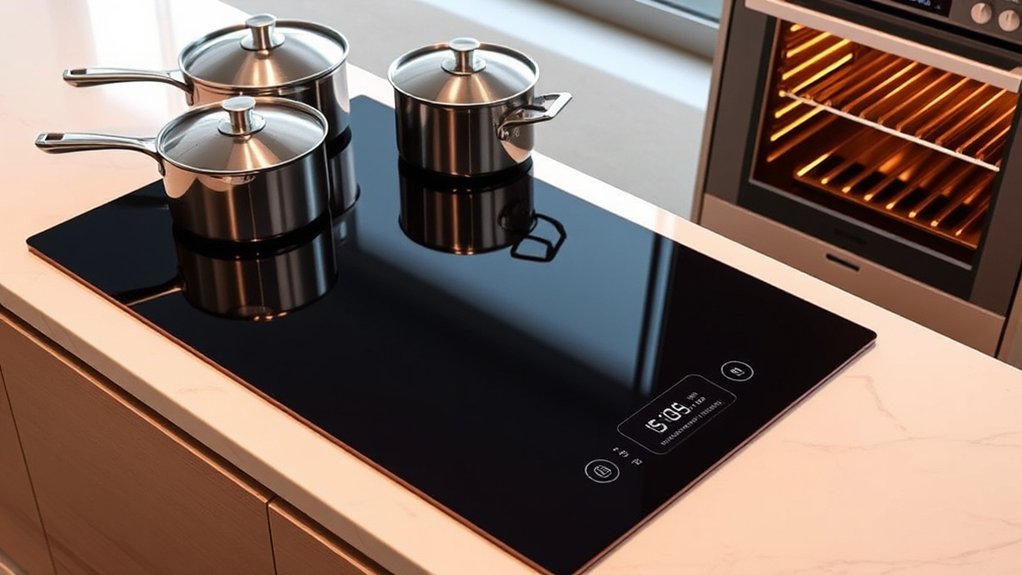
Induction cooktops work by using electromagnetic fields to directly heat pots and pans, rather than the stove surface itself. When you turn on the cooktop, an electric current runs through a coil beneath the glass surface, creating a magnetic field.
This magnetic field induces an electric current in ferromagnetic cookware, generating heat instantly. Because the heat is produced directly in the cookware, the surface stays relatively cool, reducing heat loss.
The magnetic field heats cookware directly, keeping the surface cool and minimizing heat loss for efficient cooking.
You’ll notice rapid temperature changes with precise control, as the cooktop responds instantly to your adjustments. This efficient transfer of energy makes cooking faster and more responsive.
Unlike traditional stoves, induction cooktops only heat compatible cookware, ensuring safer and more energy-efficient cooking experiences.
What Are the Safety Benefits of Induction Cooking?
Induction cooking offers several safety advantages that can give you peace of mind in the kitchen. Since the cooktop itself stays cooler, there’s a reduced fire risk and less chance of burns.
Plus, with precise heat control, you can avoid accidental overheating or spills that could cause accidents.
Reduced Fire Hazard
Because the cooktop heats only when compatible cookware is placed on it, induction stoves significantly lower the risk of kitchen fires. If you forget to turn it off or leave a pot unattended, it won’t heat without cookware, reducing fire hazards.
This safety feature helps prevent overheating and cuts down the chances of sparks or flames. Here’s a quick comparison:
| Feature | Traditional Stove | Induction Stove |
|---|---|---|
| Heat Activation | Flame or heating element | Cookware presence |
| Surface Temperature | Can get very hot | Cooler surface |
| Fire Risk | Moderate to high | Low |
| Overheating Potential | Yes | No |
| Safety Mechanism | Manual monitoring | Automatic shutoff |
This table shows how induction stoves focus on safety and help prevent fires.
Safer Surface Temperature
Since the cooktop heats only the cookware and not the surface itself, the surface temperature stays much lower than traditional stoves. This means you’re less likely to accidentally burn yourself if you touch it, reducing injury risks.
Unlike gas or electric stoves, where the surface stays hot long after cooking, induction surfaces cool down quickly. This quick cooling makes it safer when you’re multitasking or handling hot pots around the kitchen.
You won’t have to worry about lingering heat causing burns or accidents. Plus, because the surface doesn’t get excessively hot, it’s especially safer around children or pets.
Precise Heat Control
One of the main safety benefits of induction cooking is its precise heat control. You can instantly and accurately adjust the temperature, making it easy to turn the heat up or down smoothly without delay.
This helps prevent accidents like overheating or burning food. You can respond quickly to changing cooking needs, reducing the risk of spills or splatters.
Unlike traditional stoves, induction cooktops stop transferring heat the moment you turn them off. The surface stays cooler and safer to touch, which lowers the chances of burns or fires.
How Does Induction Technology Improve Temperature Control?
Induction technology significantly improves temperature control by letting you adjust heat levels instantly and accurately. When you turn the dial or press a button, the stove responds immediately, giving you precise control over cooking temperatures.
Unlike traditional stoves that rely on heating elements that take time to warm up or cool down, induction stoves use electromagnetic fields to directly heat your cookware. This means you can raise or lower the heat without any delay, helping prevent overcooking or burning.
You also get even heat distribution because the cookware heats evenly itself. This makes it easy to maintain a steady simmer or quickly bring water to a boil.
Are Induction Stoves More Energy-Efficient?
Induction stoves heat up faster than traditional models, saving you time and energy. With precise temperature control, you can cook more efficiently without wasting power.
Plus, less heat escapes into the kitchen, making induction stoves overall more energy-efficient.
Faster Heating Times
Because they generate heat directly within the cookware, induction stoves heat up much faster than traditional electric or gas stoves. When you turn on an induction cooktop, heat transfers instantly to your pot or pan, reducing wait times considerably.
This quick response means you spend less time waiting for your food to start cooking and can adjust temperatures instantly. Unlike gas or electric stoves, which rely on heating elements that take time to warm up, induction stoves deliver rapid heat directly to the cookware.
This efficiency not only speeds up meal preparation but also helps you maintain better control over cooking processes. Overall, induction stoves save you valuable time in the kitchen by providing faster, more immediate heating.
Precise Temperature Control
Thanks to their rapid heating capabilities, induction stoves also offer remarkably precise temperature control. You can set the heat level with great accuracy, allowing you to simmer, boil, or sear at specific temperatures.
Unlike traditional methods, where heat fluctuates and needs constant monitoring, induction stoves respond instantly to your adjustments. This precision helps you avoid overheating or undercooking your food, ensuring consistent results.
Whether you’re melting chocolate or cooking delicate sauces, you can rely on the precise temperature settings to maintain steady heat. This control not only improves your cooking outcomes but also reduces the need for constant supervision.
It gives you more confidence and convenience in the kitchen.
Reduced Energy Loss
Since induction stoves transfer heat directly to cookware, they reduce wasted energy compared to traditional cooking methods. Unlike gas or electric stoves, most of the heat from induction is used efficiently, which lowers heat loss.
This means you need less energy to cook your food, saving you money and helping the environment. The table below shows how induction compares to other methods:
| Cooking Method | Energy Efficiency | Heat Loss | Cooking Speed |
|---|---|---|---|
| Induction | High | Minimal | Fast |
| Gas | Moderate | Higher | Moderate |
| Electric Coil | Lower | Significant | Slow |
Choosing induction helps you use energy wisely, making your cooking more eco-friendly and cost-effective.
How Quickly Do Induction Cooktops Heat Up and Cool Down?
Induction cooktops heat up and cool down really quickly, giving you better control than traditional stoves. When you turn one on, it heats almost instantly, often within seconds, so you don’t have to wait for the surface to warm up.
This fast response means you can easily adjust the heat levels, making your cooking more precise. When you turn it off, the surface cools down just as fast, which helps prevent burns and makes managing temperatures easier.
Plus, the quick heating and cooling save energy by reducing wasted heat. You can start or stop cooking in a flash, making meal prep more efficient. Overall, induction cooktops make cooking more responsive and convenient.
How Easy Is It to Clean and Maintain Induction Surfaces?
Induction cooktops have smooth, spill-resistant surfaces that make cleanup quick and simple. You can easily wipe away spills and splatters without fuss or special tools.
Plus, they require minimal maintenance, so you spend less time on upkeep and more time cooking.
Smooth, Spill-Resistant Surface
A smooth, spill-resistant surface is one of the biggest advantages of induction stoves. It’s easy to keep clean because spills stay on top instead of seeping into cracks or crevices. That means quick cleanup every time.
Spills stay on the surface, which helps prevent staining and residue buildup. The flat design makes wiping easy without needing special tools. Liquids don’t get trapped, so odors are less likely to linger.
Plus, the sleek surface resists scratches and stains, helping it stay looking new longer. This modern look not only enhances your kitchen’s style but also makes maintenance simpler, saving you time and effort.
Easy Wipe Cleanup Process
Cleaning an induction stove is simple because its smooth surface only needs a quick wipe to get rid of spills and stains. You can keep it looking new with a damp cloth or sponge, without needing any harsh cleaners.
Since the surface doesn’t trap crumbs or debris, messes won’t bake in or get stubborn. If something spills, just wipe it up right away to prevent buildup. For sticky spots, a gentle scrub with a soft cloth does the trick.
Unlike traditional stoves, induction surfaces don’t have grates or burners to disassemble or scrub deep. This makes cleaning much easier and faster.
This simplicity means you spend less time maintaining and more time cooking. Overall, the easy wipe cleanup makes induction stoves a really convenient choice for busy kitchens.
Minimal Maintenance Requirements
Because of their smooth, flat surfaces, induction stoves require minimal effort to keep in top condition. Cleaning is straightforward and quick. Here are four tips to help you maintain your stove effectively:
- Wipe spills immediately with a damp cloth to prevent stains.
- Use a gentle cleaner to avoid scratching the surface.
- Regularly check and clean the vents to ensure proper airflow.
- Avoid abrasive scrubbers that could damage the glass surface.
Following these simple steps keeps your induction stove looking new and working efficiently. Unlike traditional cooktops, induction surfaces resist grime buildup and are easy to maintain with little effort.
This low-maintenance design saves you time and helps keep your cooking area spotless effortlessly.
Should You Choose Induction Over Gas or Electric?
Are induction stoves the right choice for your kitchen? If you value quick heating, precise control, and energy efficiency, induction might be ideal. Unlike gas, which produces open flames, induction heats cookware directly through electromagnetic fields, reducing heat loss.
Electric stoves heat more slowly and may have inconsistent temperature control, but they’re often more affordable upfront. Consider your cooking habits: if you do a lot of simmering or precise tasks, induction offers rapid, accurate adjustments.
However, induction requires compatible cookware—ferrous metals like cast iron or stainless steel. If you prefer traditional visual cues like flames or coils, gas or electric may suit you better. Ultimately, your choice depends on your cooking style, budget, and kitchen setup.
What Are the Best Recipes and Cooking Styles for Induction?
Induction stoves excel at quick, precise heating, making them great for a variety of cooking styles and recipes. They work especially well with dishes that need rapid temperature changes.
For example, you can sear steaks or vegetables quickly to lock in flavor and texture. They’re perfect for simmering sauces or stocks with steady, low heat over time.
Stir-frying in a wok is also easy thanks to the precise control and fast heat response. Plus, you can boil water rapidly for pasta or blanch vegetables in just moments.
These features help you master everything from delicate sauces to high-heat searing. Induction stoves give you the control to handle complex recipes and fast-paced cooking, ensuring your dishes turn out just right every time.
What’s Next for Induction Technology and Smart Kitchens?
Advancements in induction technology are paving the way for smarter, more integrated kitchens that seamlessly blend convenience and innovation. Expect your appliances to become more intuitive, with features like voice control, remote operation, and personalized cooking settings.
Smart sensors will monitor temperature, cook times, and even ingredient freshness, adjusting settings automatically for perfect results. Integration with home automation systems will let your stove and oven communicate with other devices, creating a seamless cooking environment.
AI-powered apps will suggest recipes based on what’s in your fridge, while energy efficiency improves through smarter power management. As these innovations develop, you’ll enjoy more precise control, better safety, and a truly connected kitchen experience that makes daily cooking easier and more fun.
Frequently Asked Questions
Can I Use Any Cookware on an Induction Stove?
No, you can’t use any cookware on an induction stove. It needs magnetic cookware like cast iron or stainless steel to work properly.
To check if your pots and pans are compatible, see if a magnet sticks to the bottom. If it does, you’re good to go.
Non-magnetic options like aluminum or glass won’t heat on induction unless they’re specially designed with a magnetic base.
Are Induction Stoves Suitable for Professional Kitchens?
Yes, induction stoves are suitable for professional kitchens. They offer rapid heating, precise temperature control, and energy efficiency, which are essential for high-volume cooking environments.
You’ll appreciate their safety features, like cool-to-touch surfaces, and their easy-to-clean surfaces make kitchen maintenance simpler. Many chefs prefer induction for its responsiveness, consistent results, and ability to handle multiple dishes at once, making it a smart choice for busy, professional settings.
Do Induction Stoves Emit Electromagnetic Radiation?
Yes, induction stoves emit electromagnetic radiation, but it’s generally safe. They create a magnetic field that heats pots directly, not the air or surrounding surfaces.
Unlike microwave ovens, which emit higher levels of radiation, induction cooktops produce low-frequency fields that dissipate quickly. These are well within safety standards.
How Do Induction Ovens Differ From Traditional Ovens?
Induction ovens differ from traditional ovens mainly in how they heat food. You’ll find that induction ovens use electromagnetic fields to directly heat pots and pans, making cooking faster and more precise.
Traditional ovens, on the other hand, rely on radiant heat from elements or burners, which heats the air and surfaces first. This means induction ovens offer better energy efficiency, quicker response times, and consistent temperatures, enhancing your cooking experience.
What Are Common Troubleshooting Issues With Induction Cooktops?
Think of troubleshooting your induction cooktop like solving a puzzle. Common issues include the cooktop not turning on, which might be due to a power connection problem or error messages caused by incompatible cookware.
If the surface isn’t heating, check to see if your pots and pans fit properly. Regularly cleaning the surface and making sure your cookware is compatible can help prevent these problems, keeping your cooking smooth and hassle-free.
Conclusion
Considering all the benefits, from faster cooking to improved safety, induction stoves could be a smart upgrade for your kitchen. They’re energy-efficient, easy to clean, and offer precise temperature control—perfect for both everyday meals and gourmet dishes.
Are you ready to welcome the future of cooking and make your kitchen smarter and safer? With induction, you’re not just cooking; you’re stepping into a more efficient, innovative culinary world.
Choosing induction stoves means embracing a more modern and efficient way to cook. They combine speed, safety, and precision, making them a great addition to any kitchen.